


|
BOTTOM LINE UP FRONT
Yes — boneless couches are genuinely good, but only when you buy the right foam density and match the style to how you actually use a sofa. The viral cloud couch format delivers real comfort and unmatched delivery convenience. The make-or-break variable is foam quality: buy below the density threshold and you have an 18-month sofa. Buy above it and you have a 5-7 year one. This guide tells you exactly what to look for. |
Boneless couches look incredible on TikTok. But before you buy one, there are three things you need to know — including the one quality signal that shows up in almost every 1-star review.
The category has surged in the last two years, driven largely by short-form video. Frameless, foam-filled sofas that ship vacuum-sealed in a box and expand to full size in your living room — with zero assembly — solve a genuine problem for apartment renters, frequent movers, and anyone who has wrestled a traditional sectional up a narrow staircase.
But the market is full of cheap imitations. A $300 boneless couch and a $900 one can look identical in a product photo. They do not perform identically over time. This guide gives you the honest breakdown: what boneless couches are, what they do well, where they fail, who they're right for, and how to spot a quality one before you click purchase.
What "Boneless Couch" Actually Means
Foam Replaces the Frame
A traditional sofa has a rigid internal skeleton — hardwood or engineered wood — that holds everything in place. A boneless sofa has no frame at all.
Structure comes entirely from layered foam. Quality models stack two types: a denser base layer for support, and a softer top layer for that sink-in feel. Higher-end versions embed independent pocket springs in the base for added bounce and easier standing.
No frame does not mean no structure. Foam density becomes the single deciding factor for how long the sofa lasts — which is why it's the first thing to check before buying.
Vacuum-Compressed Shipping, Zero Assembly
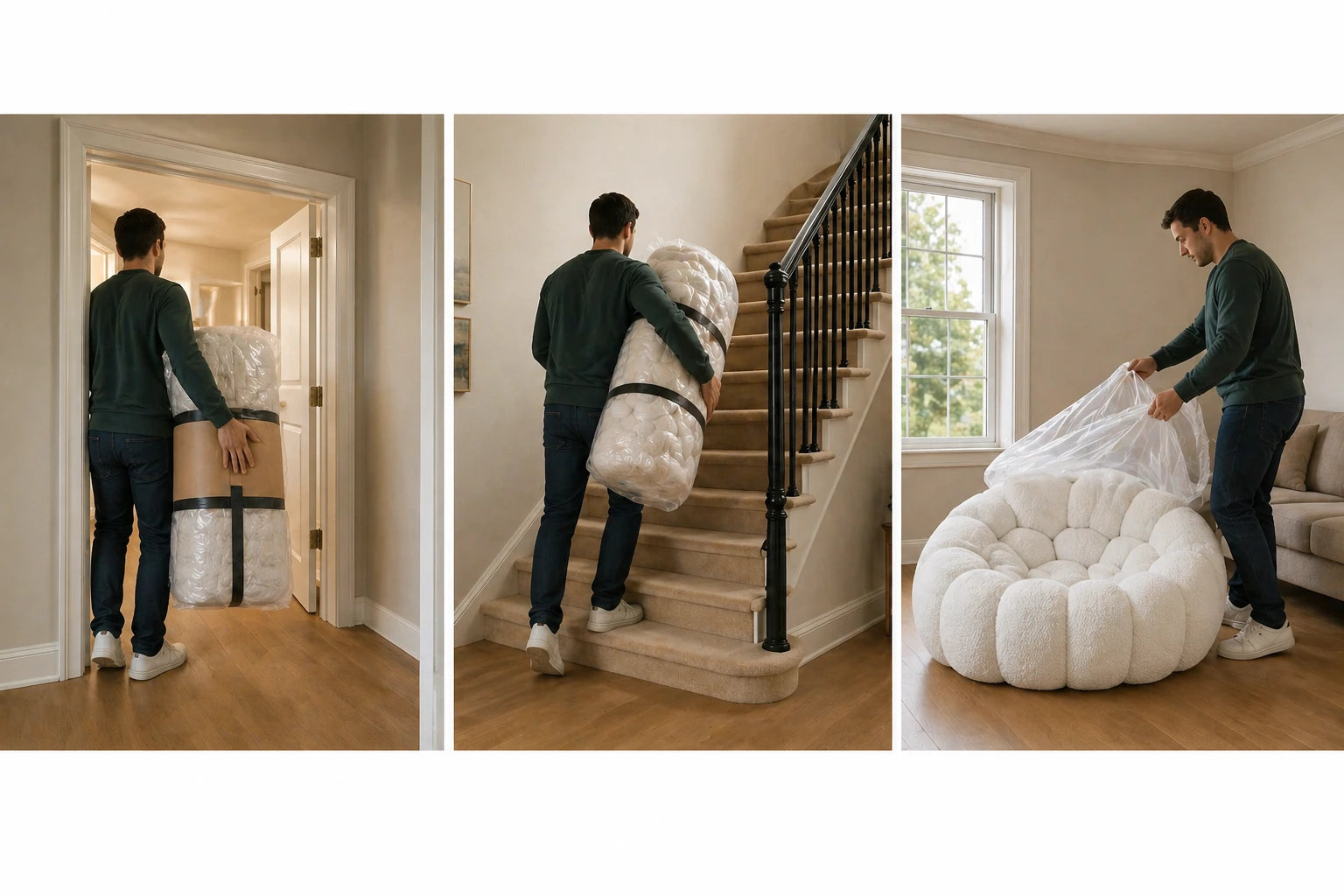
Without a rigid frame, every module — seat, back cushion, armrest — can be vacuum-compressed and shipped in separate boxes. Cut the packaging and the foam expands on its own, reaching full shape within 48-72 hours.
What this means in practice:
- Boxes clear any standard doorway, narrow hallway, or L-shaped staircase
- Zero assembly — no tools, no hardware, no instruction manual
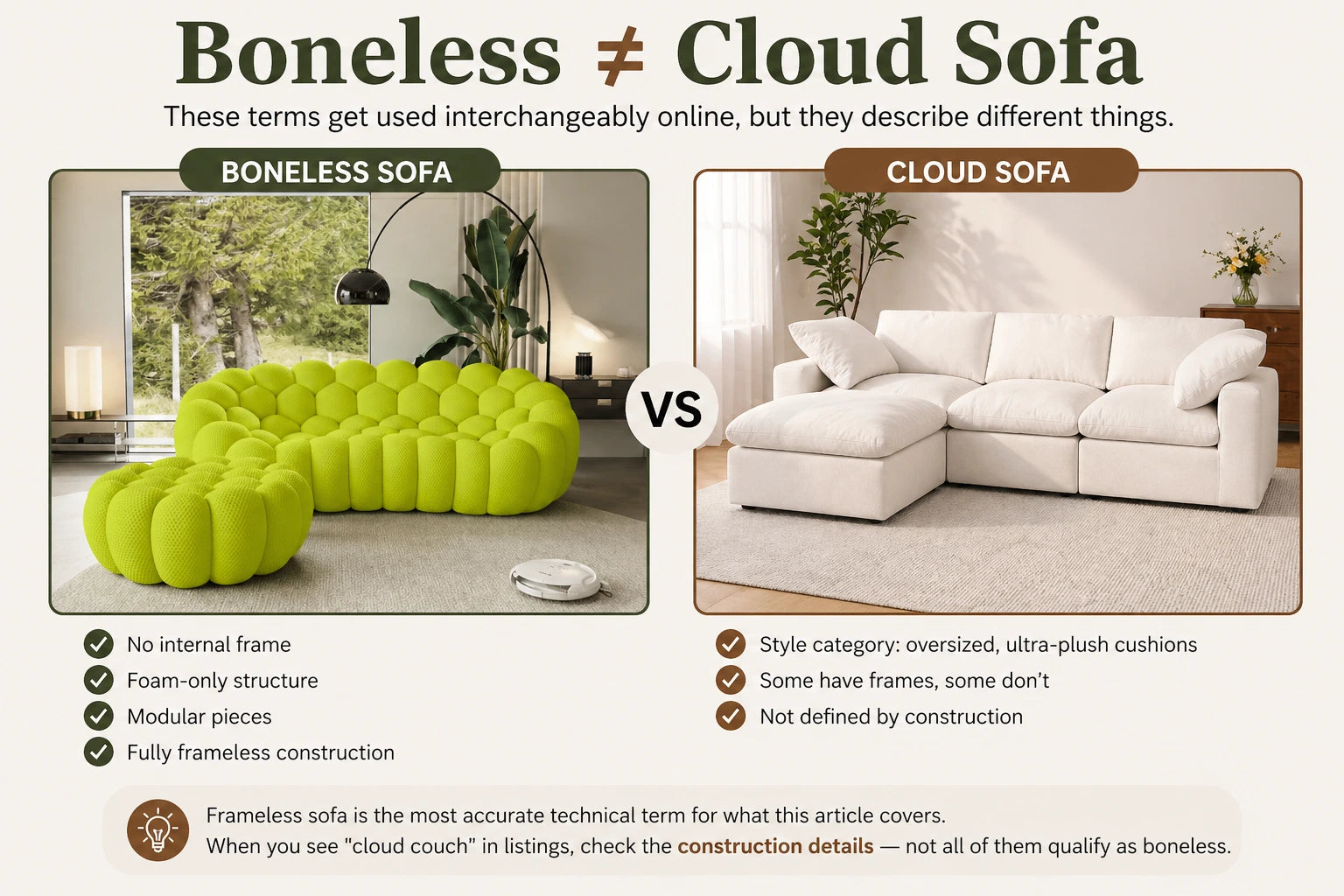
Boneless ≠ Cloud Sofa
These terms get used interchangeably online, but they describe different things. A boneless sofa is defined by its construction: no internal frame, foam-only structure, modular pieces. A cloud sofa is a style category defined by oversized, ultra-plush cushions — some cloud sofas have frames, some don't.
Frameless sofa is the most accurate technical term for what this article covers. When you see "cloud couch" in listings, check the construction details — not all of them qualify as boneless.q
Boneless Couch Pros and Cons at a Glance
| ✓ Boneless Couch Pros | ✗ Boneless Couch Cons |
|
|
Boneless Couch Pros
The comfort is real — but "feels like a cloud" doesn't tell you much. Here are the specific advantages that hold up under practical scrutiny.
Fits Any Door, No Assembly
Getting a traditional sectional into a second-floor apartment often requires a furniture dolly, at least two people, and occasionally the removal of a door frame. Getting a boneless sofa into the same space means carrying individual modules — each weighing 30-60 lbs — through any standard doorway, narrow hallway, or L-shaped staircase.
If you rent, live above the first floor, or move every one to three years, this is not a minor convenience. It resolves a logistics problem that traditional furniture has never solved well.
Modular Pieces Reconfigure Freely
Because there is no rigid frame locking the pieces together, a single purchase can be arranged as a standard sofa, L-shape sectional, U-shape, or chaise — and rearranged again whenever your room changes.
Some models — not all — can fold flat into a sleeping surface by repositioning the back cushions. Check the product listing specifically for this feature before buying.
Boneless Couch Cons
The category has real drawbacks that most positive reviews understate. Here are the three that appear most consistently in post-purchase feedback.
Modules Slide Apart Over Time
One of the most consistent complaints across boneless couch reviews — appearing repeatedly in 1–3 star ratings on major furniture retail platforms — is that individual modules drift apart during normal use.
On hardwood floors, this happens quickly. On carpet, it happens more slowly — but it still happens.
This is a design limitation of the frameless format, not a defect in any particular product. Three practical approaches address it:
|
HOW TO FIX MODULE SLIDING
1. Non-slip furniture pads under each module. Use rubberized grip pads — the same type used under area rugs. Works on both hardwood and carpet. 2. Position the sofa against a wall. Eliminates one direction of drift for the rear modules, which is the most common failure point. 3. Buy models with connector hardware. Some manufacturers include hook-and-loop fasteners or snap connectors between modules. Check the product specs for this feature before purchasing. |
Low Back Height Limits Taller Users
For taller users — or anyone who relies on back and neck support while watching TV — the backrest height often falls below the shoulder line, creating discomfort during extended sessions. Boneless sofas sit low to the ground and have a relatively short back height. For users under approximately 5'10", the proportions work well for casual lounging.
If the sofa sits against a wall, the wall itself provides additional head and neck support and mitigates this significantly. If it floats in the middle of a room, taller users will notice the limitation within an hour.
Low-Density Foam Compresses Permanently
This is the most consequential drawback — and the reason price variance in this category is so significant. The foam is the entire structure of the sofa. When it permanently compresses — develops sink spots that don't spring back — the sofa has effectively failed.
Foam density is measured in pounds per cubic foot (lbs/ft³). The following ranges reflect widely cited industry benchmarks for residential seating foam, based on furniture industry foam benchmarks widely cited across upholstery manufacturers.
| Foam Density | Expected Durability | Typical Price Range | Verdict |
| Under 1.5 lbs/ft3 | 1-2 years before noticeable compression | Under $400 | Avoid |
| 1.5-1.8 lbs/ft3 | 2-4 years with regular use | $400-$650 | Acceptable |
| 1.8-2.5 lbs/ft3 | 3-5 years with regular use | $650-$1,200+ | Recommended |
|
WHAT TO WATCH FOR
If a product listing does not specify foam density, treat that as a risk signal. Reputable manufacturers publish this figure because it is their strongest quality argument. Omitting it usually means the number would hurt sales. |
Who Should — and Shouldn't — Buy a Boneless Couch
A boneless couch is not the right purchase for everyone. Here's an honest breakdown of who benefits most — and who would likely regret it.
| ✓ Good Fit | ✗ Not a Good Fit |
|
|
How to Buy a Good Boneless Couch Without Getting Burned
Once you have decided the category makes sense for your situation, the evaluation comes down to four specific checks.
| 1 | Look up foam density in the product specs — minimum 1.8 lbs/ft3
Go to the specifications tab and find the density figure in lbs/ft3. The target range is 1.8-2.5 lbs/ft3. If the listing doesn't show this number at all, skip the product — quality manufacturers always publish it. |
| 2 | Confirm metal zippers and fully removable seat and back covers
Plastic zippers are the most cited hardware failure in post-purchase reviews — they crack under repeated washing. Look specifically for metal zippers (brass or nylon-coil). Also confirm that both seat cushion and back cushion covers are removable, not just the armrests. |
| 3 | Choose pocket spring construction for daily use
Pure foam is adequate for occasional lounging, but compresses faster under daily seated weight. Pocket springs embedded in the base add bounce, better posture support, and make it easier to stand up. Look for a spring wire diameter of at least 2.0mm in the specs. |
| 4 | Verify rubberized anti-slip bases on all modules
Check customer photos or product detail shots for the underside of each module. Rubberized or fabric-gripped bases prevent sliding on both hardwood and carpet. Bare foam bases require separate furniture pads — factor that into the purchase decision. |
|
IN-STORE FOAM QUALITY TEST
Press firmly into the seat cushion with your fist and release. Quality high-density foam springs back within 1-3 seconds and leaves no lasting indentation. Foam that takes 5 seconds or more to recover — or leaves a visible depression — is low-density and will compress permanently over time. This behavior also shows up in customer video reviews, so check those when buying online. |
Our Boneless Sofa Picks by Use Case
The right boneless sofa depends on how you actually use it. Here are three picks — each matched to a specific use case, with the key specs that matter for that scenario.
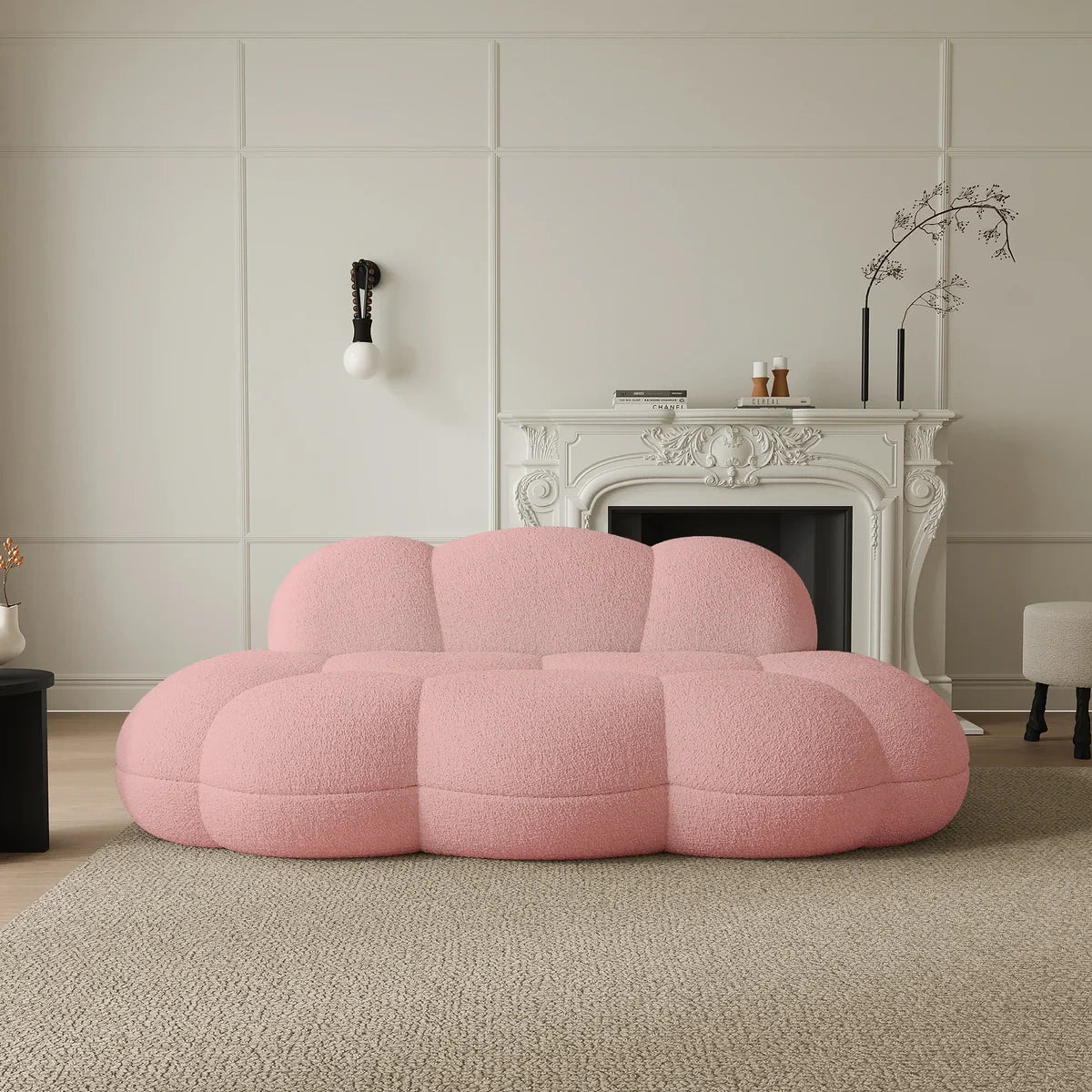
01. Best for Apartments & Frequent Movers
1-Piece Teddy Velvet Pink Loveseat (3-Seater)Soft teddy velvet, compact loveseat format, easy to carry and reposition
Price: $490
Pros: Teddy velvet fabric is soft, durable, and easy to wipe clean; single-module format ships compactly and fits through any standard doorway; lightweight enough for one person to move; works as a standalone loveseat or combined with other modules.
Check your blog-only savings in cart or at checkout.
Best for: Renters above the first floor, anyone without an elevator, people who move every 1-2 years and need furniture that adapts to different room layouts.
02. Best for Guest Rooms & Flex Spaces
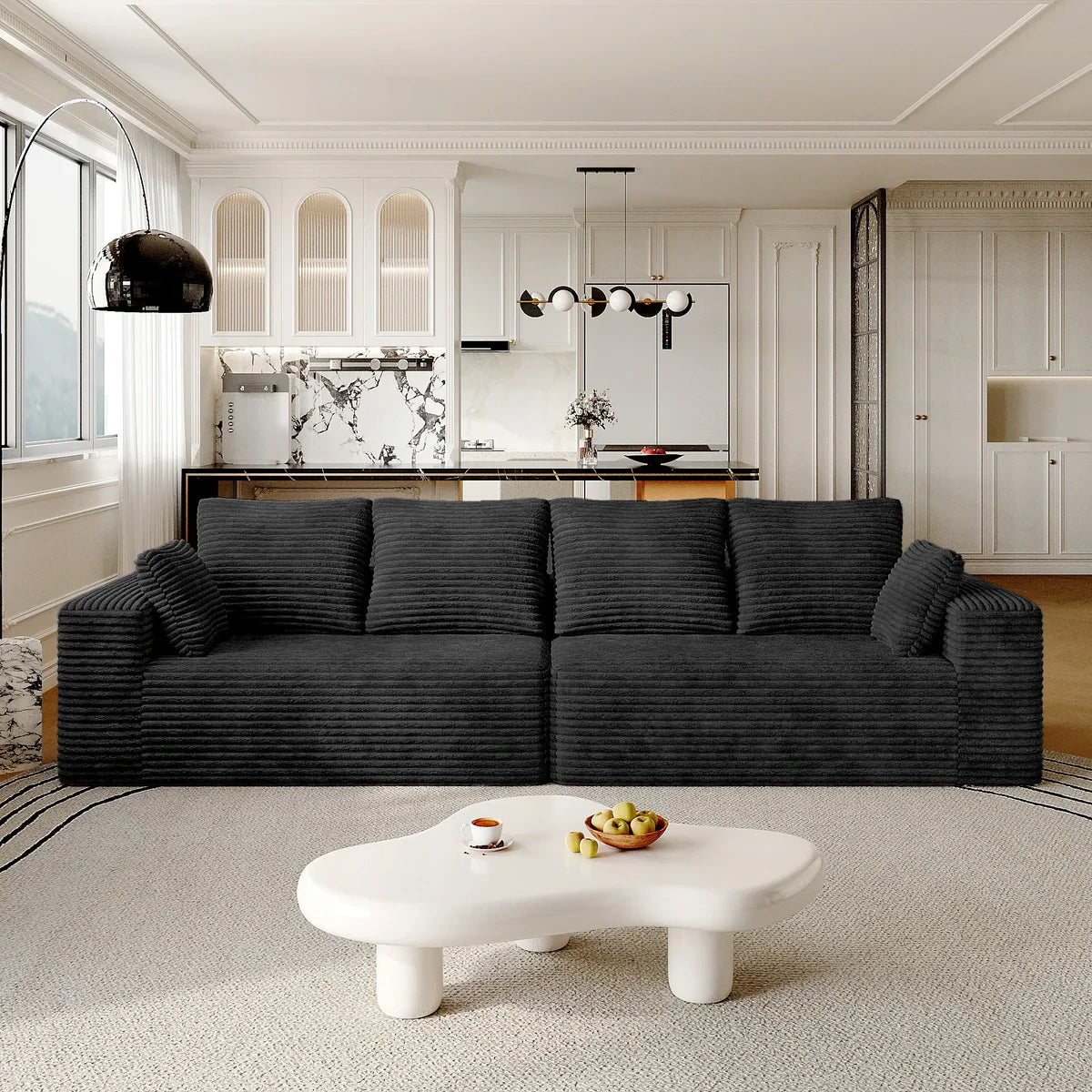
2-Piece Corduroy Black Loveseat (4-Seater)2-piece corduroy set, versatile 4-seater configuration, converts to sleeping surface
Price: $650
Pros: 2-piece modular set gives you flexibility to arrange as a sofa, chaise, or flat sleeping surface; corduroy fabric is durable and easy to maintain; classic black colorway works across room functions; 4-seater capacity suits both daily lounging and hosting guests.
Check your blog-only savings in cart or at checkout.
Best for: Home offices that double as guest rooms, studios, or any space needing dual sit/sleep function.
03. Best for Pet Owners & Families
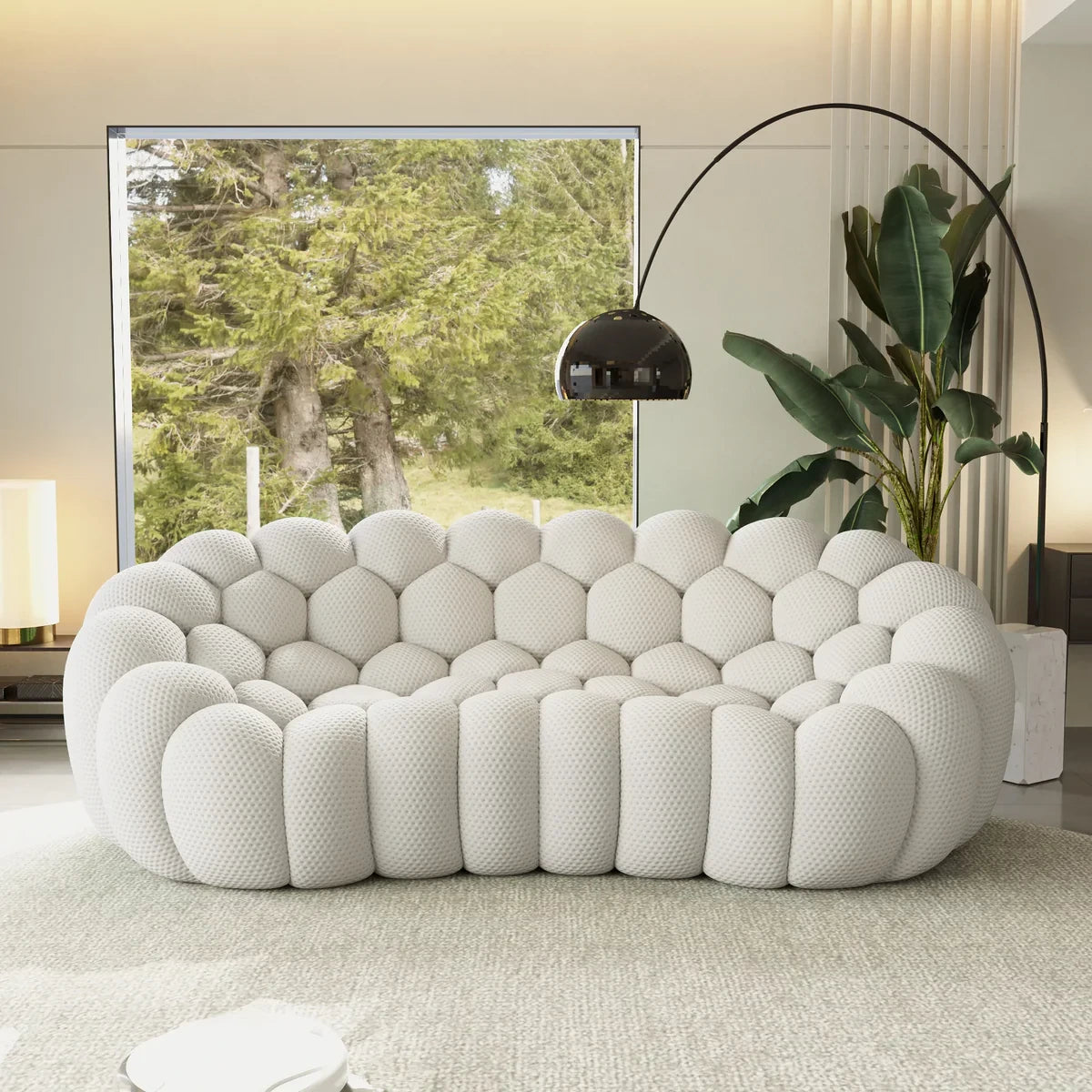
1-Piece 3D Knitted Fabric Light Grey LoveseatPremium 3D knitted fabric, deep-sink comfort, washable and pet-friendly
Price: $830
Pros: Premium 3D knitted fabric feels expensive and holds its texture over time; modular single-piece design is easy to move and reposition; deep-sink cushioning ideal for lounging; covers are fully removable and machine washable; lightweight enough to carry between rooms solo.
Cons: Single-piece loveseat — buy multiple units for a larger sectional setup; knitted texture may trap pet hair more than smooth fabrics.
★★★★★ 4.8 / 5 — based on verified customer reviews
"Honestly, I didn't expect this quality for the price. The fabric feels thick and cozy, not cheap at all. I bought two to make a loveseat and they stay together perfectly. It's my favorite spot to read."
Check your blog-only savings in cart or at checkout.
The Verdict: Are Boneless Couches Good?
Boneless couches are good — for the right buyer. The format genuinely solves a real problem: furniture that fits through any doorway and requires no assembly. And it delivers real comfort for casual, relaxed use. The viral hype is not unfounded.
The category's reputation for disappointment comes almost entirely from buyers who purchased on price alone, ended up with low-density foam, and found themselves sitting on a compressing slab within eighteen months. That is a product quality problem, not a format problem.
The checklist is short: foam density of 1.8+ lbs/ft3, metal zippers, removable covers on all primary surfaces, and module connectors or a plan to prevent drift. A boneless couch that meets those criteria is a genuinely competitive alternative to a traditional framed sofa.
If that description matches your situation, the format is worth it. If you need a sofa that lasts fifteen years or provides daily lumbar support, a traditional framed sectional is still the stronger choice.
| BROWSE OUR BONELESS SOFA COLLECTION
Every model includes foam density specs, full cover washability details, and honest use-case guidance. |
Frequently Asked Questions
How long does a boneless couch last?
It depends almost entirely on foam density. High-density foam in the 1.8-2.5 lbs/ft3 range typically holds its shape for 3-5 years of regular use. Foam under 1.5 lbs/ft3 can start compressing permanently within 1-2 years.
The practical way to check: press firmly into the seat cushion and release. Quality foam springs back within 1-3 seconds and leaves no lasting dent. Foam that takes 5 seconds or longer to recover is low density.
Can you sleep on a boneless couch?
Occasionally, yes — boneless couches are comfortable for a guest night here and there. For regular nightly sleep, you want a model specifically designed for fold-flat conversion, where back cushions are removed and repositioned to create a continuous sleeping surface.
Standard boneless sectionals without this feature are not designed as primary sleep surfaces. See our fold-flat collection for models with this feature.
Are boneless couches good for back pain?
No. Boneless couches provide limited lumbar support for prolonged upright sitting. The low back profile and deep-sink foam are designed for lounging, not structured seated posture.
If you have back concerns: position the sofa against a wall for head and neck support, and add a lumbar pillow for longer sessions.
How do I stop boneless couch cushions from sliding apart?
Three approaches that consistently work:
- Non-slip furniture pads — place rubberized grip pads beneath each module. Effective on both hardwood and carpet.
- Wall positioning — place the sofa back against a wall to eliminate drift. The back-to-seat join is the most common failure point.
- Buy models with connectors — hook-and-loop or snap fasteners between modules. Check the product specs before purchasing.
What is the difference between a cloud sofa and a boneless sofa?
They are not the same product. A boneless sofa is defined by its construction — no internal frame, foam-only structure, modular pieces. A cloud sofa is a style category defined by oversized, ultra-plush cushions; some cloud sofas have frames, some don't. Frameless sofa is the most technically precise term. When you see cloud couch in listings, check the construction details before assuming it qualifies as boneless.


