


How to Choose a Modular Sofa and Ottoman

Introduction
A modular sofa and ottoman is a flexible seating system made from individual modules that can be rearranged into different layouts. Homeowners often pair modular sofas with movable ottomans to create chaise extensions, coffee tables, or extra seating depending on the room layout.
A well-chosen modular sofa and ottoman can flex with your life: weekday TV nights, weekend guests, and everything in between. The trick is matching the configuration to your room, your comfort preferences, and the way you plan to use the ottoman (chaise extension, coffee-table stand-in, extra seat, or storage).
This guide walks you through measurements, layouts, materials, washability, and policies—so you can buy with confidence without getting lost in buzzwords.
Understanding Modular Sofa And Ottoman Design
A modular sofa and ottoman system uses individual seating pieces that can be rearranged to create flexible living room layouts.
A modular sofa and ottoman is made of individual units that can be rearranged into different layouts: straight runs, L-shaped, U-shaped, or pit arrangements. Ottomans add flexibility, serving as footrests, coffee tables, extra seating, or storage.
 Benefits of Modular Sofas
- Flexible Layouts: Rearrange units as your room or lifestyle changes.
- Expandable: Add modules instead of replacing the whole sofa.
- Custom Comfort: Mix deep loungers with upright seats to suit your household.
- Chaise Extension: Place an ottoman next to an end seat to create a lounge area.
- Coffee Table / Extra Seating: Use trays on ottomans for drinks, books, or additional guests.
- Storage: Hidden compartments for blankets, toys, or magazines keep your space tidy.
If you're weighing this setup against a standard fixed-frame couch, WJS breaks down the tradeoffs in modular sofa benefits vs. traditional sofas.
6 Steps to Choosing a Modular Sofa and Ottoman
Choosing a modular sofa and ottoman becomes easier when you follow a structured process that evaluates space, layout, comfort, materials, and lifestyle needs.
The six steps below help homeowners plan a modular sofa layout that fits both the room size and daily use.
Step 1 Measure Your Room Before Planning a Modular Sofa Layout
Accurate room measurements ensure a modular sofa and ottoman layout fits comfortably without blocking walkways or crowding the living room.
Before choosing modules or ottoman size, measure key parts of the room that affect furniture placement and delivery access.
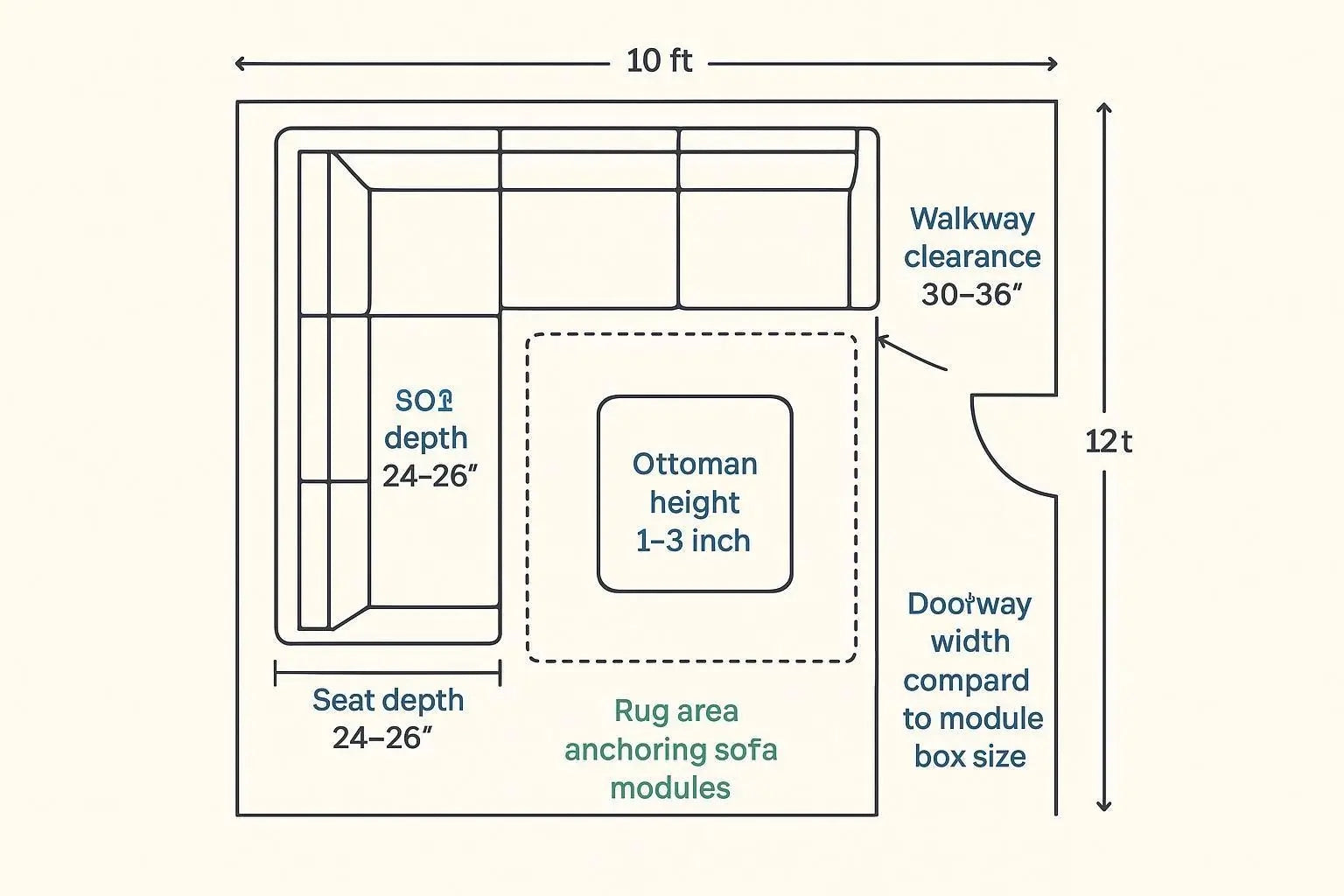 Key Measurements for Modular Sofa Layout Planning
| Measurement | Recommended Range | Notes |
| Walkways | 30-36 in | Allows comfortable traffic flow around seating |
| Doorways | Measure narrowest point | Ensure large modules can pass |
| Stair clearance | Check height & width | Needed for multi-level delivery |
| Room footprint | Sketch floor plan | Include walls, existing furniture, and clearance |
Interior designers typically recommend maintaining 30-36 inches of walking clearance around living room furniture. These measurements help determine how many modules can fit and where the ottoman should be positioned within the seating layout.
Tips:- Use graph paper or digital room planners to test layouts.
- Consider future additions: extra modules or a larger ottoman.
If you're deciding whether the deeper, lounge-first profile is actually right for your space and posture, see is a cloud modular sofa worth it.
Step 2: Choose the Right Seat Depth and Ottoman Height
Seat depth and ottoman height strongly influence how comfortable a modular sofa feels for lounging, upright sitting, or casual seating.
Choosing the correct proportions ensures the ottoman works naturally as a footrest, coffee table, or extra seat.
Recommended Seat Depth for Modular Sofas| Type | Recommended Depth | Best For |
| Lounge / deep seating | 40-45 in | Relaxed reclining, movie nights |
| Upright / structured seating | 21-23 in | Reading, working, formal sitting |
Deeper modular sofas encourage lounging, while standard seat depths provide better back support for upright posture. For more details about seat depth and comfort ergonomics, see our ergonomic sofa measurement guide.
Recommended Ottoman Height for Modular Sofas| Use Case | Sofa Seat Height | Recommended Ottoman Height | Notes |
| Chaise-style footrest | 18-20 in | 1-3 in lower than sofa | Supports legs without strain |
| Coffee table | 18-20 in | 16-18 in | Stable tray placement |
| Extra seating | 18-20 in | Same or slightly lower | Comfortable for guests |
When ottoman height aligns with sofa seating height, the modular layout feels balanced and easy to use.
Tips:- Adjustable or movable ottomans allow switching between chaise, table, or extra seat.
- For lounge-first setups, deeper seats and slightly lower ottomans provide optimal comfort.
Step 3: Plan the Best Modular Sofa Layout for Your Room
Planning the layout ensures a modular sofa and ottoman configuration fits the room size while maximizing seating capacity.
Different room widths support different modular sofa shapes and ottoman placements.
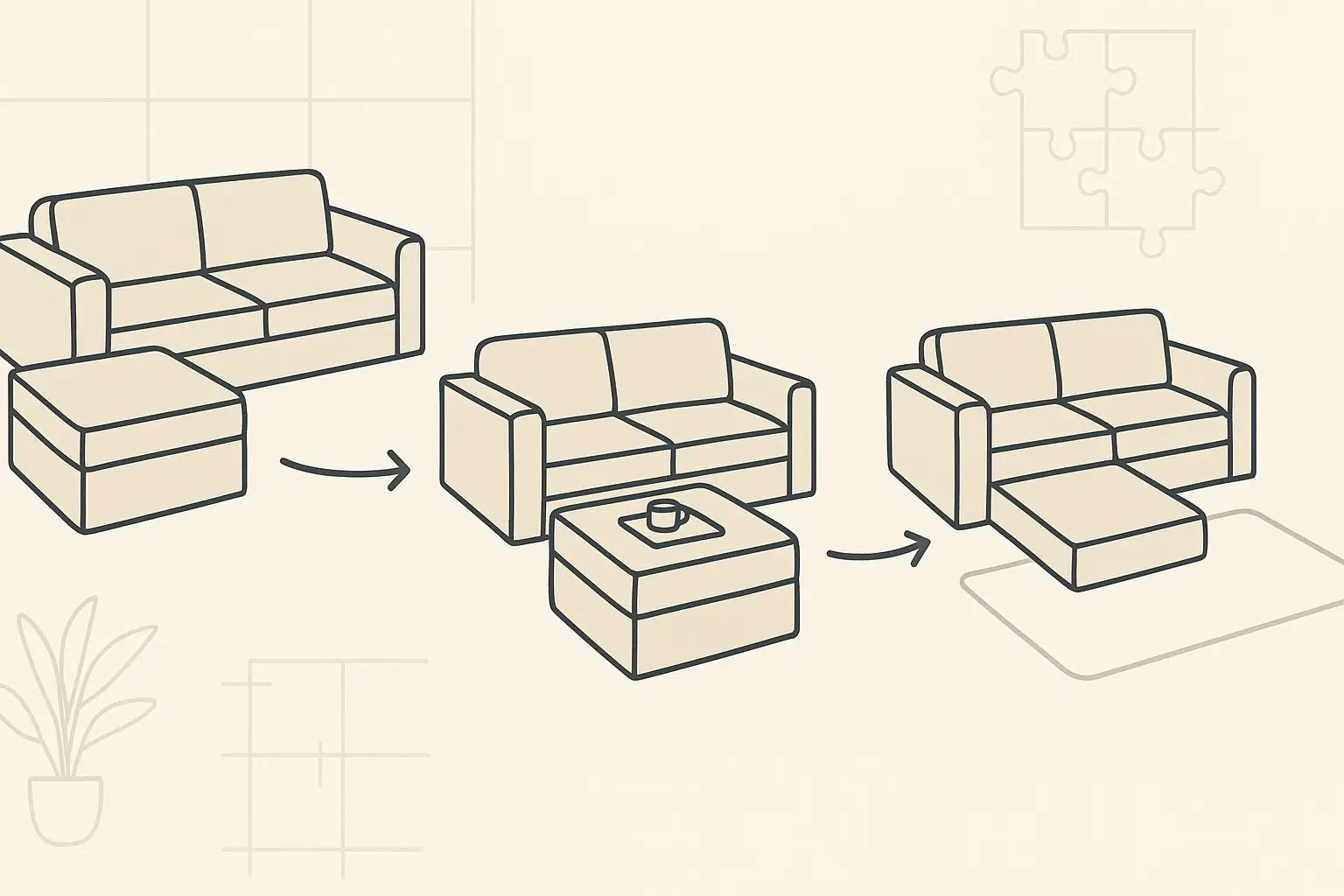 Recommended Modular Sofa Layouts by Room Width
| Room Width | Layout | Modules | Ottoman Function |
| 9-10 ft | Compact L | 2 seat modules + corner | Chaise footrest without fixed chaise |
| 11-13 ft | L or small U | 3-4 seats + corners | Coffee table by day; chaise or extra seat for movie nights |
| 14-16+ ft | Wide U or pit | 5-7 seats + corners | Center “island” ottoman for games, storage hub |
The ottoman placement can change how the living room functions, switching between lounging, conversation seating, or table use.
Tips:- Chaise Layout: Place ottoman beside an end seat for extended lounging.
- Centered Ottoman: Functions as a table and extra seating during gatherings.
- Storage Ottoman: Keeps blankets, toys, and accessories out of sight while accessible.
- Internal link placeholder: How to choose a modular sectional sofa
Step 4: Choose Durable Materials for Long-Lasting Comfort
Durable materials help a modular sofa and ottoman remain comfortable, supportive, and visually appealing for years.
Frame construction, cushion density, and upholstery fabrics all affect durability.
 Common Frame Materials in Modular Sofas
| Frame Type | Benefit | Notes |
| Kiln-dried hardwood | Long-term strength | Removes moisture to prevent warping |
| Plywood (high-quality) | Reliable support | Multi-layered veneers for stability |
| Steel | High durability | Resistant to bending over time |
| Cushion Type | Density | Usage / Notes |
| Residential foam | 1.8-2.5+ lb/ft³ | Higher density holds shape longer, lower density feels plusher |
| Everyday family | 2.0-2.4 lb/ft³ | Balances comfort & lifespan for daily use |
| Cloud-like | HR foam core 35 kg/m³ + fiber/feather topper | Soft, sink-in feel; needs regular fluffing |
Suspension Systems: Webbing, sinuous springs, or grid systems maintain support and prevent sagging.
Performance Fabrics: Choose upholstery fabrics that resist abrasion, stains, and fading. Check Martindale (20,000-30,000 cycles) or Wyzenbeek (15,000-20,000 double rubs) ratings for typical residential use.
According to the Association for Contract Textiles (ACT), fabrics rated above 15,000 double rubs are generally considered suitable for heavy residential seating applications.
For cushion materials, many modern sofas use CertiPUR-US® certified foam, which ensures the foam meets standards for durability, emissions, and chemical safety.
Step 5: Check Delivery and Return Policies
Delivery methods and return policies can affect the overall buying experience for modular sofas.
Understanding shipping details helps avoid problems during delivery and installation.
 Modular Sofa Delivery Methods
| Module Size | Shipping Method | Notes |
| Small units & ottomans | Parcel carriers | Standard shipping service |
| Large sectional sets | Freight / LTL | Exceeds parcel size limits, may require special handling |
Because modular sofas ship in separate pieces, they often pass through doorways more easily than traditional sofas.
Check these policies before purchasing:
- Return windows and conditions
- Warranty coverage
- Original packaging requirements
If you want a concrete example of a storage ottoman with removable covers in the same family as modular sectionals, see WJS's description of a storage design in the Deluxe ottoman page with washable covers.
Step 6: Match the Configuration to Your Lifestyle
The best modular sofa and ottoman layout depends on how the living room is used every day.
Different households prioritize different features when choosing modular seating.
 Modular Sofa Layouts for Families
- Use durable frames and performance fabrics
- Storage ottomans for toys, blankets, or daily items
- Compact L or U configurations
- Movable ottomans for footrest or extra seat
- Symmetrical U-shaped layouts for visual balance
- Textured fabrics (bouclé, woven) for tactile depth and modern aesthetics
Matching the sofa configuration to your lifestyle ensures better comfort and long-term satisfaction.
Modular Sofa and Ottoman Buying Checklist
Choosing the right configuration depends on how your household actually uses the living room.
| ✅ | Step | Action | Details / Tips |
| ☐ | 1 | Measure Room | Include doorways, walkways, stair clearance; maintain 30-36 in walkways |
| ☐ | 2 | Decide Sofa Depth | 40-45 in for lounging; 21-23 in for upright sitting |
| ☐ | 3 | Choose Ottoman Function | Chaise extension, coffee table, extra seat, or storage |
| ☐ | 4 | Verify Materials | Frame (hardwood/plywood/steel), cushion density (~2.0-2.4 lb/ft³), fabric abrasion |
| ☐ | 5 | Consider Delivery & Returns | Check multi-box shipping, LTL freight, return window, original packaging requirements |
| ☐ | 6 | Match Lifestyle | Families: storage + performance fabrics; Apartments: compact L; Design-focused: symmetrical U |
Common Mistakes When Choosing a Modular Sofa and Ottoman
Avoiding common mistakes helps ensure your modular sofa and ottoman remains comfortable and functional long-term.
- Ignoring room measurements → causes cramped spaces or blocked walkways.
- Choosing the wrong seat depth → affects comfort.
- Neglecting ottoman function → reduces flexibility.
- Selecting low-quality materials → shortens sofa lifespan.
- Skipping delivery and return checks → surprises at arrival.
Conclusion
Choosing the right modular sofa and ottoman starts with measuring your room, planning the layout, and deciding how you'll use the ottoman.
Confirm comfort through seat depth and cushion density, choose durable frames and fabrics, and review delivery and warranty policies before purchasing.
By following these steps, your modular sofa and ottoman can adapt seamlessly from daily lounging to entertaining guests. At WJS Home, we design modular seating solutions that combine flexibility, durability, and modern style.