


Introduction
Velvet looks incredible on day one. But what about month six — after the coffee spills, the shedding dog, and the kids using the cushions as a trampoline? Most reviews skip that part. This guide doesn't. We break down exactly what velvet delivers, what it costs you over time, and the one spec that separates a sofa you'll love in three years from one you'll regret in three months. If you're spending $1,500-$3,000 on a sectional, read this first.
Know What Velvet You're Actually Getting First
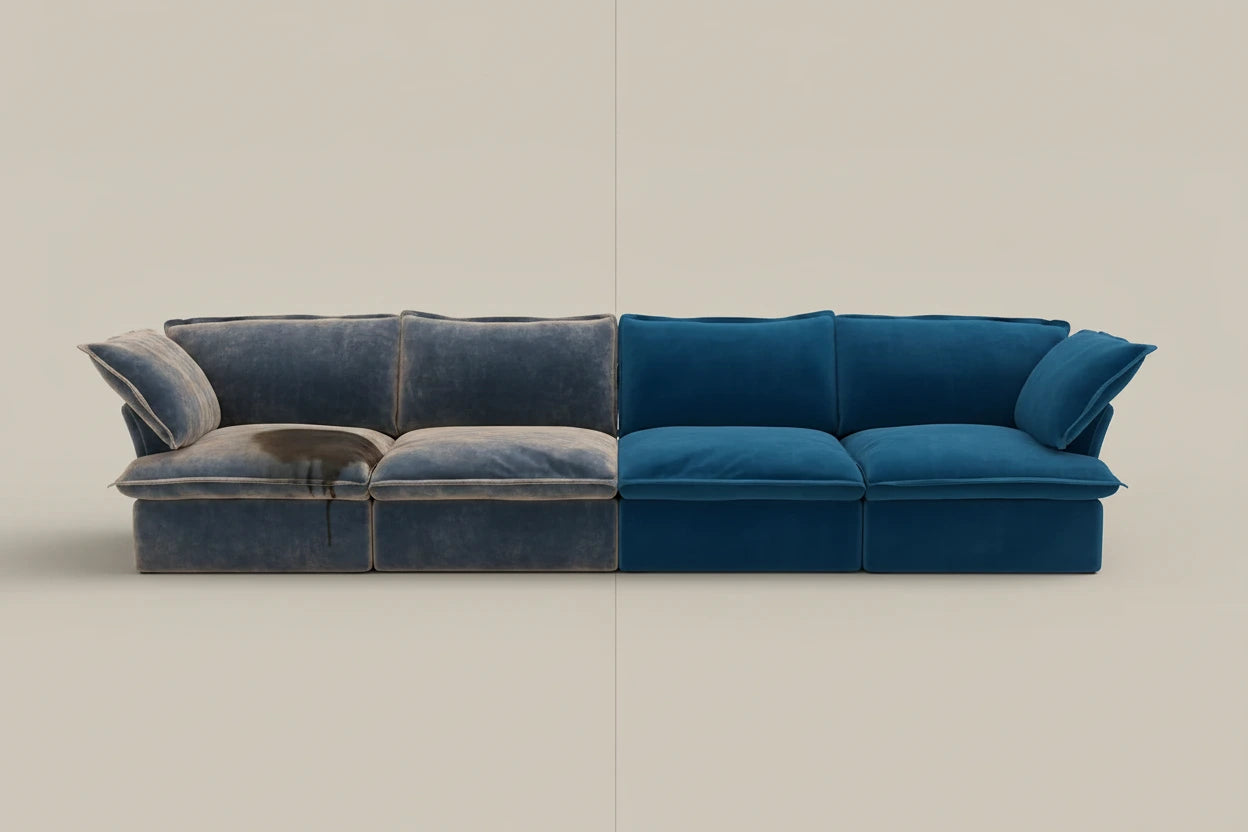
Not all velvet performs the same — buying the wrong type is the single most common reason buyers regret a velvet sofa within the first year. The difference between cotton velvet and performance velvet, and whether covers are washable, will determine your entire ownership experience.
- Cotton velvet is the traditional version — rich, soft, and visually stunning out of the box. It crushes unevenly, absorbs spills, and shows patchy wear after year two.
- Performance velvet is a synthetic or blended construction engineered to replicate the look while resisting staining, crushing, and wear. It's the version that holds up in real households.
If a product listing doesn't specify which type you're getting, assume cotton and ask before buying. Washable covers are the one spec that eliminates velvet's biggest practical weakness — factor that in from day one. See how different sofa fabrics compare on durability and maintenance.
Velvet Sofa Pros and Cons — The Complete Picture
Velvet sectional sofas offer genuine advantages in aesthetics and comfort, but carry real trade-offs in maintenance and durability that vary significantly by construction type. Understanding both sides before purchase is what separates a satisfying long-term buy from an expensive mistake.
Quick-Reference: Velvet Sectional Sofa — Pros & Cons at a Glance
| Pros | Cons |
| 1. Visual depth and warmth that linen and leather can't replicate | 1. Pet hair embeds and requires weekly brushing |
| 2. Softer seated comfort than woven fabrics and leather | 2. Crush marks in high-use zones can become permanent |
| 3. Performance velvet lasts 5-8 years with proper care | 3. Cotton velvet ages unevenly after year two |
| 4. Modular construction — replace one piece, not the whole sofa | 4. Fades faster than microfiber or leather in direct sunlight |
| 5. Washable covers reduce weekly maintenance to 3-5 min | 5. Non-washable velvet carries hidden cleaning costs over time |
| 6. Microfiber outperforms velvet in durability and stain resistance |
The Pros That Actually Matter
Performance velvet, when properly constructed, delivers advantages that justify the price premium over linen and microfiber alternatives. These are the five that consistently show up in long-term owner feedback.

✅ Pro 1: Visual Depth Others Can't Match
Velvet's cut pile construction reflects light directionally, shifting tone as light moves across it in a way no flat-weave fabric replicates. Where linen reads casual and leather reads cold, velvet is warm, layered, and visually rich — it's why velvet keeps appearing in high-end interiors across decades of changing trends. Buyers consistently report it's the one piece in a room that prompts unsolicited compliments, something product photos don't fully capture until you're sitting in front of it.
✅ Pro 2: Softer Comfort Than Most Fabrics
Velvet's dense pile is softer against skin than linen, canvas, or leather — particularly in cooler months when leather feels cold and woven fabrics feel coarse. For households where the sofa sees daily extended use, the tactile difference is noticeable and sustained over time. If you're also considering chenille, here's how chenille compares as a sofa fabric.


✅ Pro 3: Performance Velvet Lasts
The reputation for velvet being fragile applies to cotton velvet, not performance velvet — a well-constructed performance velvet sectional realistically lasts 5-8 years under normal household use. The key variables are pile density, backing construction, and whether the frame is solid or engineered wood.
✅ Pro 4: Modular Pays Off Over Time
A modular sectional means replacing one damaged piece rather than the entire sofa — a $300 fix instead of a $2,000+ replacement. It also means the configuration adapts to a new floor plan if you move, rather than becoming a piece that no longer fits the room. Browse the 10 best sectional sofas of 2025 for top-rated modular picks.


✅ Pro 5: Washable Covers Change Everything
Non-washable velvet means professional dry cleaning at $80-$150 per visit, two to four times per year in active households. Washable covers convert that into a 3-5 minute weekly wipe-down and a machine wash cycle when needed — over five years, the cost difference is $400-$1,200. See the best washable sofas worth buying if this is your top priority.
The Cons Buyers Discover Too Late
Velvet's trade-offs are real and specific — most of them only become visible after several months of daily use. These six are the ones that consistently catch buyers off guard.
❌ Con 1: Pet Hair Embeds Differently
Velvet's pile traps pet hair below the surface layer in a way smooth fabrics don't, and a lint roller only removes what's on top. Weekly brushing with a rubber brush is non-negotiable for pet-owning households — skip it for two to three weeks and you'll see visible matting that's difficult to reverse. Read the full guide on velvet sofas and pet hair management.


❌ Con 2: Crush Marks Don't Always Recover
Velvet pile compresses under sustained pressure — from sitting in the same spot repeatedly or from objects left on the surface — and deep crush marks in high-use zones can become permanent texture changes that no amount of steaming fully reverses. This is a structural limitation of the material, not a quality defect, and it affects both cotton and performance velvet.
❌ Con 3: Cotton Velvet Ages Unevenly
High-contact zones lose pile density faster than low-contact areas, creating a patchy appearance that becomes visible around the 18-24 month mark in active households. This is the material behaving as expected under use — not a defect — but it's rarely disclosed clearly at point of sale.


❌ Con 4: Fades Faster In Direct Sun
Velvet's pile structure makes it more susceptible to UV degradation than microfiber or leather — the fibers lose dye at an uneven rate, and the directional color shift that makes velvet beautiful becomes a liability when fading sets in. Neither cotton nor performance velvet is a good choice for a sofa in direct, unobstructed sunlight for more than two to three hours daily.
❌ Con 5: Non-Washable Carries Hidden Costs
Factor in dry cleaning ($80-$150 per visit), annual fabric protector reapplication ($50-$100), and the realistic possibility of one unrepairable stain requiring reupholstering ($600-$1,500) or early replacement. Over five years, a non-washable velvet sectional can cost $800-$2,000 more in total than a washable-cover alternative.


❌ Con 6: Microfiber Outperforms Velvet In Key Areas
Microfiber resists stains, releases pet hair more easily, and fades more slowly than velvet under UV exposure. For households where maintenance minimization is the primary concern, microfiber is the more practical choice — velvet wins on aesthetics and comfort, microfiber wins on durability and ease of care.
Who Should (and Shouldn't) Buy a Velvet Sectional
A velvet sectional is the right choice for design-forward households that prioritize aesthetics and can commit to basic weekly maintenance — and the wrong choice for anyone expecting zero upkeep or living in a high-sunlight room. Knowing which category you're in before purchase saves a significant amount of money and frustration.
Good fit:
- Design-forward households where the sofa is a deliberate aesthetic centerpiece
- Medium-to-low traffic living rooms willing to commit to weekly brushing and occasional washing
- Families with kids or pets — specifically with washable-cover performance velvet
- Airbnb hosts who want visual impact: performance velvet in a deep colorway handles guest turnover better than it looks like it should
Not a good fit:
- Anyone expecting zero maintenance — velvet is never that, even with washable covers
- Rooms with strong, unobstructed direct sunlight hitting the sofa for more than two to three hours daily
- Households that move frequently — velvet sectionals are heavy and the pile shows handling damage
So, is a velvet sectional worth it?
Yes for design-focused homes that can handle light weekly maintenance. No for anyone expecting zero upkeep or dealing with heavy direct sunlight. For most households, washable-cover performance velvet is the safest call. If you're also considering a chaise configuration, the sectional with chaise buying guide covers what to look for.
3 Velvet Sectional Sofa Recommendations by Use Case
Three options across different price points and use cases — one entry-level, one mid-range built for active households, one premium for design-first buyers. Each has a clear best-fit scenario and real trade-offs worth knowing before you buy.
Option 1 — Article Abisko 91" Velvet Sofa
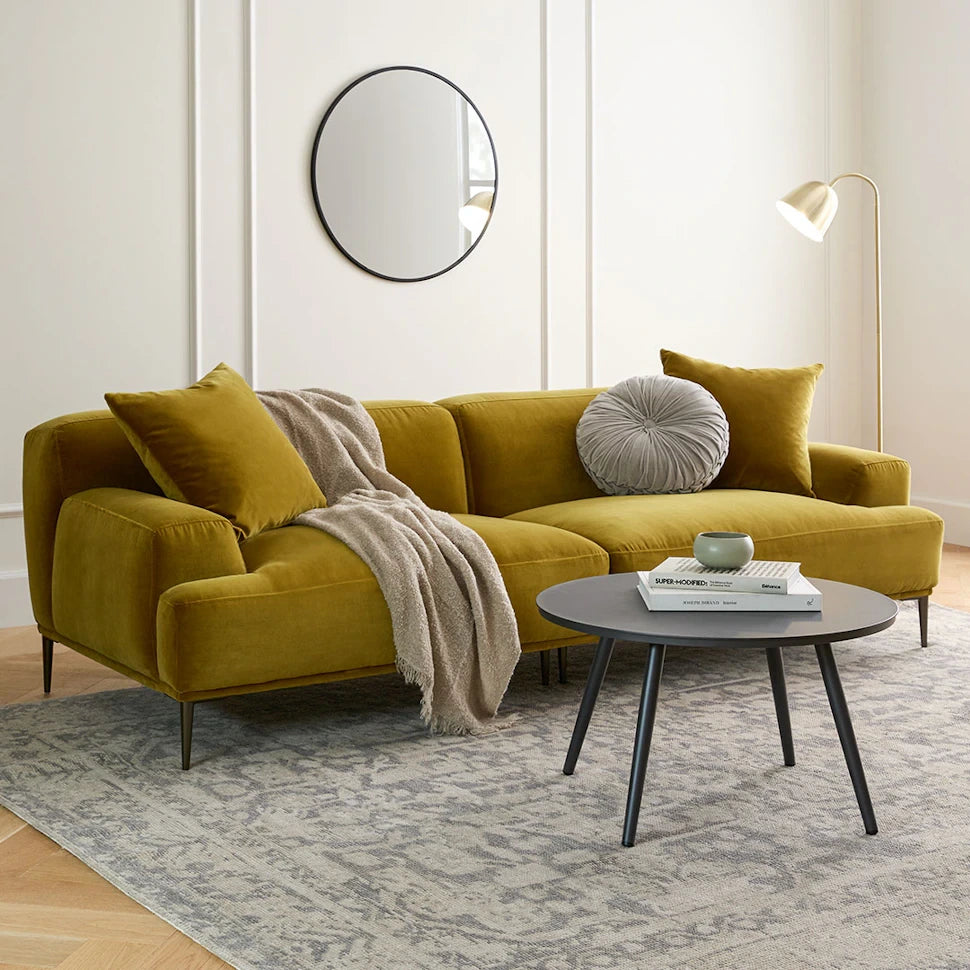
Best for: small apartments, walk-ups, and buyers who want oversized comfort in a compact footprint
Renters in tight spaces consistently call this one out for solving a real problem — it moves through narrow stairways and small doorways in two pieces, then comes together in about 15 minutes to feel like a proper, full-sized sofa. Buyers in studio and one-bedroom apartments note that it reads as much larger than expected once in the room, without overwhelming the space. The Plush velvet holds up well to daily use, and owners report that blotting spills quickly keeps it looking clean without much effort. For a primary sofa in a compact living room, it's a setup people tend to stick with.
Price: $1,299
Pros: performance velvet (50,000 rubs); compact yet oversized design; easy-to-move two-piece construction; durable kiln-dried wood frame; includes pillows; clean Scandinavian aesthetic
Cons: non-modular with limited configuration flexibility; requires dry cleaning for tougher stains; fixed cushions limit adjustability
Customer Reviews: ★★★★☆ (4.3/5) — "Perfect for a small apartment but still feels big and comfortable. The velvet is soft and holds up well over time."
| Specification | Details |
| Configuration | Standard sofa |
| Dimensions | 91" W x 35" D x 28" H |
| Upholstery | 100% polyester / Performance velvet |
| Frame | Kiln-dried larch / Plywood / Brushed aluminum |
| Cushions | High-density foam / Polyester fiber (fixed seat & back) |
| Seating Capacity | 3-4 people |
| Assembly | Partial assembly (approximately 15 minutes) |
| Delivery | 3- 14 business days / Free shipping |
| Trial / Returns | 30 days / Retail return policy |
| Warranty | 1 year / Limited warranty |
Option 2 — WJS Home Blue Velvet Sectional Sofa
 BLOG-ONLY: Get 10% OFF
Best for: families, active households, and buyers who want long-term flexibility with washable performance velvet
Buyers with kids and pets point to the washable slipcover system as the deciding factor — velvet that can go in the washing machine changes the calculus entirely for high-traffic households. The modular build means layouts can shift when rooms change, and the storage ottoman earns its footprint as a practical daily bonus rather than just a styling add-on.
Price: $1,430
Pros: machine-washable performance velvet covers; modular configuration flexibility; solid wood frame; storage ottoman included; replaceable individual sections; multiple colorways available
Cons: heavier than non-modular alternatives, which makes rearranging or moving more involved; limited customer reviews available
Customer Reviews: ★★★★☆ (4.6/5) — "The washable covers are the reason I bought this over everything else. Three kids and a dog later, it still looks like it did when it arrived."
| Specification | Details |
| Configuration | L-shaped sectional (modular) / Multiple configurations available |
| Dimensions | 122.7" W x 83.4" D x 36.6" H |
| Upholstery | Velvet / Washable slipcovers |
| Frame | Solid wood |
| Cushions | Down-filled / Foam + fiber blend |
| Seating Capacity | 3 people (this configuration) |
| Assembly | Partial assembly (under 25-30 minutes) |
| Delivery | 7-15 business days / Free shipping |
| Trial / Returns | 30 days |
| Warranty | 2 years (material and workmanship) |
Option 3 — West Elm Harmony Modular Multi-Piece Sofa
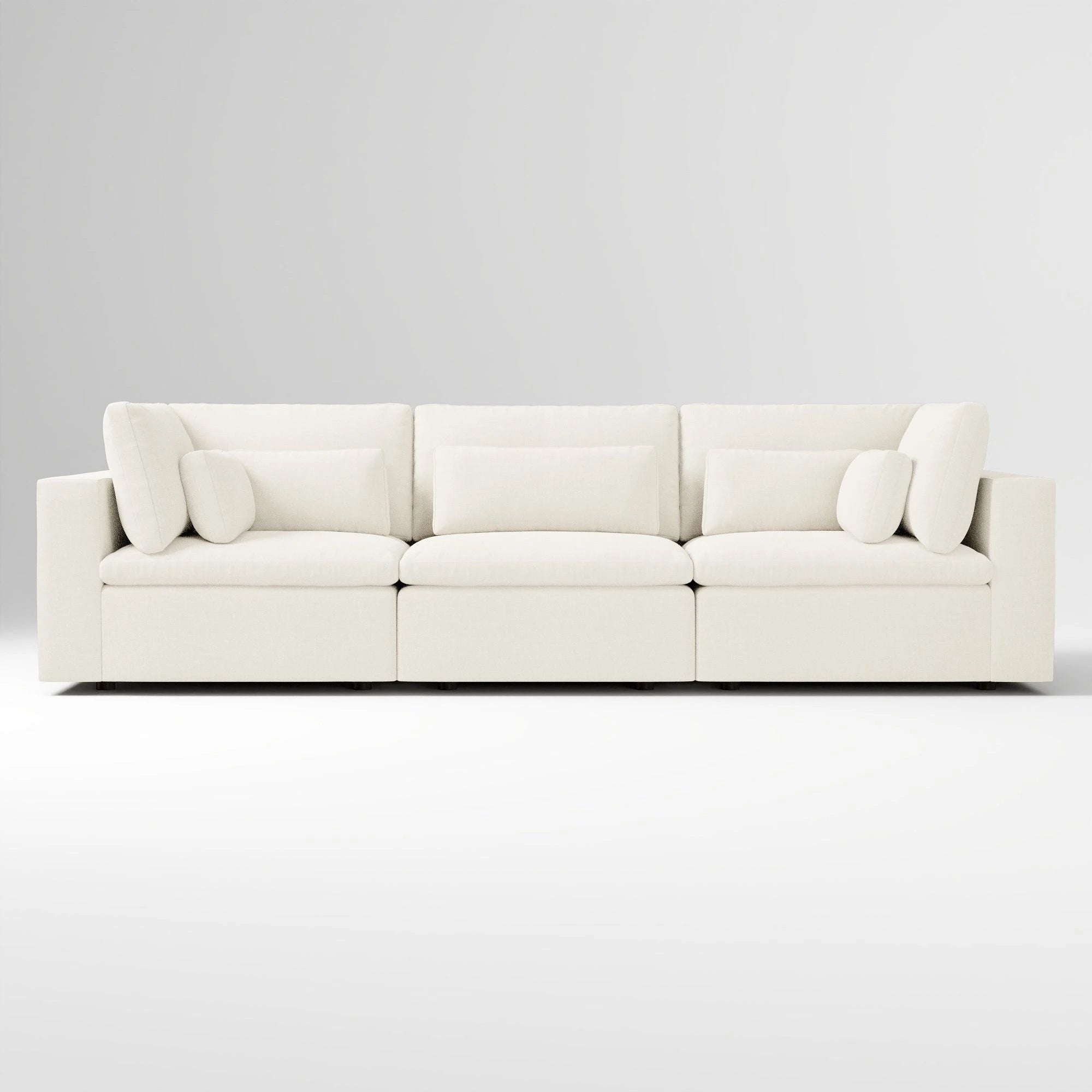
Best for: design-forward buyers prioritizing finish quality and aesthetics over long-term practicality
Buyers who choose the Harmony tend to describe it as the sofa they'd been looking for for years — the kind of piece that anchors a room and gets noticed by guests. Reviewers consistently call out the down cushion softness and the upholstery finish as noticeably above what they'd seen at similar price points. The trade-offs come up too: covers are non-washable on most configurations, and lead times mean planning ahead. For a considered, low-traffic living room treated as a long-term investment, it delivers on the aesthetic promise.
Price: $1,838.40
Pros: premium down cushion construction; refined silhouette; wide range of configurations and fabric options; hand-built frame with hand-finished upholstery; modular flexibility
Cons: non-washable covers on most configurations; 1-4 week lead time; higher price point than alternatives
Customer Reviews: ★★★★☆ (4.4/5) — "Genuinely the most beautiful piece of furniture I've owned. The velvet color is richer in person than in photos. That said, I'd think twice if I had young kids."
| Specification | Details |
| Configuration | Modular / Multiple configurations |
| Dimensions | 86"W x 43"D x 37"H |
| Upholstery | Performance chenille / Linen weave / Boucle / Multiple fabric options |
| Frame | Hand-built solid wood |
| Cushions | Down + foam blend (pillowy soft) |
| Seating Capacity | 2-4+ people (varies by configuration) |
| Assembly | White Glove Service |
| Delivery | 4-5 business days / Free shipping |
| Trial / Returns | 30-dasy return policy |
| Warranty | Non |
Conclusion
Don't ask whether velvet is a good sofa fabric — ask whether the velvet sofa you're looking at has machine-washable covers. That single spec is what separates a manageable, long-lasting piece from a high-maintenance liability. At WJS Home, the modular velvet sectional is built around exactly that combination: performance upholstery, washable covers, and a hardwood frame built for real households. That's the version worth buying.


