


The Sofa Features You Think You Need (But Probably Don't)

Introduction
You've been scrolling for weeks. Deep seats, cloud cushions, a sofa bed just in case, modular layouts that promise to "grow with your space" — every feature sounds like a good idea. But most sofa regrets aren't about missing a clever function. They're about buying the wrong size, the wrong seat depth, the wrong fabric, or a feature that sounded practical but never got used.
This guide helps you cut through the noise: which sofa features are regularly overestimated, and which ones are genuinely worth your money.
Quick Answer: Sofa Features You Think You Need But Don't
Most people overestimate sofa beds, extra-deep seating, and flexible add-ons — and end up paying for features they rarely use. The things that feel exciting in a showroom often matter far less than size, fabric durability, and comfort fit once you're actually living with the sofa every day.
| Often overestimated | Why |
| Sofa bed for "just in case" use | Guests stay rarely — you pay a premium for a mechanism that's used a handful of times a year, often at the cost of everyday comfort |
| Extra-deep, ultra-soft seating | Feels indulgent in the showroom but can cause poor posture and back strain when you're sitting on it daily for hours |
| Fancy extras or trend-led details | Decorative stitching, statement legs, and on-trend colours date quickly — and rarely justify the price bump |
In the sections below, we break down the most commonly overestimated features, and what actually matters when choosing a sofa.
The Sofa Features Most People Overestimate
Most sofa shoppers don't regret skipping a feature — they regret paying extra for one they never actually use. Here are the three types of features that consistently disappoint in real life.
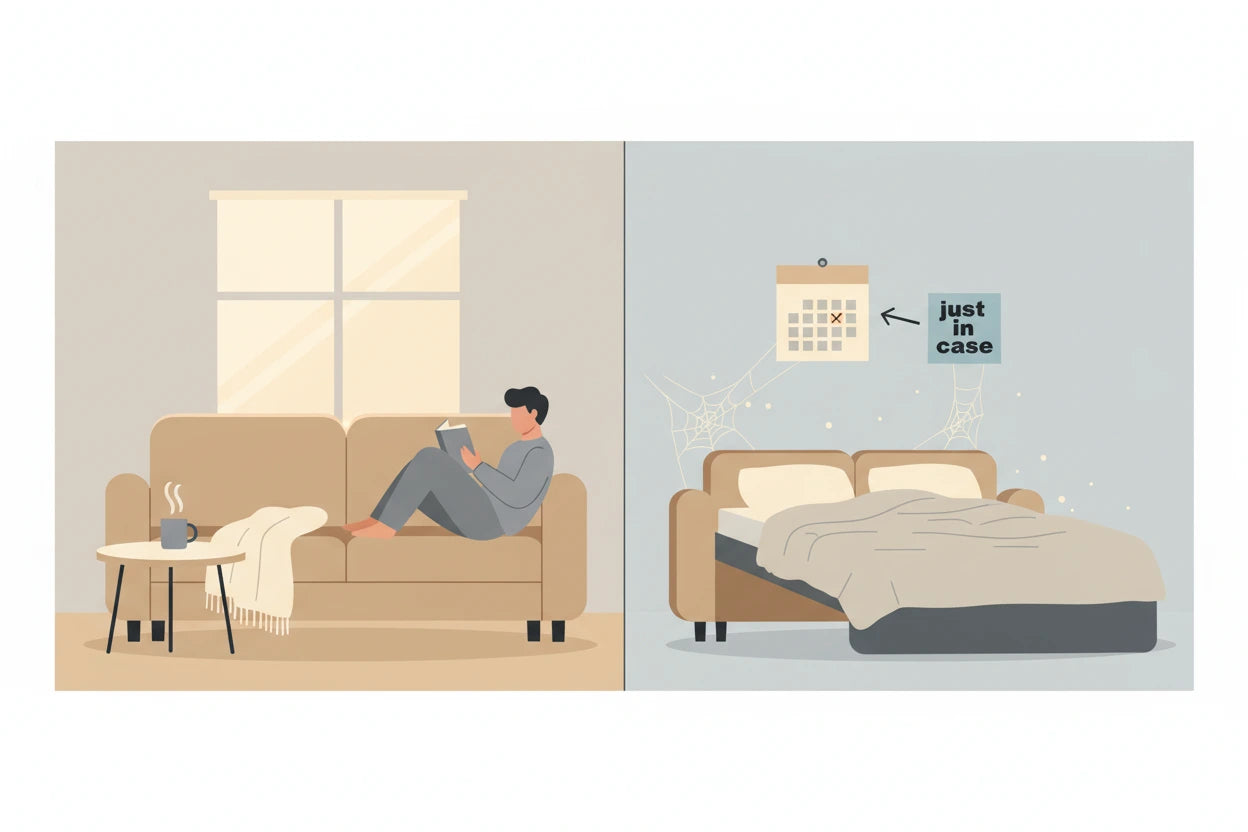
Buying a Sofa Bed "Just in Case"
A sofa bed is only worth considering if guests stay over regularly — otherwise, you're giving up daily sitting comfort and floor space for a sleeping option you'll rarely unfold. The folding mechanism sits directly beneath the cushions, which is exactly why sofa beds often feel firmer and less comfortable to sit on than a standard sofa at the same price. If the honest answer is "just in case," that trade-off rarely pays off.
Real trade-offs that often get overlooked:
- Mattress quality: Most built-in mattresses are thin and unsupportive for actual sleep — fine for one night, uncomfortable for anything longer
- Mechanism durability: The fold-out mechanism is the first thing to wear out or stiffen, often within a few years of regular use
- Overall weight: A standard 3-seater sofa typically weighs 100-175 lbs. A comparable sofa bed usually weighs 200-350 lbs — nearly double — which makes rearranging or moving significantly harder
- Sitting vs. sleeping trade-off: Finding a sofa bed that does both well usually means spending considerably more than you planned
Extra-Soft or Deep Seating Isn't Always Better
Physiotherapists and chiropractors consistently note that seats which are too soft cause the pelvis to tilt backward, collapsing the lumbar spine's natural curve and placing uneven pressure on spinal discs. When shopping, treat foam density as your durability signal: 1.8 lbs per cubic foot is the industry minimum — foam below that typically loses its shape within 1-3 years of regular use. For seat depth, 20-22 inches suits most adults; a practical test is to sit fully back and check for 1-2 inches of clearance between the seat edge and the back of your knees.
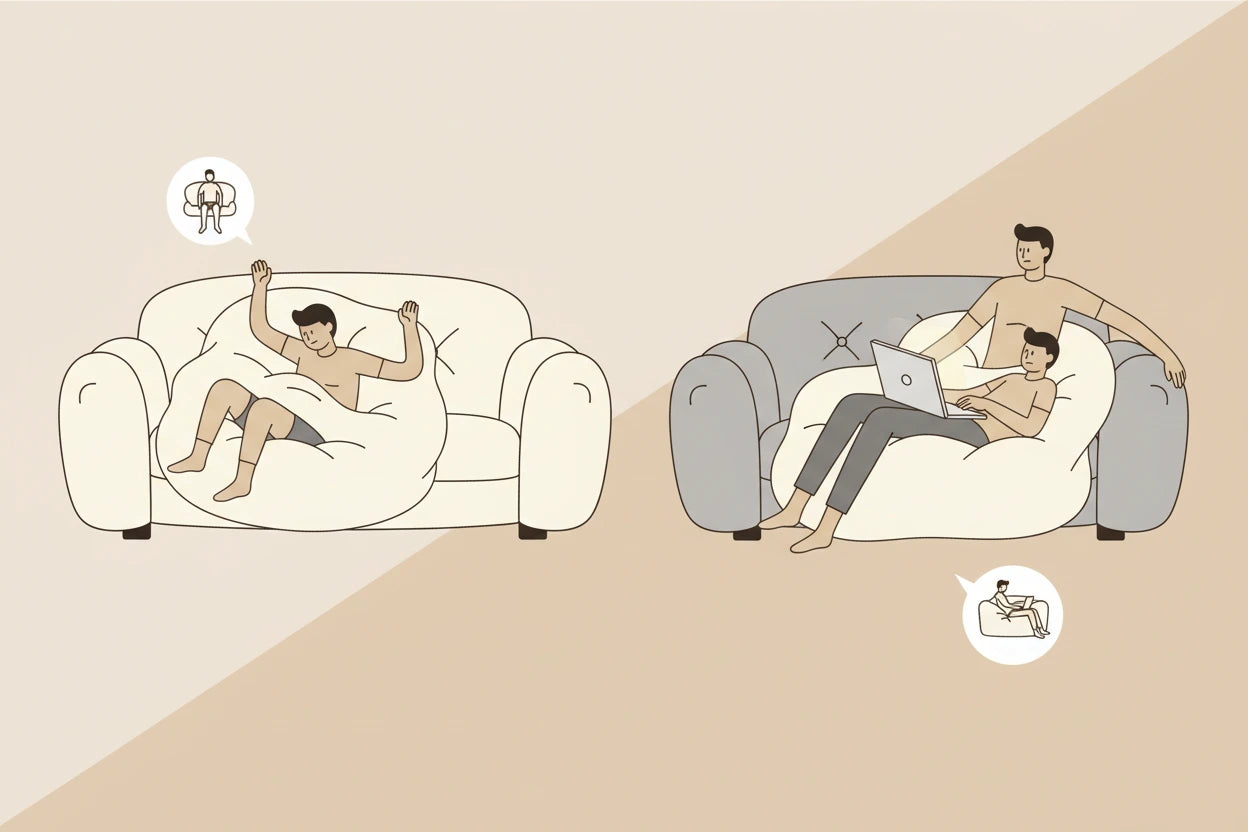
Key things to think about before going extra-deep or extra-soft:
- Who actually sits on this sofa every day?-Not just you — consider everyone in the household
- How do you typically sit?-Upright for TV, slouched for movies, legs up? Different habits need different support
- Soft cushions flatten over time- what feels cushioned at purchase can feel deflated within a year or two, depending on fill quality
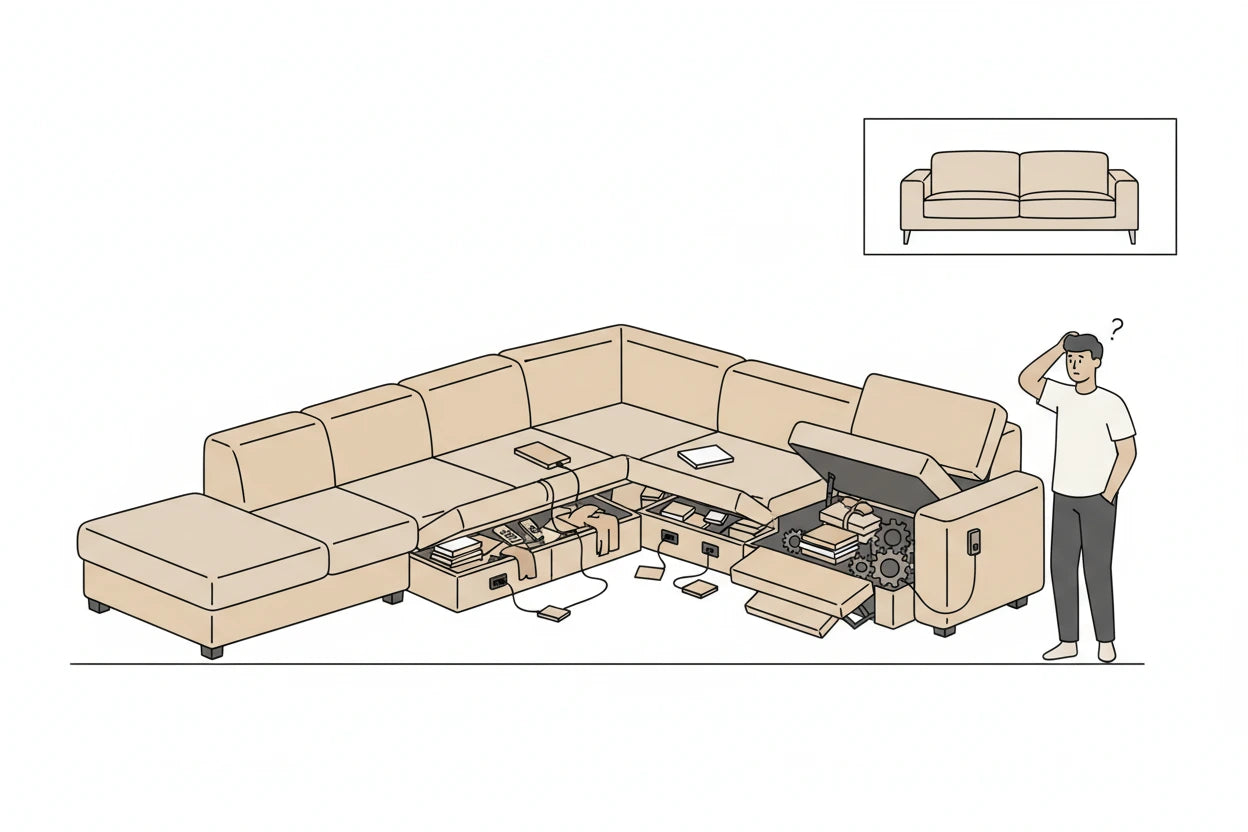
That Sound Flexible Can Add More Compromise Than Value
Modular layouts, built-in storage, chaise extensions, and tech add-ons all promise flexibility — but in practice, more moving parts means more weight, more floor space lost, and more things that eventually fail or go out of style.
The honest question is whether any of it solves a problem you actually have every week. For a practical look at when modular really earns its cost, this-comparison of compact vs. modular sofas is worth reading before you decide.
What tends to disappoint in practice:
- Modular add-ons: Adaptable in theory, but if your floor plan isn't changing, you're paying for flexibility you'll never use
- Built-in storage: Awkward to access, makes the sofa harder to move, and rarely as practical as a separate storage piece
- Oversized chaises: Can dominate a room and restrict traffic flow more than they contribute to comfort
- Tech extras: Charging ports and LED features feel convenient until they stop working — and there's usually no easy fix
What's Actually Worth Paying For in a Sofa
The features that make a sofa genuinely worth it aren't the ones that photograph well. They're the ones you'll notice — or seriously regret skipping — every single day.
The Right Size for Your Room and Delivery Path
Getting the dimensions right is the single most practical decision you'll make when buying a sofa, and one of the most commonly skipped. A sofa that dominates the room, blocks a walkway, or doesn't fit through the front door on delivery day is a problem no amount of comfort or style can fix.
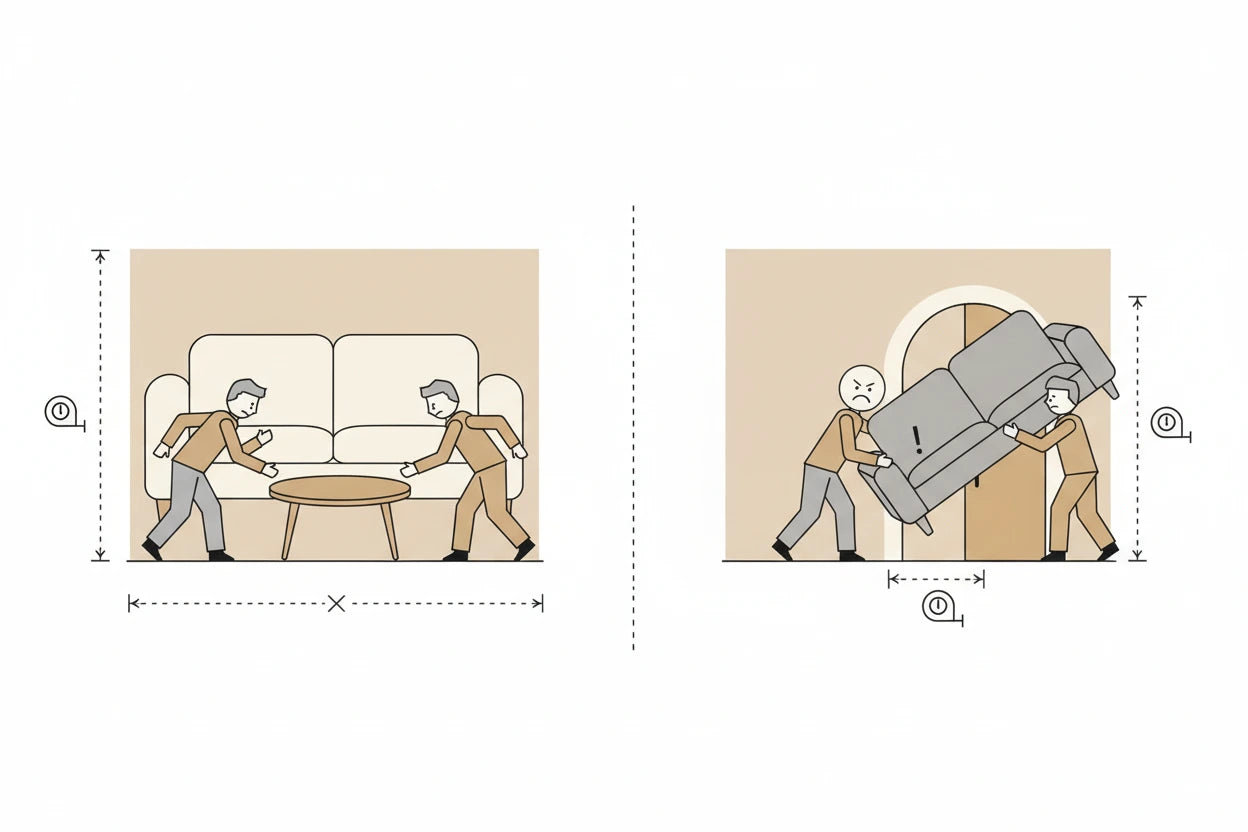
Before ordering anything, measure:
- Room dimensions including clearance around other furniture and traffic flow through the space
- Walking space — allow at least 30-36 inches around the sofa so the room still feels liveable
- Doorways, hallways, staircases, and elevator turning clearance — this is where many deliveries fail at the very last step
- The fully extended footprint if you're buying a sofa bed — measure from the sofa back to where the foot of the mattress will land when open
A sofa that fits your actual room will always feel better to live with than one that looked stunning in a larger showroom or a styled product photo — use this-sofa measurement guide-to get the numbers right before you order.
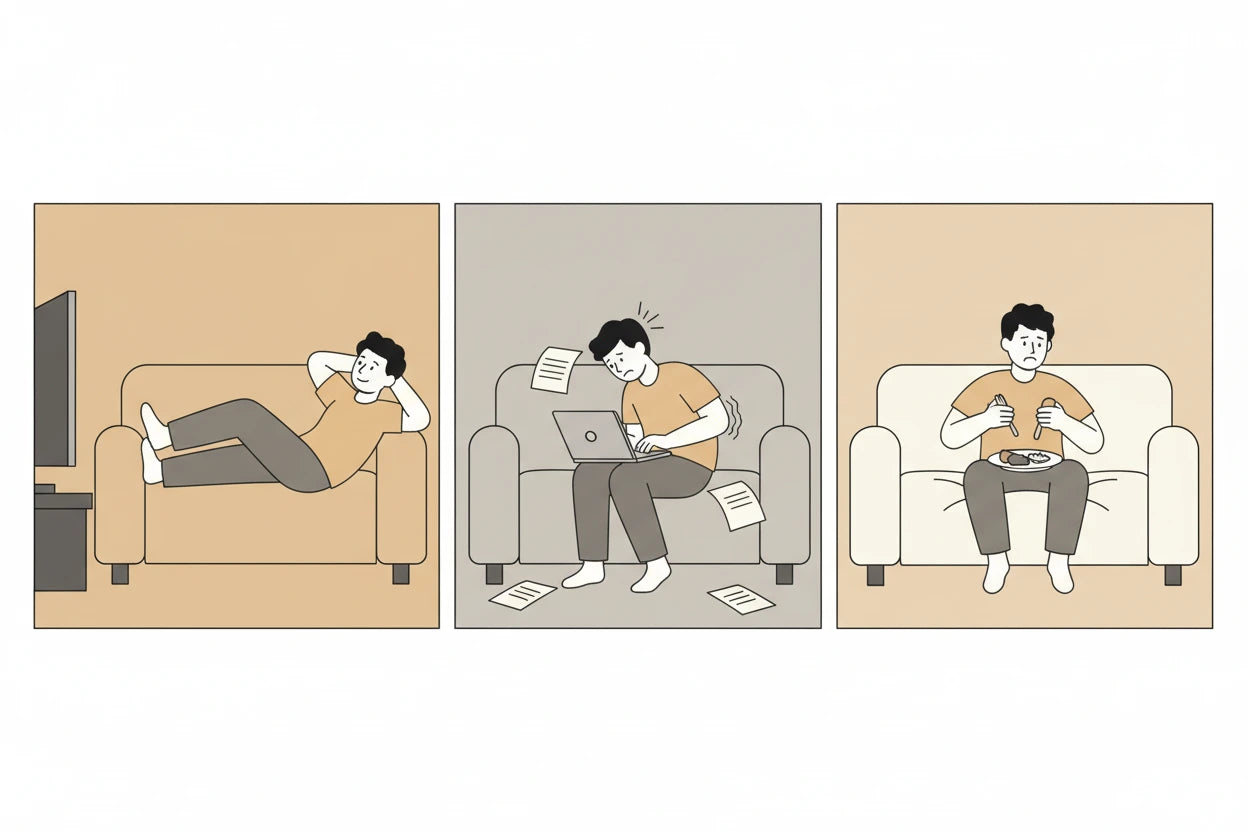
Comfort That Matches How You Actually Use It
Comfort isn't one thing — it depends entirely on how you sit, how long you sit, and who else is sitting with you. A sofa that works perfectly for movie-night lounging can be genuinely exhausting for someone eating dinner on it or working from home.
Rather than going by feel alone in the store, think about your real daily habits:
- Upright sitters (working, eating, reading) need firmer back support and a seat depth that keeps their feet on the floor — typically 20-22 inches
- Dedicated loungers and taller people tend to prefer deeper seats in the 22-26 inch range, with a reclined back angle
- Seat height matters more than most people realize — 17-19 inches suits most adults comfortably; too low makes standing up a workout, especially for older users
- Arm height affects how you rest and whether the sofa feels proportionate to your body
For a closer look at how seat depth interacts with comfort and body type, this seat depth guide breaks it down practically.
Durable Construction and Cushion Support
Everything that determines how long a sofa lasts is invisible in a showroom, which is exactly why it's so easy to overlook. The frame, the cushion fill, and the support system are what separate a sofa that holds its shape for a decade from one that sags within two years.
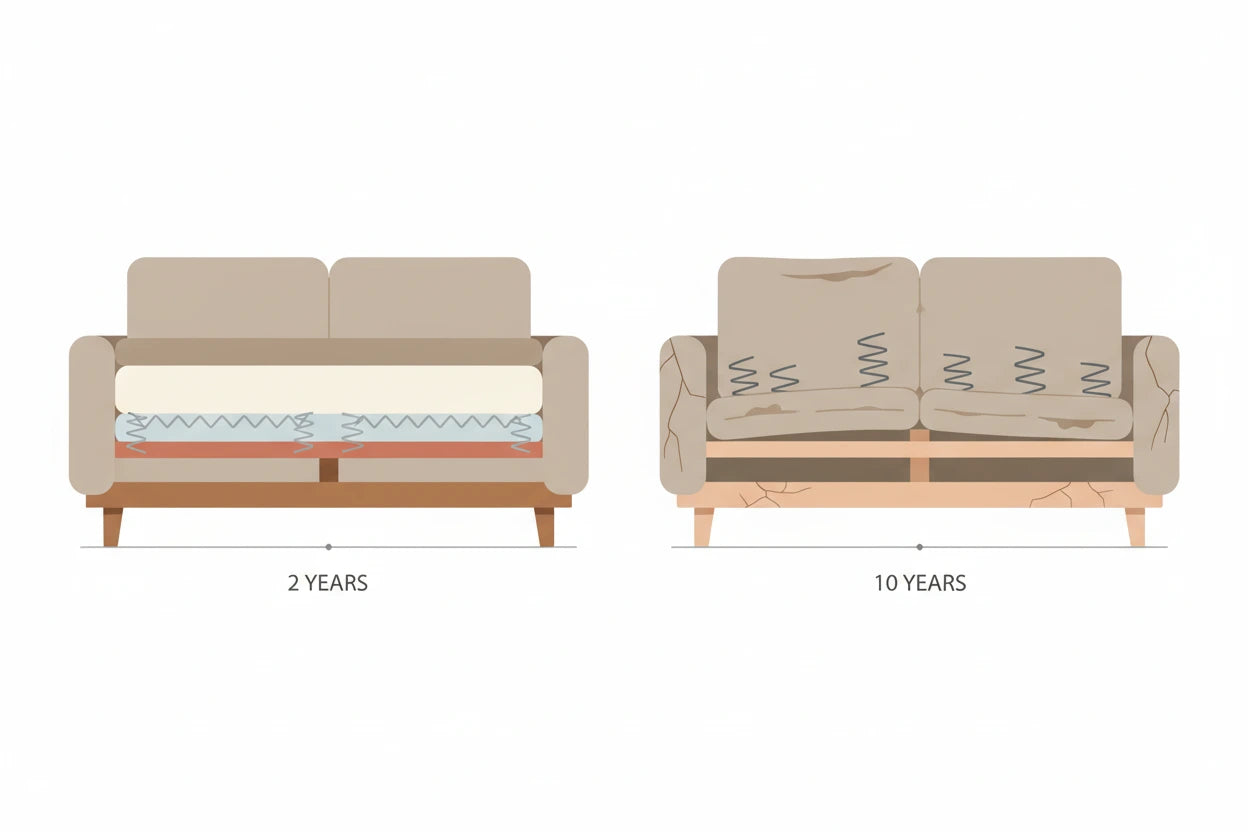
What to ask about (or look for) before buying:
- Frame material: Kiln-dried hardwood with reinforced joints outlasts softwood, particleboard, or metal composite frames
- Cushion fill: High-resilience foam holds its shape far longer than low-density foam; a foam core wrapped with a fiber or feather layer adds comfort without sacrificing support
- Support system: Sinuous springs or eight-way hand-tied coils provide better long-term performance than simple webbing alone
- Reversible and removable cushions: These extend the life of the sofa significantly and are a genuine quality signal, not just a convenience feature
For a detailed look at how different cushion fills compare in terms of comfort and longevity, this comparison of down cushions vs. foam cushions is genuinely useful reading before you decide.
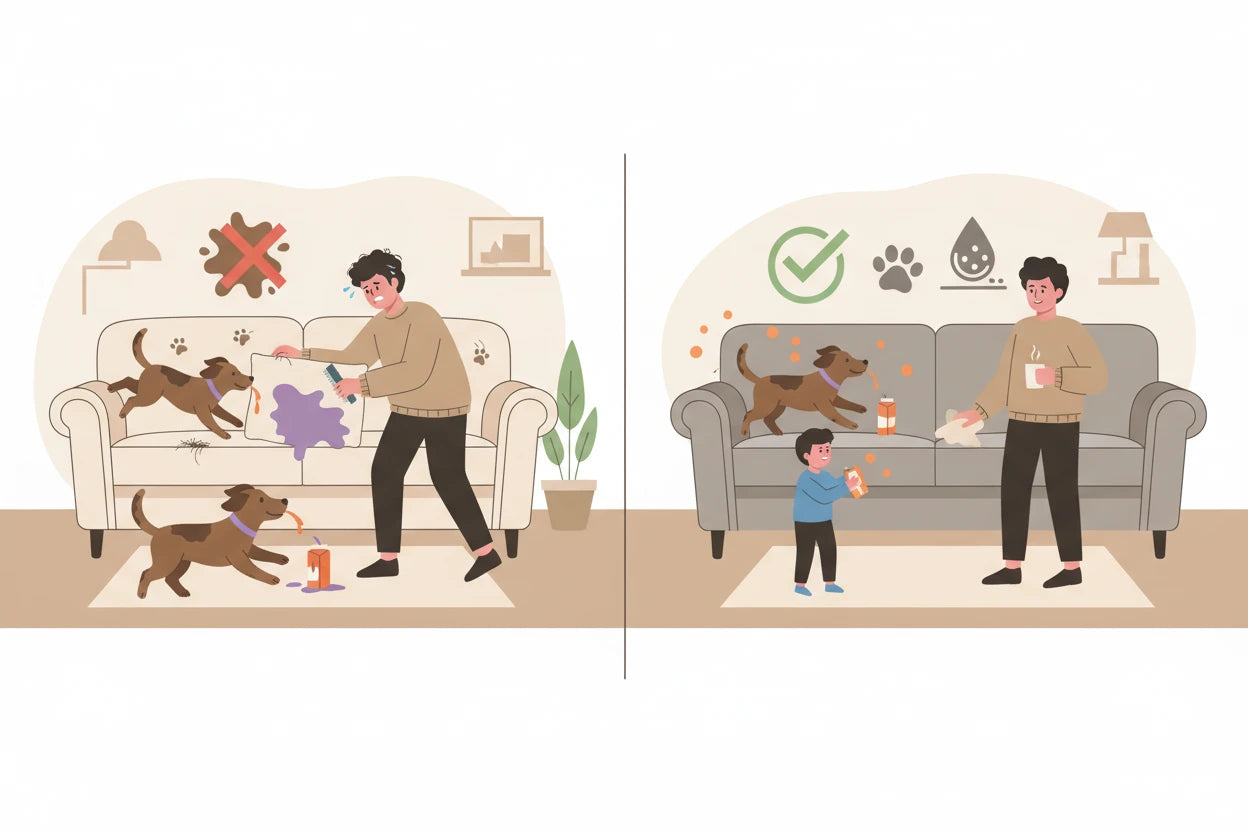
Easy-Care Upholstery for Real Life
Fabric choice is one of the most under-researched decisions in the sofa buying process — and one of the most consequential. A fabric that looks incredible in the store can become a daily maintenance burden at home, especially with kids, pets, or just regular daily life.
What easy-care upholstery actually looks like in practice:
- Tight weaves (microfiber, canvas, performance linen blends) resist spills, pet claws, and everyday wear far better than loose weaves, velvet, or delicate flat-finish fabrics
- Removable, washable cushion covers are genuinely one of the most useful features a sofa can have — easy to clean, possible to replace without replacing the whole sofa
- Mid-tones and textured weaves hide daily dust and wear significantly better than white, cream, or solid light colors
- "Performance fabric" is a marketing term, not a guarantee — always confirm whether it's machine washable or spot-clean only, and whether it's specifically tested for pet resistance or pilling
Easy-care fabric isn't about sacrificing style. It's about choosing something that still looks good two years from now without professional cleaning every few months. For guidance on which fabrics hold up best in real households, this easy-to-clean sofa fabric guide is worth filtering through before you commit to a material.
3 Questions to Ask Before Paying Extra for Any Sofa Feature
These three questions work as a practical filter for any sofa feature — before you add it to your cart.
Will I Use This Feature Every Week?
If the honest answer is "probably not, but it would be nice to have" — deprioritize it. This applies to sofa beds, recliners, built-in storage, modular add-ons, and chaise extensions. Features only earn their cost through regular, real use.
Does This Improve Comfort or Just Change the Look?
Ask yourself: would this sofa still feel worth the price in a less eye-catching fabric or silhouette? This applies to deep seats, cloud-feel cushions, statement arm styles, and oversized shapes. If the answer is no, it's a style decision — not a comfort investment.
Will This Make the Sofa Harder to Clean, Move, or Maintain?
Every feature that adds convenience in one direction usually adds inconvenience in another. Attached cushions can't be flipped or washed; very large sectionals become impossible to rearrange; white upholstery shows everything. This applies to light-colored fabrics, sofa bed mechanisms, and any oversized or heavy build.
Recommended Sofa Types Based on What Buyers Care
Rather than a full product list, here are three sofa types that directly connect to the judgment framework above — each matched to a real buyer profile, with a specific product worth looking at.
A Cleanable Fabric Sofa With Removable Cushions
Price: $2,250
Best for: Families with children, pets, or high-frequency daily use in a main living space.
BLOG-ONLY: Get 10% OFF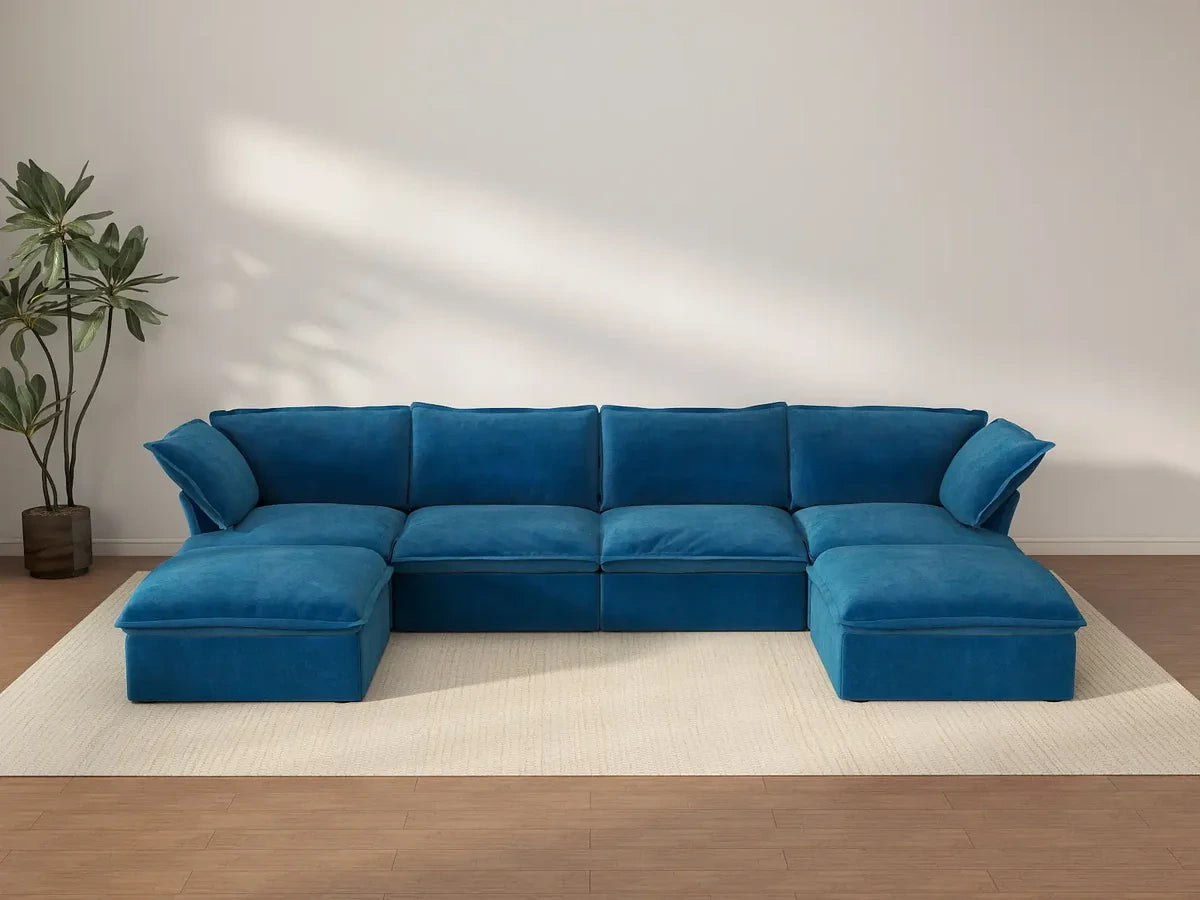
Worth paying for: Durable, washable upholstery combined with removable cushion covers and a layout that supports how your whole household actually sits — not just how it looks in a photo.
Feature you can skip: 100% down cushions, attached seat cushions, and non-washable upholstery in light colors. These look premium but carry a significantly higher maintenance cost for everyday family life.
Watch out for: Don't just look for the label "performance fabric." Confirm specifically whether the fabric is machine washable or spot-clean only, whether cushion covers are removable, and whether the weave is prone to pilling or attracting pet hair.
Worth considering: The WJS Home Deluxe Cloud Blue Velvet U-Shaped Sectional is a 6-piece modular sectional — including 2 ottomans and built-in storage — that seats up to 5, with washable velvet covers that actually come off. Currently priced at $2,250 (65% off), it's one of those sofas where the practical features justify the investment more than the look alone.
A Right-Size Sofa for Small or Busy Spaces
Price: $1,199
Best for: Small apartments, rentals, compact living rooms, or any space where traffic flow and proportion matter as much as seating capacity.
Worth paying for: The right seat depth, slim arm profiles, proven construction, and delivery-friendly dimensions. In a smaller space, a sofa that fits correctly will always feel better and look better than a larger sofa that technically fits but dominates the room.
Feature you can skip: Oversized chaise sections, extra-deep seats, bulky recliner arms, and large sectionals. These configurations often sacrifice walkway clearance, visual breathing room, and layout flexibility — exactly what smaller spaces need most.
Watch out for: Always confirm full sofa width, seat depth, arm width, and doorway and staircase clearance before ordering. The most common small-space sofa mistake isn't choosing the wrong style — it's choosing the wrong scale.
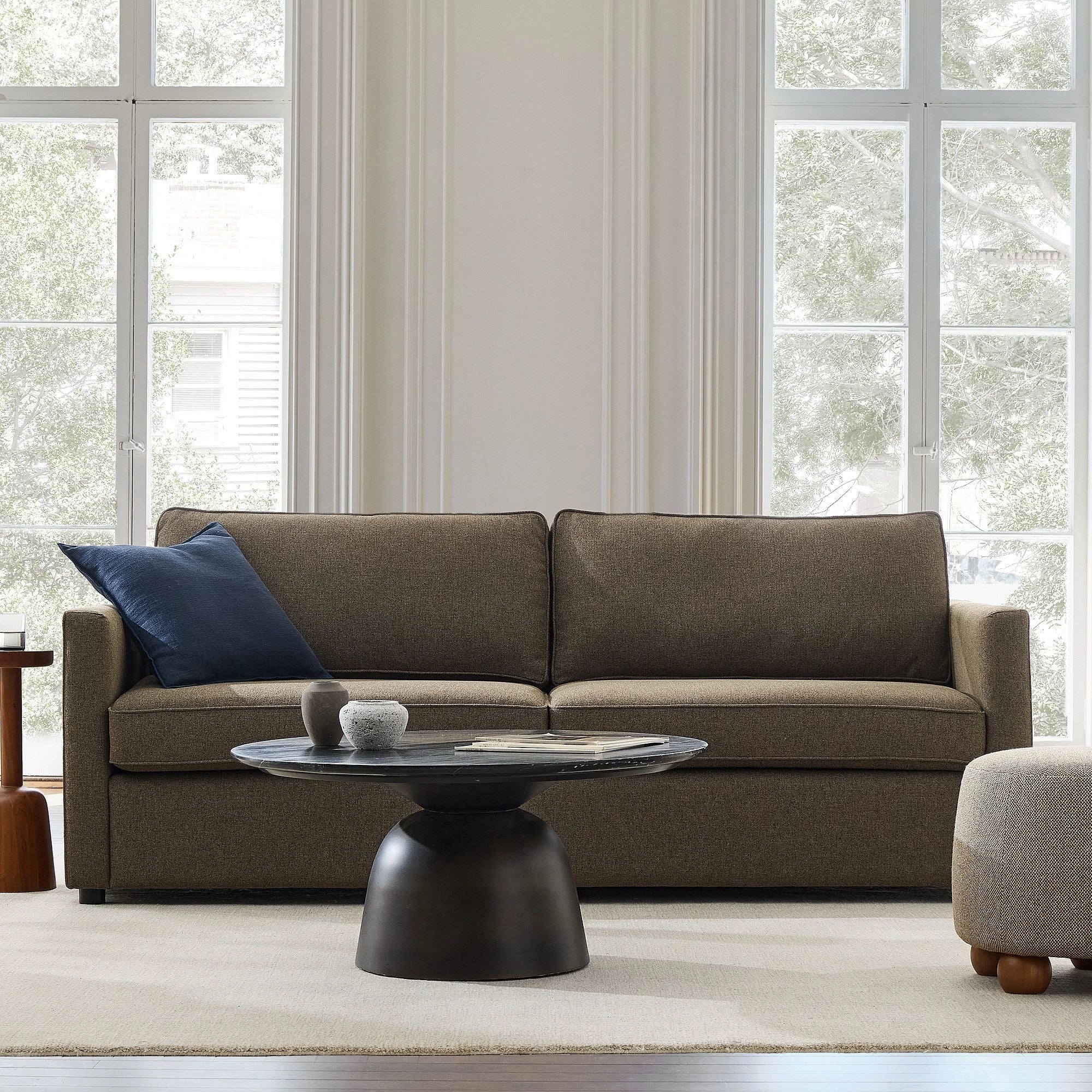
Worth considering: The West Elm Harris Sofa (96") is built on a kiln-dried hardwood frame with sinuous springs and high-resiliency foam cushions — solid, proportionate, and available in performance fabrics to match your actual cleaning habits. At $1,199 (20% off), it's a well-priced entry point for buyers who want genuine construction quality without committing to an oversized footprint.
A Sofa Bed Only If Guest Sleeping Is a Real Need
Price: 2,299
Best for: Homes that regularly host overnight guests, studio apartments where sleeping space is genuinely limited, or households where a dual-purpose piece solves a real, recurring problem.
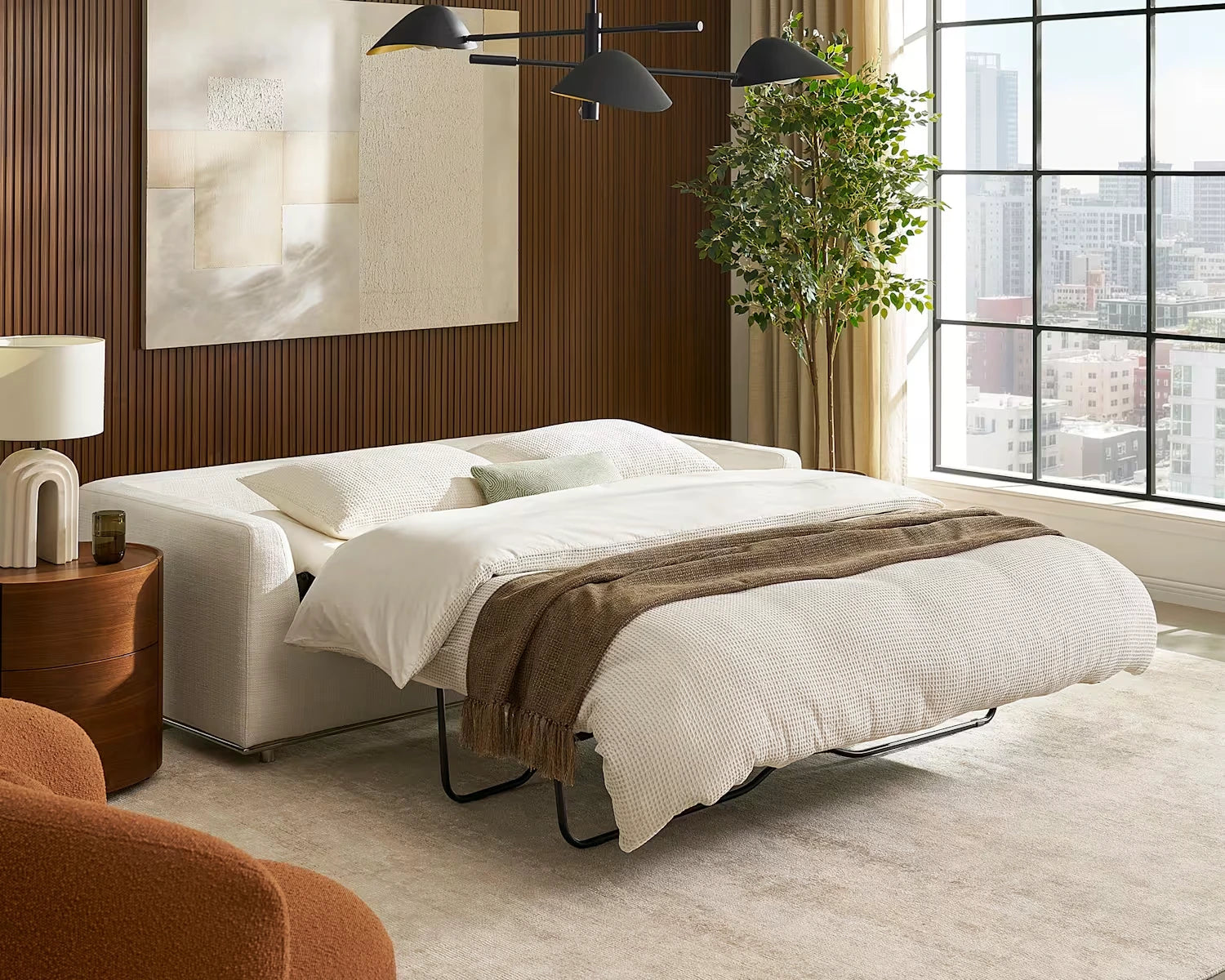
Worth paying for: A smooth, reliable pull-out mechanism, a durable frame that handles repeated folding without warping, and a mattress that is genuinely comfortable enough to sleep on — not just thick enough to qualify as one.
Feature you can skip: Budget "just-in-case" sleeper options with thin foam mattresses and stiff mechanisms. These rarely satisfy as either a sofa or a bed, and the mechanism is usually the first thing to fail.
Watch out for: Measure the fully opened footprint before purchasing — most buyers are genuinely surprised by how much clear floor space a sofa bed needs when extended. Test sitting comfort and sleeping comfort separately before committing.
Worth considering: The Castlery Hamilton Sleeper Sofa converts into a full queen-size sleeping surface via a pull-out mechanism, in a Performance Brilliant White fabric that handles real daily use. Priced at $2,299, it's worth every dollar if overnight guests are a genuine regular need — but only then.
Conclusion
When buying a sofa, the most expensive mistake usually isn't skipping a feature. It's buying for a fantasy version of your life instead of how you actually sit, live, clean, and use your space. Focus on size, comfort, durability, and fabric first — and let the extras earn their place only if they solve a real, everyday problem for your household. At WJS Home, you'll find sofas built around exactly these priorities — designed for how real people actually live, not just how a showroom looks.