


Boneless Couch vs Regular Couch: Which Sofa Style Is Better for Daily Life

Boneless Couch vs Regular Couch: Which One Should You Buy?
Quick answer: Choose a boneless couch if you want a soft, low-profile sofa for lounging, gaming, movie nights, or a flexible apartment layout. Choose a regular couch if you need stronger back support, easier sitting and standing, a more polished living room look, and a sofa that holds its structure for years.
The real decision goes beyond "soft vs firm." It comes down to how you actually use the room. If your sofa is where you nap, stretch out, or watch TV for hours, a boneless couch fits your lifestyle. If your sofa needs to host guests, support older family members, store everyday items, and stay presentable over years of daily use, a regular couch is the safer investment.
What Is a Boneless Couch?
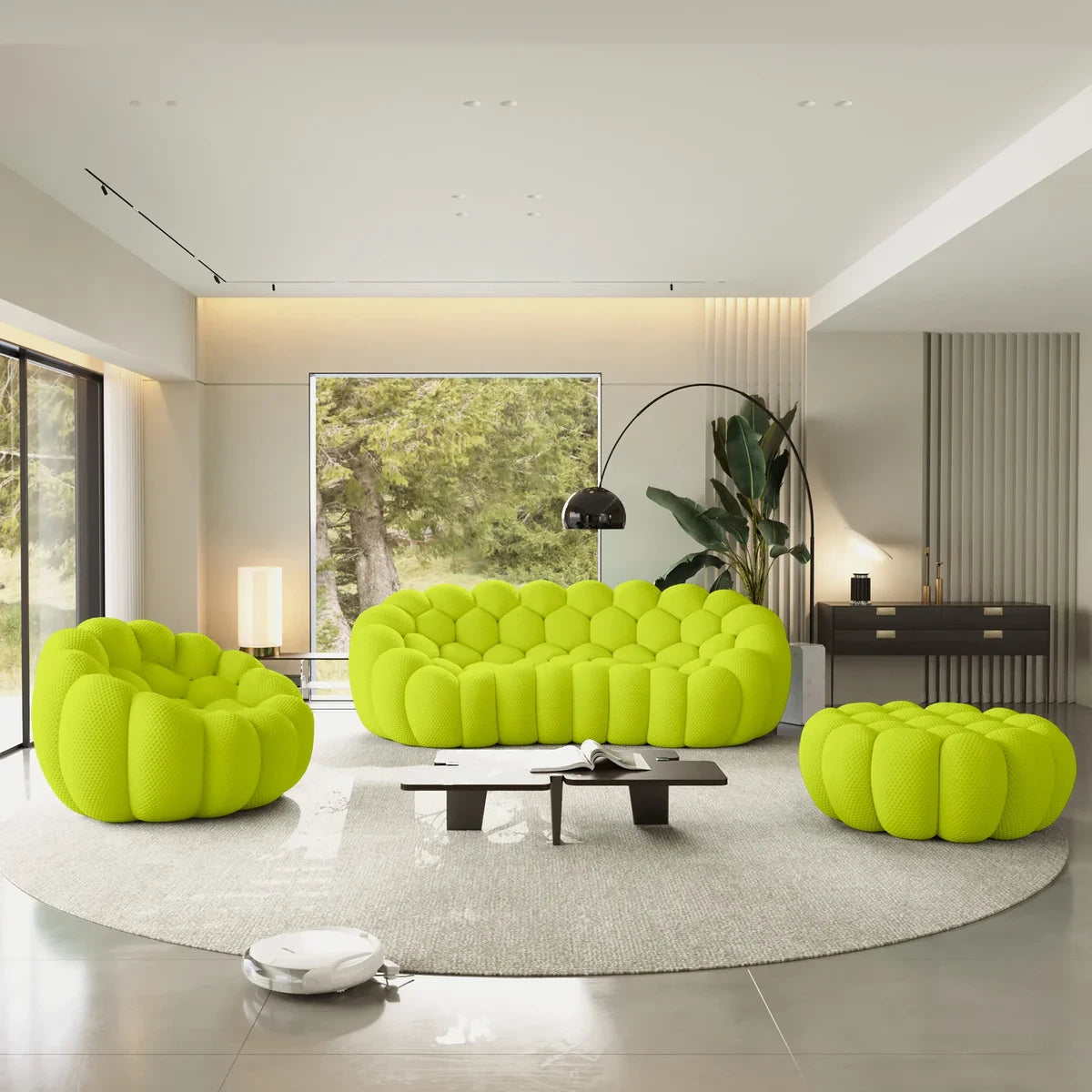
A boneless couch is a frameless or low-structure sofa built around foam blocks, cushion-based modules, or soft sectional components rather than a traditional raised wooden or metal frame. The seat sits closer to the ground, the edges are rounded and soft, and the overall silhouette feels casual and relaxed.
Where boneless couches are most popular:
- Apartments and small living rooms
- Media rooms, gaming setups, and home theaters
- Kids' lounge spaces and playrooms
- Informal open-plan living areas
- Rentals and furnished short-term housing
Because many boneless designs are modular, they are easier to carry through narrow hallways, up staircases, or into apartments with small elevators. You can reconfigure them for movie nights, rearrange for guests, or expand them as your space grows.
The tradeoff: A boneless couch may feel exceptional when lying down but less supportive when sitting upright for extended periods. The low seat height can also be inconvenient for taller adults, older adults, or anyone managing knee or lower back issues.
What Is a Regular Couch?
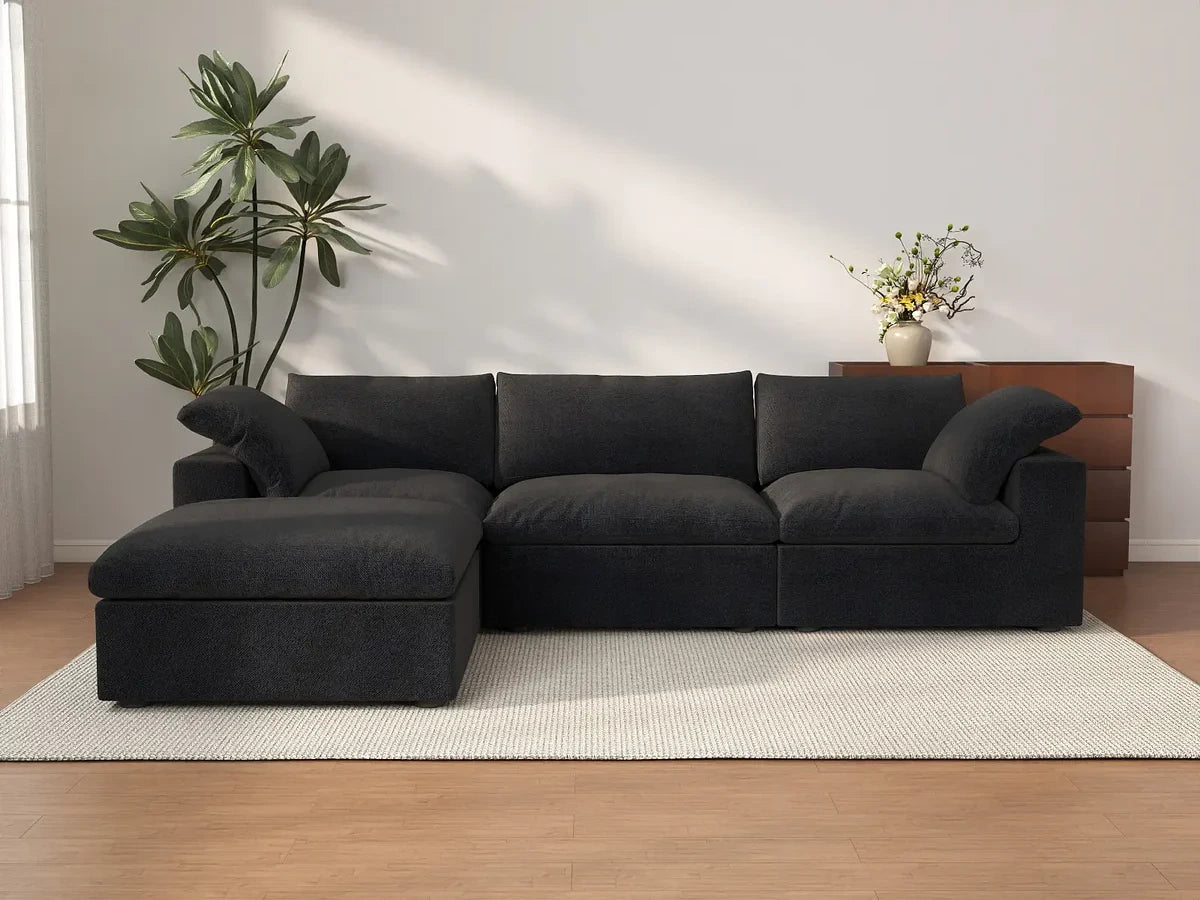
A regular couch is built around a wood or metal frame with defined armrests, a structured back panel, and a standard seat height typically between 17 and 19 inches from the floor. It is designed to support upright sitting, everyday family use, and a more finished, polished room layout.
Where regular couches perform best:
- Main living rooms and family rooms
- Guest rooms and entertaining spaces
- Home offices where you sometimes sit on the sofa to work
- Households with mixed age groups, including older adults and young children
Regular couches tend to keep their shape more consistently over time because the frame does the structural work rather than relying entirely on foam density. They are easier to sit down on and stand up from, which matters significantly for elderly guests or anyone with mobility concerns.
The tradeoff: Regular couches are heavier, harder to move, and less flexible if your room layout changes often. Some models can feel too upright or firm for long lounging sessions, especially if the seat depth is shallow or the cushions lack softness.
Boneless Couch vs Regular Couch: Key Differences
| Feature | Boneless Couch | Regular Couch |
| Frame | None or minimal | Wood or metal frame |
| Seat height | Low (13-17 inches) | Standard (17-20 inches) |
| Primary comfort style | Lounging, sinking in | Upright sitting, hosting |
| Back support | Soft, flexible | Firmer, more structured |
| Ease of moving | High (modular, lightweight) | Lower (heavier, rigid) |
| Shape retention | Depends on foam quality | Generally more stable |
| Cleaning | Often washable covers | Varies by fabric type |
| Price range | $300-$1,500+ | $400-$3,000+ |
| Style | Casual, contemporary | Versatile, traditional or modern |
| Best for | Media rooms, renters, relaxed spaces | Living rooms, families, guests |
The most important difference is posture. A modern boneless couch is designed around relaxation and horizontal comfort, while a regular couch is engineered for supported upright sitting.
If you spend most of your sofa time lying down, curled up, or watching content for hours, the boneless style fits more naturally. If you sit upright, host guests regularly, or want a sofa that looks tidy and structured after heavy use, a regular couch has the clear advantage.
Boneless Couch vs Regular Couch: Comfort Compared
Comfort is not a single measurement. It depends entirely on what you are doing.
For lounging and horizontal comfort, boneless couches are hard to beat. The foam-based construction wraps around your body rather than pushing back against it. There are no hard frame edges to press into your back or legs. You can stretch across the full width, shift positions freely, and let the cushioning contour to your body shape.
For upright sitting and posture support, regular couches perform better. The structured back keeps your spine aligned when you sit forward to eat, have a conversation, use a laptop, or host guests. The standard seat height also makes it significantly easier to stand up, especially for people who sit and stand frequently throughout the day.
For mixed households that include both loungers and upright sitters, a regular couch with deep cushions and a slightly reclined back angle often provides the best of both styles without fully committing to either extreme.
Boneless Couch vs Regular Couch: Which Lasts Longer?
Durability depends more on material quality than sofa type, but the structural difference matters.
Regular couches typically last longer because the wooden or metal frame carries most of the structural load. Even as cushions compress over time, the frame keeps the sofa's shape. A quality regular couch with high-density foam cushions and a kiln-dried hardwood frame can easily last 10 to 15 years with normal use.
Boneless couches rely almost entirely on foam quality to maintain their shape. A boneless couch with low-density foam (below 1.8 lbs per cubic foot) can flatten noticeably within two to three years under daily use. A boneless couch with high-density foam (2.0 lbs per cubic foot or higher) will hold its form much longer, but it still does not have the structural backup of a frame.
Key things to check before buying a boneless couch:
- Foam density: Look for 1.8 lb/ft³ or higher for daily use; 2.0 lb/ft³ or above for heavy use or large households
- Cover removability: Washable covers extend the life dramatically
- Modular construction: Allows you to replace individual sections if one area wears faster
Boneless Couch vs Regular Couch: Cleaning and Maintenance
This is one of the most overlooked factors when comparing sofa styles, and it is especially important for households with children, pets, or frequent guests.
Boneless couches often have a cleaning advantage because many are built with removable, machine-washable covers. If a cushion gets spilled on, you can unzip the cover, wash it, and have it back the same day. This is a significant practical benefit over fabric sofas that require professional cleaning or specialized upholstery treatments.
Regular couches vary widely by fabric. Performance fabrics like microfiber, polyester blends, and solution-dyed acrylic are easier to clean and more stain-resistant. Natural fabrics like cotton, linen, or velvet are softer but more difficult to maintain. Leather and faux leather regular couches are easy to wipe down but can crack or peel over time.
If you have pets or young children, prioritize washable covers or performance fabric regardless of which sofa style you choose. A stain on a non-washable sofa quickly becomes a permanent feature.
Boneless Couch vs Regular Couch: Price Comparison
Boneless couches generally start around $300 to $500 for single-seat or basic two-seater versions and can reach $1,000 to $1,500 or more for high-quality modular sectional configurations with washable covers and high-density foam.
Regular couches have a wider price range. Entry-level options start around $400 to $600, mid-range quality begins around $800 to $1,200, and premium options with solid hardwood frames, down-blend cushions, and performance fabrics run $2,000 and above.
Where to focus your budget:
- For a boneless couch, spend more on foam density and cover quality rather than on aesthetics alone
- For a regular couch, the frame material matters most for longevity — look for kiln-dried hardwood over particle board or MDF
Boneless Couch vs Regular Couch for Specific Situations
If You Have Pets
Regular couches with performance fabric or boneless couches with fully washable covers are the two most practical choices. Avoid velvet, linen, or untreated fabric on either type. Pet hair embeds deeply in textured fabrics and is difficult to remove without professional cleaning.
If You Have Young Children
Washable cover boneless couches are often the most practical family choice because spills and accidents can be cleaned quickly and thoroughly. However, the low seat height of boneless couches can make it harder for small children to climb up independently, which is a consideration for toddlers.
If You or a Family Member Has Back Pain
A regular couch with lumbar support and a mid-range firm cushion density is generally the safer recommendation. Boneless couches can worsen back discomfort if they cause the pelvis to tuck under during prolonged sitting. If you want a softer sofa but still need support, look for a regular couch with adjustable lumbar cushions or a backrest angle that allows for a slight recline.
If You Live in an Apartment or Move Frequently
Modular boneless couches have a clear advantage. They break down into smaller sections, fit through narrow doorways and staircases, and can be reconfigured to fit different room layouts. For renters or anyone who moves every one to two years, the flexibility of a modular sofa reduces the risk of buying furniture that does not fit the next apartment.
If You Work From Home
If you occasionally work from your sofa, a regular couch with a firm upright back and a seat height that aligns with a coffee table or laptop stand will be far more comfortable over a four to six hour working session than a low-profile boneless design that encourages a reclined posture.
Boneless couch and regular couch: pros and cons
Boneless couch Pros
- Excellent for lounging, lying flat, and relaxed seating
- Often modular and easier to move through small spaces
- Many options include washable, removable covers
- Flexible layout options for open floor plans
- Generally lower price entry point for comparable size
Cons
- Less lumbar and back support for upright sitting
- Low seat height inconvenient for older adults or joint issues
- Shape retention depends heavily on foam density
- Can look too casual in formal living rooms
- Less suitable for frequent hosting or guest seating
Regular couch Pros
- Better upright posture and back support
- Standard seat height easier to sit down on and stand up from
- Frame-based structure provides more consistent long-term shape
- More versatile visually for different room styles
- Works better as a primary guest-facing sofa
Cons
- Heavier and harder to move and reconfigure
- Can feel too firm or upright for extended lounging
- Larger frame sizes may not fit through narrow apartment doorways
- Fabric varieties require more maintenance unless you choose performance fabric
- Mid-range and premium options are more expensive
Recommended Sofa Options by Use Case
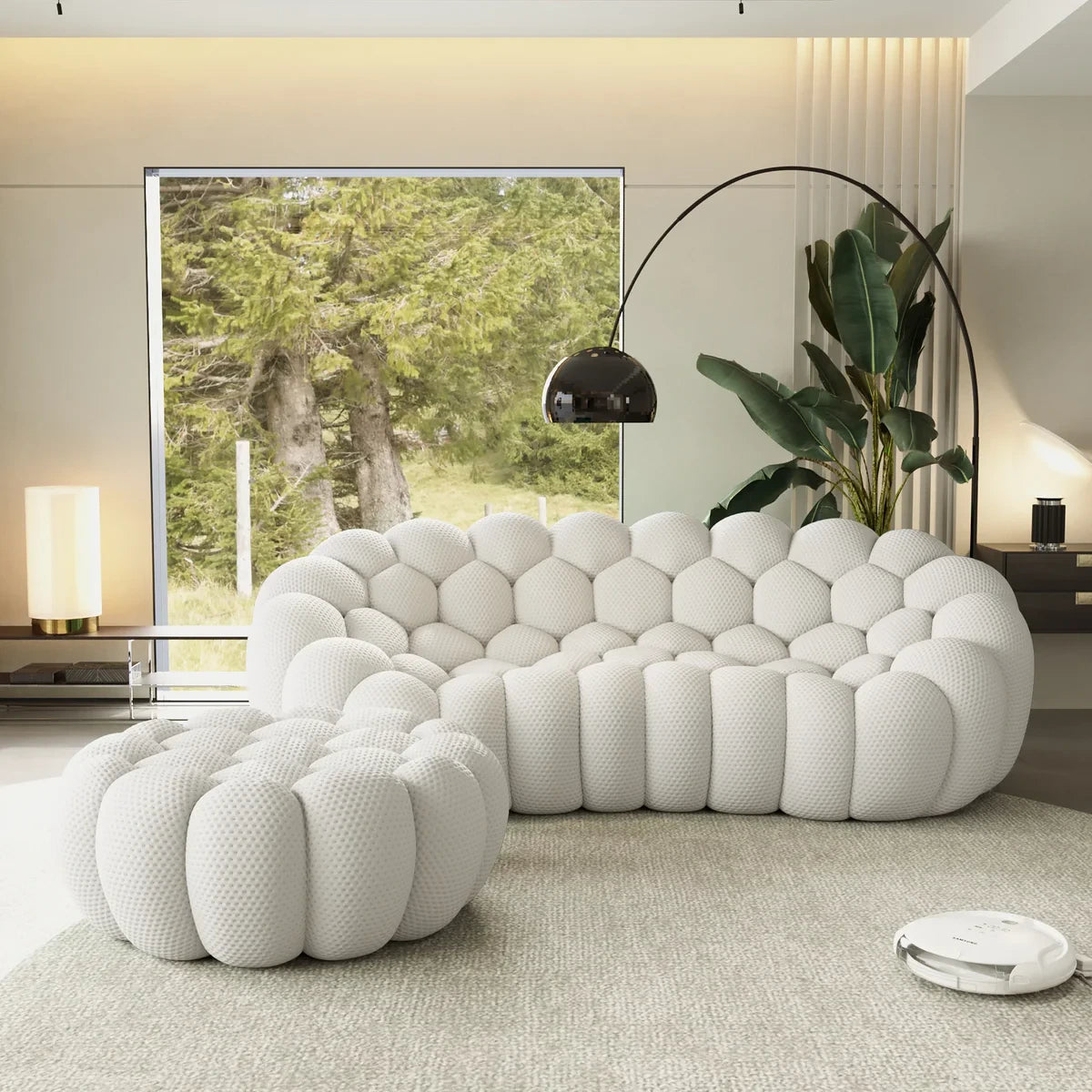
Best boneless couch: WJS Home 3D Knitted Fabric Light Grey Boneless Sofa with Ottoman
Price: $ 1,050 (Price may vary based on campaigns)
A frameless, floor-level design with 3D knitted fabric and an included ottoman — built for the kind of deep, casual comfort that regular couches can't replicate. Easy to move, easy to rearrange, and soft enough to sink into after a long day.
Best for: renters, apartment dwellers, gamers, and anyone who spends most of their sofa time lounging or watching TV.
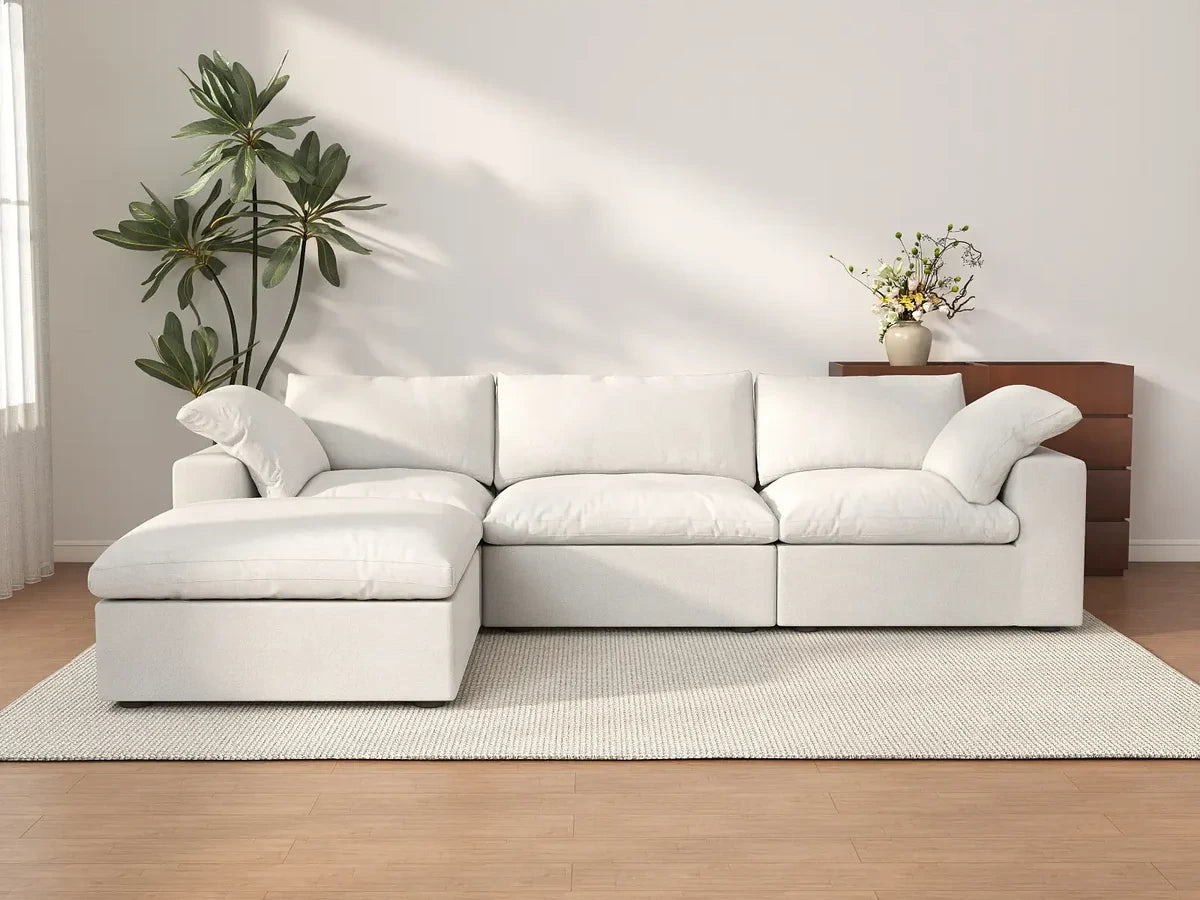
Best regular couch: WJS Home Deluxe Cloud 3-Seater White Storage L-Shaped Sectional
Price: $1,190 (Price may vary based on campaigns)
A cloud-soft cushion feel paired with the upright support and frame structure of a regular couch — plus a hidden storage ottoman. Washable covers, modular configuration, and a clean white finish that works in most living room styles.
Best for: families, frequent hosts, and anyone who needs a structured main living room sofa with everyday storage.
Conclusion
Both sofa styles have real strengths — the right choice depends on how you use the room. If you lounge more than you sit, go boneless. If you host guests, support mixed age groups, or need long-term structure, a regular couch is the safer investment.
WJS Home offers options across both styles, from flexible modular sectionals to structured cloud-comfort sofas, so you can find the right fit without compromising on quality or practicality.
Browse the WJS Home sofa collection to find the style that matches how you actually live.
FAQ
Yes, for households where the sofa is mainly used for lounging, watching TV, or casual relaxation. If you need firm support for long sitting sessions, regular hosting, or back health reasons, a regular couch is generally more comfortable over time.
Please check are boneless sofas good for more details.