


How to Choose the Right Sofa Cover for Your Home

Introduction
A sofa cover is a removable fabric layer that protects and styles your sofa. Many covers look cheap online or wear out quickly, wasting both money and effort. If you're wondering how to choose a sofa cover that fits perfectly and lasts, this guide will help. Knowing how to choose a sofa cover ensures you select the right fit, material, and color for your household, compare options effectively, and maximize long-term value.
Follow this step-by-step method to avoid common mistakes and pick a cover that truly enhances your home.
Before You Choose a Sofa Cover: What to Know First
Sofa covers look similar on a product page and perform very differently in a real home. Before working through the steps below, these are the principles that apply to every purchase decision in this guide:
- There is no universal sofa cover.Every recommendation in this guide is conditional on your sofa type, household, and room. A cover that's the right choice for a standard 3-seater in a low-traffic formal room is the wrong choice for a deep-seat modular sofa in a household with dogs and young children.
- Fit is more important than material.A high-quality velvet cover that doesn't fit your sofa will look worse than a mid-range polyester cover that fits correctly. Get the type and size right first - material is a secondary decision.
- The cheapest cover is rarely the cheapest option long-term.A $30 universal cover replaced twice a year costs more annually than a $150 fitted cover that lasts four years - and produces a worse result throughout.
- Measure before you read reviews.Reviews tell you how a cover performed for someone else's sofa. Without your own measurements and sofa type confirmed, reviews are difficult to interpret usefully.
Work through the steps in order. The decisions compound - each one narrows your options and makes the next decision easier.
How to Choose The Right Sofa Covers: 7 Step-by-Step Guide
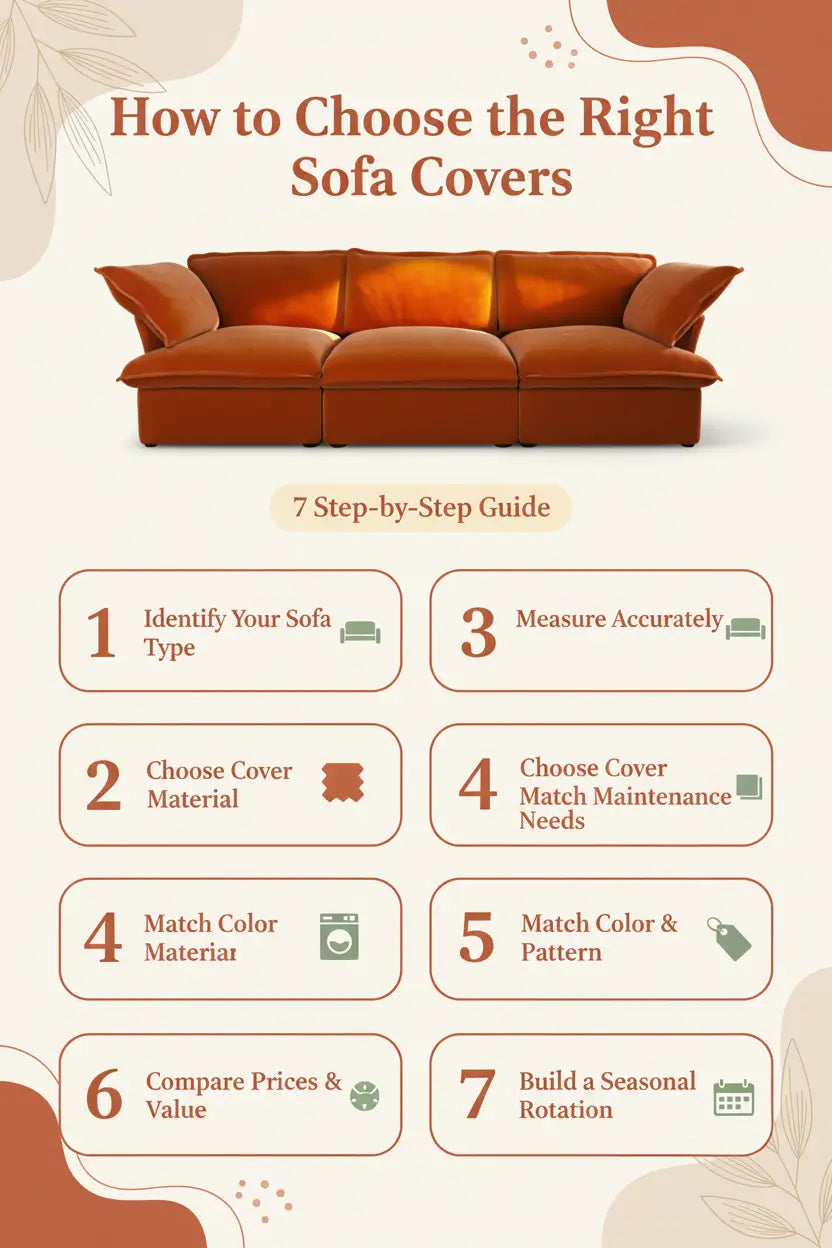
Choosing the right sofa cover involves knowing your sofa type, measuring accurately, selecting suitable material, matching style, and planning maintenance.
This step-by-step guide walks you through each factor to ensure long-term value, proper fit, and durability-not just appearance.
Step 1: Identify Your Sofa Type for the Perfect Cover
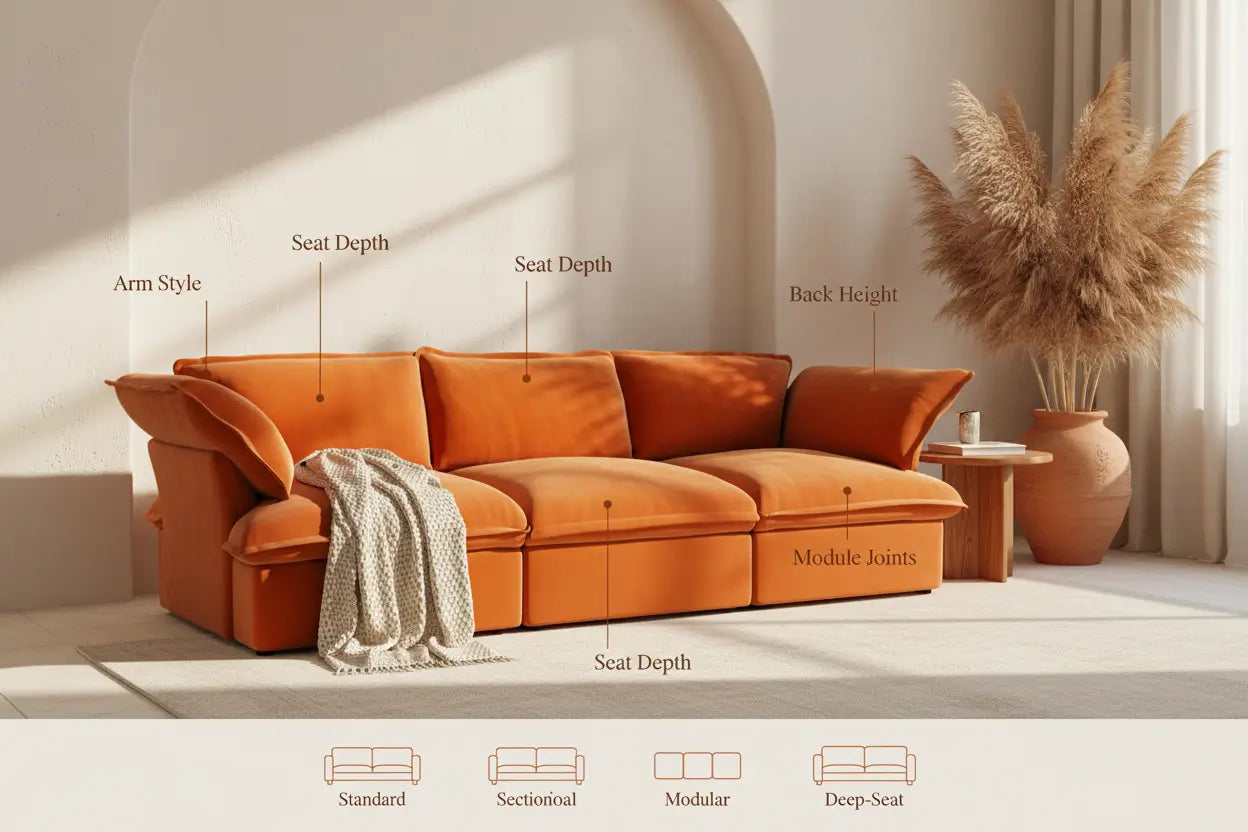
If you do only one thing, check your sofa type first - it determines fit and style.
Most people skip this step and go straight to measuring. That's the wrong order. Knowing your sofa type determines which cover constructions will even work for you - and eliminates a large portion of the market before you spend time comparing materials or sizes.
Interior designers from Architectural Digest consistently point to sofa architecture as the starting point for any cover or slipcover decision - the sofa's structure should drive fabric choice, fit type, and finish, not the other way around.
-
Standard sofa (2-seat loveseator 3-seat)
The most straightforward to cover - stretch covers and fitted slipcovers both work well. Main variable: arm style. Scroll arms need more fabric volume at the curve than flat track arms. A cover designed around track arms on a scroll-arm sofa will pull tight at the curve and look strained regardless of how well the width fits.
-
Sectional or L-shaped sofa
Requires separate covers per section - one for the main sofa, one for the chaise or corner unit. Don't buy one large cover expecting it to wrap the whole sectional. Look for covers sold as sectional sets, or buy individual covers sized to each section independently.
A common experience among sectional owners: a "large" universal cover fits the main sofa portion acceptably but is completely unusable on the chaise - wrong depth, wrong arm configuration, excess fabric pooling at the join. Sectional covers are a per-section purchase, not a whole-sofa purchase.
-
Modular sofa
Buy covers for each individual module, not for the current configuration. This keeps your options open when the layout changes. Covers with ties or elastic backing stay in place better when modules are separated or repositioned. Configuration-specific covers make the sofa difficult to rearrange - every layout change requires re-evaluating cover fit.
-
Deep-seat or lounge sofa
Standard covers are designed for seat depths up to ~90cm. If your sofa exceeds that, standard covers will pull forward and expose the back frame. This is a structural mismatch - no amount of tucking resolves it. Always check the cover's maximum seat depth in the product specs, not just the width or size label.
-
Sofas with attached or tufted cushions
Attached cushions prevent the cover from being tucked between seat and back, so the cover needs enough volume to accommodate the fixed shape without pulling. For tufted sofas, avoid standard covers - the buttons create uneven pressure points that distort the cover surface. Look for covers with elastic backing or tie-down points that anchor without relying on the tufting area for tension.
Step 2: Measure Your Sofa Accurately for Best Fit
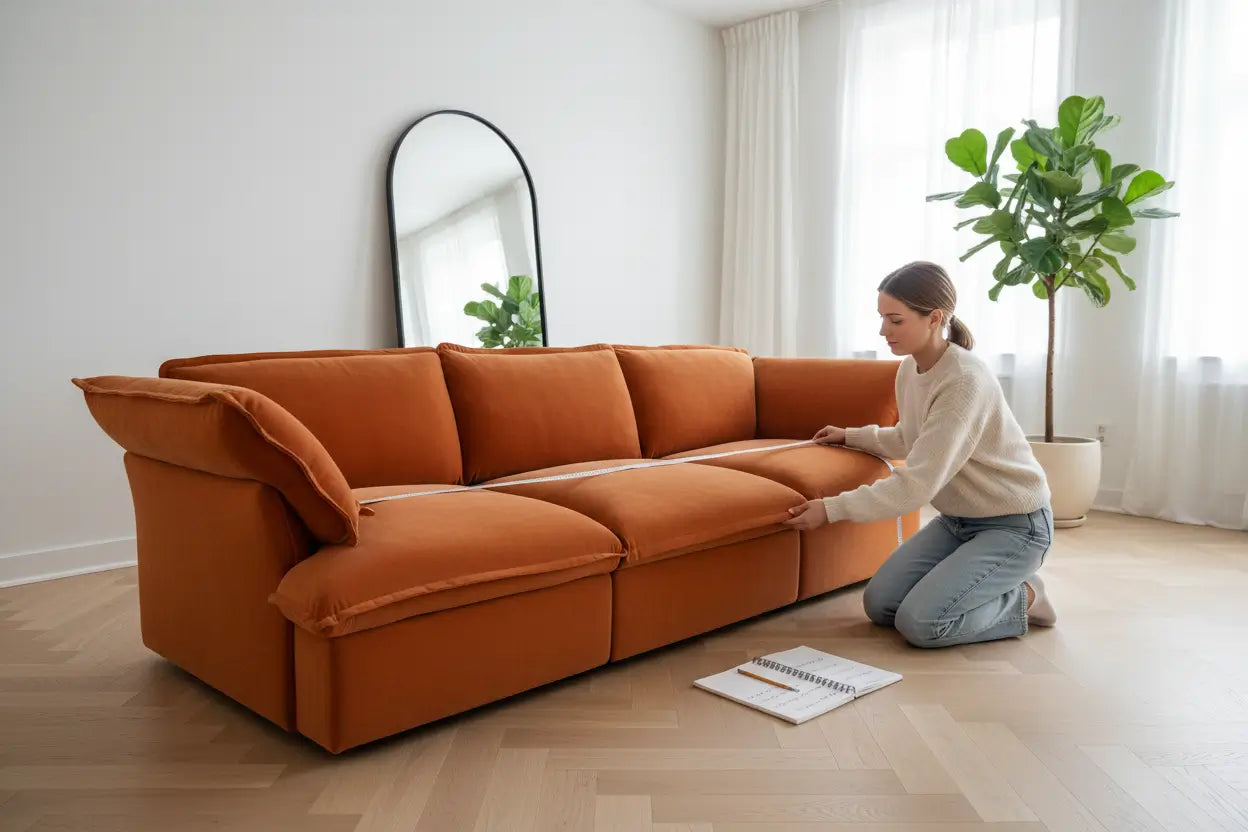
Seat depth matters more than width for cover fit. Once you know your sofa type, measurement is straightforward - but only if you measure the right things. Most cover sizing failures come from measuring the wrong areas, not from getting the numbers wrong.
Furniture proportion and human scale are closely linked - a sofa's depth affects how you sit, arm height affects how you rest, and back height affects how supported you feel. The same logic applies to covers: the slipcover measurements that matter are the ones that correspond to how the cover interacts with the sofa's structure under daily use, not the ones that look most obvious on a tape measure.
What to Measure and Why Each Number Matters
-
Seat width (inside arm to arm)
Your primary sizing number. Measure from the inner edge of one arm to the inner edge of the other - not the total frame width. Total frame width includes the arms and produces a number that's too large, leading to a cover that's loose across the seat even if the label size seems correct.
-
Seat depth (front edge to back cushion base)
The most commonly ignored measurement and the most common reason covers fail in use. Measure from the very front edge of the seat cushion to where it meets the base of the back cushion. If this number is 90cm or more, you need a deep-seat cover - standard covers will pull forward constantly under normal sitting pressure, exposing the back frame within days of installation.
-
Back height (seat surface to top of back)
Relevant for covers that wrap the full sofa back. A cover too short in back height will expose the top of the frame and migrate downward under use. Measure from the seat surface - not the floor - to the highest point of the back.
-
Arm width and profile
Measure arm width at the widest point. More importantly, identify the arm profile:
- Scroll arms (curved):Need covers with extra fabric volume at the curve. Standard covers pull tight and wear through at the arm edge first.
- Track arms (flat/square):The default assumption for most standard covers. Fit well without modification.
- Tapered or sloped arms:Variable - check the cover's arm allowance against your measurement before purchasing.
-
For sectionals and modular sofas
Measure each unit independently: seat width, depth, back height, and arm configuration for every section. Do not measure total span and work backward. Measurements will differ between sections - particularly between the main sofa and the chaise, which typically has no arm on one side and different depth dimensions.
Common Measurement Mistakes
- Measuring total frame width instead of seat width - produces a number 15-30cm too large depending on arm width
- Ignoring seat depth - the single most common cause of covers that won't stay in place
- Assuming arm style doesn't matter - scroll arms on a standard-cover purchase is one of the most frequent fit complaints
- Measuring once without double-checking - a 5cm error can shift you into the wrong size band
Pro tip:Measure twice, in two directions for seat width and depth - sofas are not always perfectly square, and the larger number is the one that determines your size band.
To avoid sizing issues, follow a proper sofa dimensions guide when measuring width, depth, and height.
How to Use Your Measurements to Choose the Right Size
| Your Measurement | What to Do |
| Falls within a size band | Choose that size |
| Falls at the upper edge of a band | Size up - a slightly large cover tucks cleanly; a tight cover fails at seams first |
| Falls between two bands | Size up and tuck the excess - never size down |
| Seat depth over 90cm | Filter for deep-seat covers only |
| Sectional or modular | Buy one cover per section, sized independently |
Step 3: Choose Sofa Cover Material for Pets, Kids, or Low-Traffic Rooms
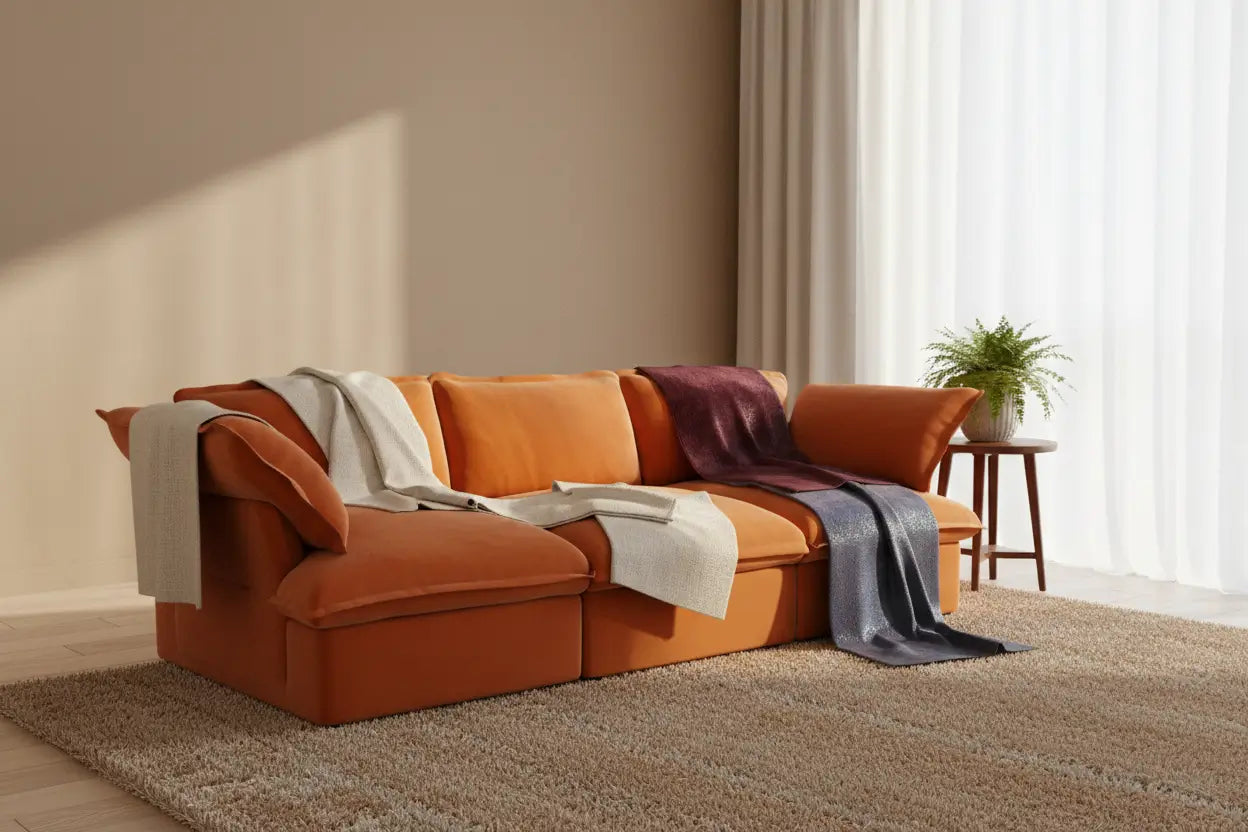
The right material prevents stains, wear, and daily damage. Material selection is where most buying guides give you a list of fabrics and call it done. The more useful question isn't "what are the options" - it's "which material holds up to how your household actually operates." The wrong fabric choice shows up within weeks: pilling, permanent staining, distortion after washing, or a cover that looks worn before the sofa underneath shows any sign of use.
Fabric performance, according to Crypton,in real home environments depends on fiber structure, weave density, and finish - not just the fabric name.
Material Comparison at a Glance
| Material | Best For | Pros | Cons | Cleaning |
| Linen | Dry climates, low-traffic formal rooms | Minimal aesthetic; breathable | Wrinkles in humidity; pet hair embeds in weave | Machine wash cold; air dry |
| Cotton / Blends | Everyday family use, frequent washing | Washable; versatile | Shrinks 3-5% unless pre-washed; loses shape after 40-50 washes | Machine wash cold; tumble dry low |
| Velvet (Martha Stewart) | Style-focused spaces, cooler seasons | Luxurious look; rich texture | Pile crushes with heat; directional grain affects appearance | Spot clean or hand wash; air dry flat - no tumble dry |
| Polyester / Synthetic | Pets, high-traffic households | Durable; affordable; easy care | Pills below 300D; warps under high dryer heat | Machine wash; avoid high heat |
| Performance Fabric (Crypton /Sunbrella) | Kids, dogs, allergy sufferers, heavy staining risk | Stain & moisture resistant at fiber level; long-lasting | Higher price; fewer style options | Machine wash or wipe-clean |
Not sure which fabric suits your lifestyle? Explore this detailed sofa fabric guide to compare durability, comfort, and maintenance.
Which Material Should You Choose?
- Pets in the home→ Polyester 300D+ or performance fabric
- Young children (under 8)→ Performance fabric - stain resistance at fiber level, not surface treatment
- Style-focused, low-traffic room→ Velvet or linen - both photograph well and elevate the space
- Frequent washing needed→ Cotton or cotton blend - most forgiving for repeated machine washing
- Humid climate or open-plan kitchen adjacent→ Avoid linen - polyester or cotton blend instead
- Seasonal second cover→ Linen or lightweight cotton for spring/summer; velvet or heavier cotton for fall/winter
- Allergy or moisture sensitivity→ Performance fabric only
If you're considering textured fabrics, you can also learn whether chenille is a good sofa fabric for everyday use.
One Rule That Applies to Every Material
Always confirm whether the cover has been pre-washed before purchase. Cotton and cotton blends shrink on the first wash regardless of quality. Velvet can distort if washed incorrectly from the start. A cover that fits perfectly before the first wash and poorly after it is one of the most common - and most avoidable - cover complaints.
Step 4: Match Cover Maintenance to Your Household Routine
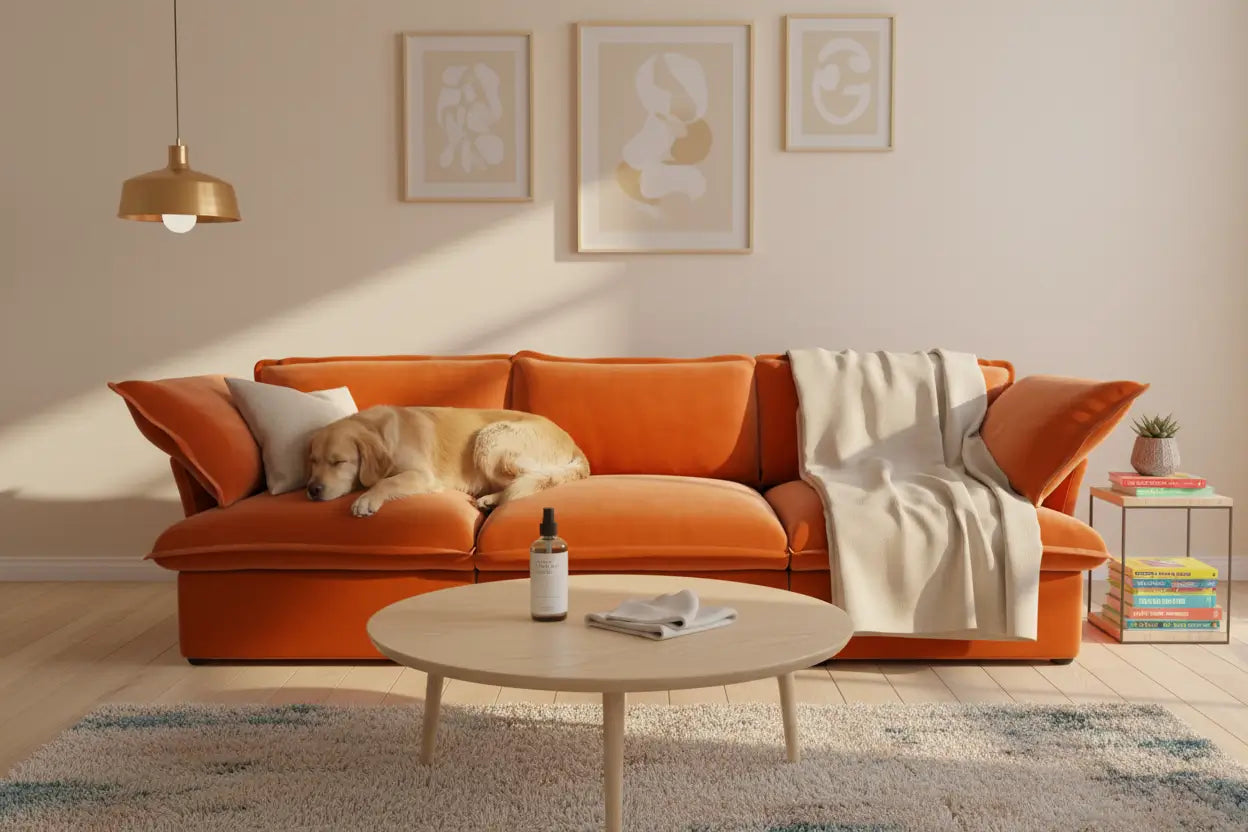
Covers fail fastest when cleaning needs don't match your lifestyle. A cover that requires dry cleaning in a household with two dogs and young children will either be under-cleaned or damaged within months. Before committing to a material, be honest about two things: how often the cover will realistically need cleaning, and what cleaning method you will actually use - not what you intend to use.(viaReal Simple)
Cleaning & Maintenance Guide by Material
| Material | Washing Frequency | Cleaning Method | Key Rules | Stain Treatment |
| Performance Fabric | Every 2-3 weeks (pets/allergies); 3-4 months (low traffic) | Machine wash or wipe-clean | Fiber-level protection survives repeated washing; bleach-safe (Sunbrella) | Cold water + mild soap for most stains |
| Polyester 300D+ | Every 2-3 weeks (pets); monthly (kids); 3-4 months (adults) | Machine wash | Avoid high heat in dryer; run no-heat dryer cycle first to loosen pet hair | Enzyme cleaner or mild dish soap; cold water |
| Cotton / Blends | Monthly (kids/pets); every 3-4 months (adults) | Machine wash cold | Pre-wash before first use; tumble dry low; remove slightly damp | Enzyme cleaner; avoid bleach on colored cotton |
| Linen | Every 3-4 months (low traffic only) | Machine wash cold | Air dry only; iron while slightly damp | Cold water only - hot water sets stains permanently |
| Velvet | Spot clean as needed; deep clean seasonally | Hand wash or professional clean | Never tumble dry; blot only - never rub; brush pile after drying | Blot immediately with dry cloth; professional treatment for deep stains |
Material Maintenance Scorecard
Rated 1-5 (5 = best performance in that category)
| Material | Ease of Cleaning | Washing Frequency Tolerance | Stain Resistance | Longevity Under Daily Use | Overall |
| Performance Fabric | ⭐⭐⭐⭐⭐ | ⭐⭐⭐⭐⭐ | ⭐⭐⭐⭐⭐ | ⭐⭐⭐⭐⭐ | 20/20 |
| Polyester 300D+ | ⭐⭐⭐⭐⭐ | ⭐⭐⭐⭐ | ⭐⭐⭐⭐ | ⭐⭐⭐⭐ | 17/20 |
| Cotton / Blends | ⭐⭐⭐⭐ | ⭐⭐⭐⭐ | ⭐⭐⭐ | ⭐⭐⭐ | 14/20 |
| Linen | ⭐⭐⭐ | ⭐⭐ | ⭐⭐ | ⭐⭐⭐ | 10/20 |
| Velvet | ⭐⭐ | ⭐⭐ | ⭐⭐ | ⭐⭐⭐ | 9/20 |
Bottom Line
- Lowest overall maintenance cost→ Performance Fabric - easiest to clean, most durable, lowest long-term cost of ownership
- Easiest daily cleaning→ Performance Fabric / Polyester 300D+ - both machine washable; handle everyday stains with minimal effort
- Longest lifespan under daily use→ Performance Fabric, followed by Polyester 300D+
- Best value for durability on a budget→ Polyester 300D+ - the most practical choice when performance fabric pricing is a barrier
- Best appearance, lower-traffic spaces→ Velvet or Linen - strongest visual impact, but require higher maintenance effort and have less margin for error
Different fabrics require different care routines-for example, here's how to clean a corduroy sofa properly without damaging the texture.
Step 5: Match Color and Pattern to Your Living Room Style
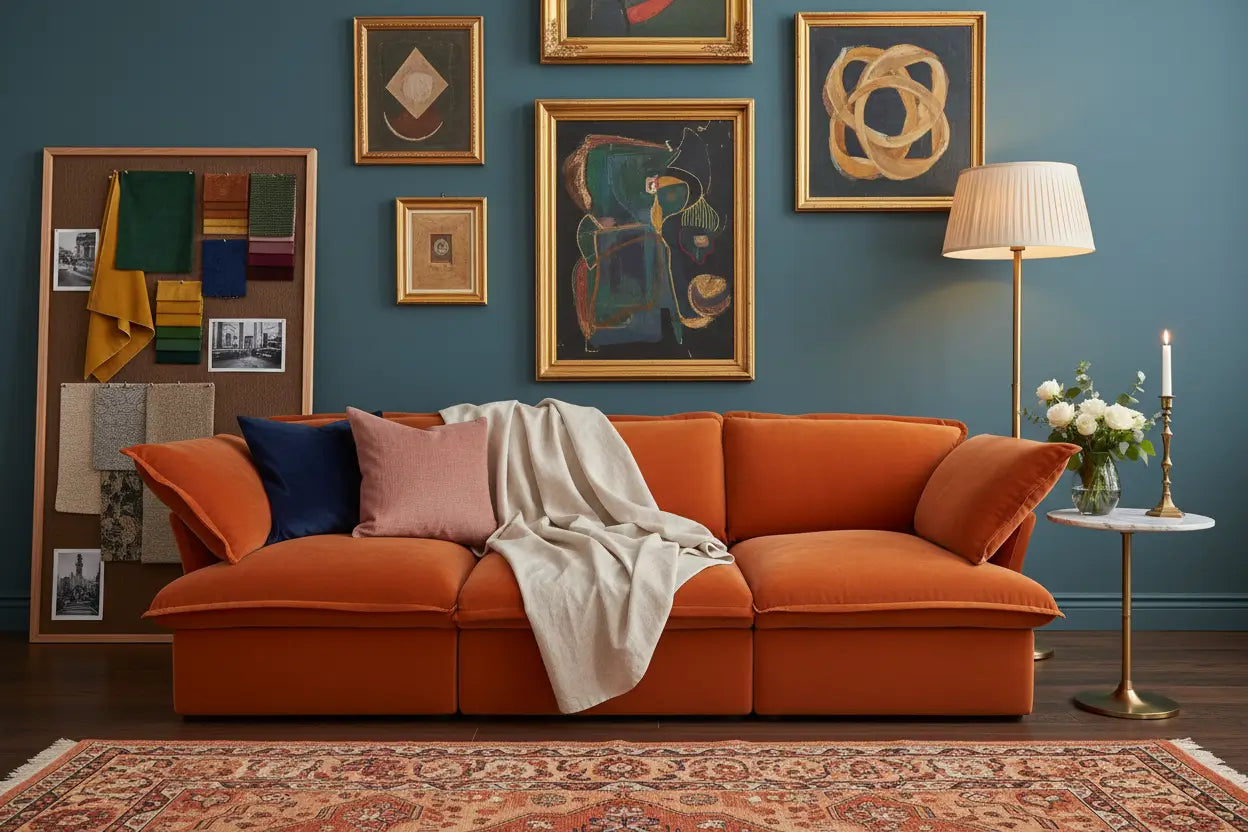
Correct undertone and pattern scale make your sofa look intentional. A sofa cover does more than protect - chosen correctly, it can rebalance a room's color distribution, update a space seasonally, or correct a décor decision that no longer works. Chosen poorly, it competes with everything around it. The difference is rarely about personal taste; it's about understanding a few principles that interior designers apply consistently.(viaA Floral)
Start With the 60-30-10 Rule
The most reliable framework for color balance in any room:(viaThe Spruce)
| Zone | Proportion | Typically Occupied By |
| Dominant color | 60% | Walls, flooring, large rugs |
| Secondary color | 30% | Large furniture - including your sofa |
| Accent color | 10% | Cushions, throws, artwork, fixtures |
Your sofa cover sits in the30% secondary zone. It should complement the dominant color - not match it exactly, and not contrast it sharply. A cover that matches the wall color makes the sofa disappear. A cover that sharply contrasts it makes the sofa compete with the room rather than anchor it.
Undertones Matter More Than the Color Itself
This is the detail most buyers miss when choosing online. Two covers can both be described as "grey" or "beige" and look completely different in a room depending on their undertone:
- Warm-toned rooms(honey wood floors, cream walls, brass or gold fixtures) → need covers with warm undertones: warm beige, camel, terracotta, warm sage, off-white with yellow base
- Cool-toned rooms(white walls, chrome or silver fixtures, cool-toned wood or concrete floors) → work with cool undertones: cool grey, slate blue, cool green, pure white
A cool-toned grey cover in a warm-toned room will look visually "off" even if grey is technically neutral. Always test a fabric swatch against your wall and flooring in natural daylight before committing - screen color rendering is unreliable for undertone matching.
Pattern Scale Relative to Sofa Size
Pattern choice is not just about personal preference - scale relative to sofa size determines whether a pattern reads as intended or becomes visual noise:
| Sofa Size | Pattern Recommendation |
| Large sofa (200cm+) | Large-scale patterns or solid colors - small patterns read as texture and look muddy at distance |
| Standard sofa (160-200cm) | Medium-scale patterns or solid colors - most pattern scales work at this size |
| Loveseat or accent chair (under 160cm) | Small or medium patterns work well - scale is appropriate to the furniture size |
One additional rule:if your room already has a dominant pattern (wallpaper, large area rug, patterned curtains), keep the sofa cover solid or use a very subtle texture. Two competing patterns at different scales create visual tension that makes a room feel unsettled rather than layered.
Color by Room Function
| Room Type | Color Approach | Reasoning |
| Family living room (high traffic) | Mid-tone neutrals - warm grey, taupe, camel | Dark colors show pet hair and lint; very light colors show every mark; mid-tones are the most forgiving |
| Formal sitting room (low traffic) | Any color including light or bold | Lower cleaning frequency means delicate colors are manageable |
| Open-plan living/dining | Neutral that bridges both zones | Avoids visual competition between dining and living areas |
| Small room | Medium-tone in the room's dominant color family | Very dark covers make small sofas feel heavier and reduce perceived space |
Common Color and Style Mistakes
- Matching the cover exactly to the wall color- the sofa disappears into the room rather than anchoring it
- Choosing color from a screen without a swatch- undertones render differently on screens; what looks warm online can read cool in your specific lighting
- Using a small-pattern cover on a large sofa- the pattern reads as texture at distance and looks unintentional
- Buying a bold or trendy color as a permanent cover- bold colors work well as seasonal layers but commit you to a specific aesthetic that may not age well year-round
- Ignoring the room's existing patterns- a patterned cover in a room with patterned rugs or wallpaper creates competition rather than layering
When evaluating deals, it helps to understand pricing benchmarks-this guide explains how much a cloud sofa typically costs and what affects value.
Step 6: Check Sofa Cover Prices and Find the Best Value
Cost per month of use matters more than sticker price. You've identified your sofa type, taken your measurements, chosen your material, and know what color and style works for your room. The final purchasing decision comes down to one question: are you getting the right cover at a fair price?
Sofa Cover Price Guide
| Cover Type | Price Range | Hidden Costs to Watch | Monthly Cost (Est.) | Best For |
| Universal stretch cover | $20-$60 | Return shipping $15-$40 if poor fit | ~$8-10/month | Testing fit; temporary use |
| Mid-range fitted slipcover | $60-$150 | Shipping $10-$50 | ~$3-4/month | Most households; best value |
| Premium fitted slipcover | $150-$300 | Swatch sample $0-$15 | ~$3-5/month | Design-focused spaces |
| Sectional cover set (2-piece) | $80-$250 | Per-section purchase; not whole-sofa | ~$3-5/month | Sectional & L-shaped sofas |
| Performance fabric cover | $200-$500+ | Higher upfront; lowest replacement rate | ~$3-6/month | Pets, kids, heavy use |
| Custom / tailored slipcover | $300-$800+ | Professional cleaning if velvet | ~$4-8/month | Sofas over $1,000; best fit |
The $30 cover is almost always the most expensive option per month - buying correctly once costs less than buying cheaply twice.
What to Check Before Finalizing Any Cover Purchase
Regardless of where you buy, verify these before completing the purchase:
- Exact cover dimensions- seat width range, maximum seat depth, arm allowance. If the retailer can't provide specific dimensions, treat the sizing as approximate.
- GSM and material composition- disclosed GSM is a reliable quality indicator; undisclosed GSM is a red flag on any cover above $50
- Return policy- confirm whether return shipping is covered and whether the return window is sufficient to test fit and washing
- Care label- machine washable vs. hand wash vs. dry clean only; confirm this matches your household's realistic cleaning habits before purchasing
- Swatch availability- for covers above $100, always request a fabric swatch before committing; undertone and texture are difficult to judge accurately from product photography
Step 7: Alternate Seasonal Covers to Keep Your Sofa Fresh
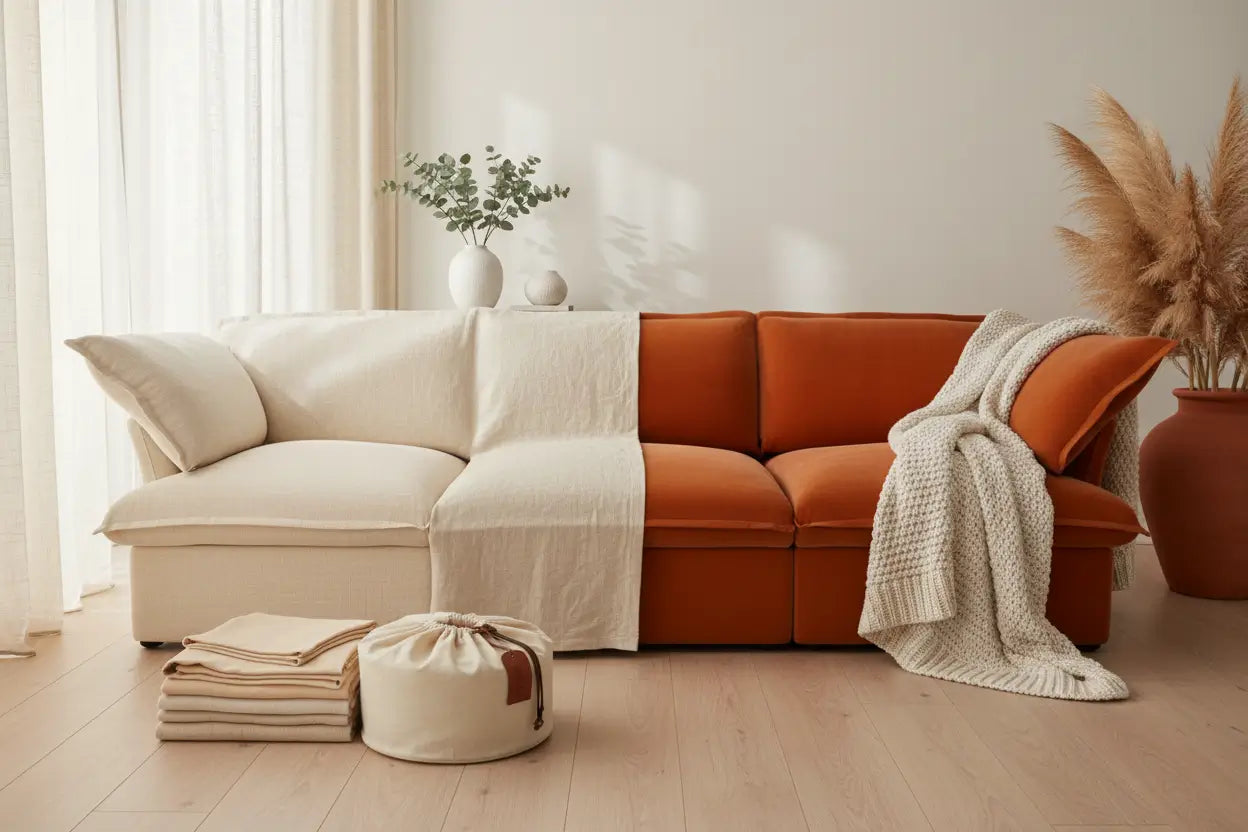
Two covers last significantly longer than one. The system is simple: a fitted base cover in a neutral tone for year-round use, and a seasonal layer - lightweight linen or cotton in spring/summer, velvet or brushed cotton in fall/winter - swapped twice a year using daylight saving time as your trigger. This halves washing frequency for each cover, distributes wear evenly, and keeps your living room looking intentional rather than worn.
A second cover is worth it if you have pets, children, a high-traffic room, or a sofa over $1,000. If none apply, one quality cover on a regular wash schedule is sufficient.
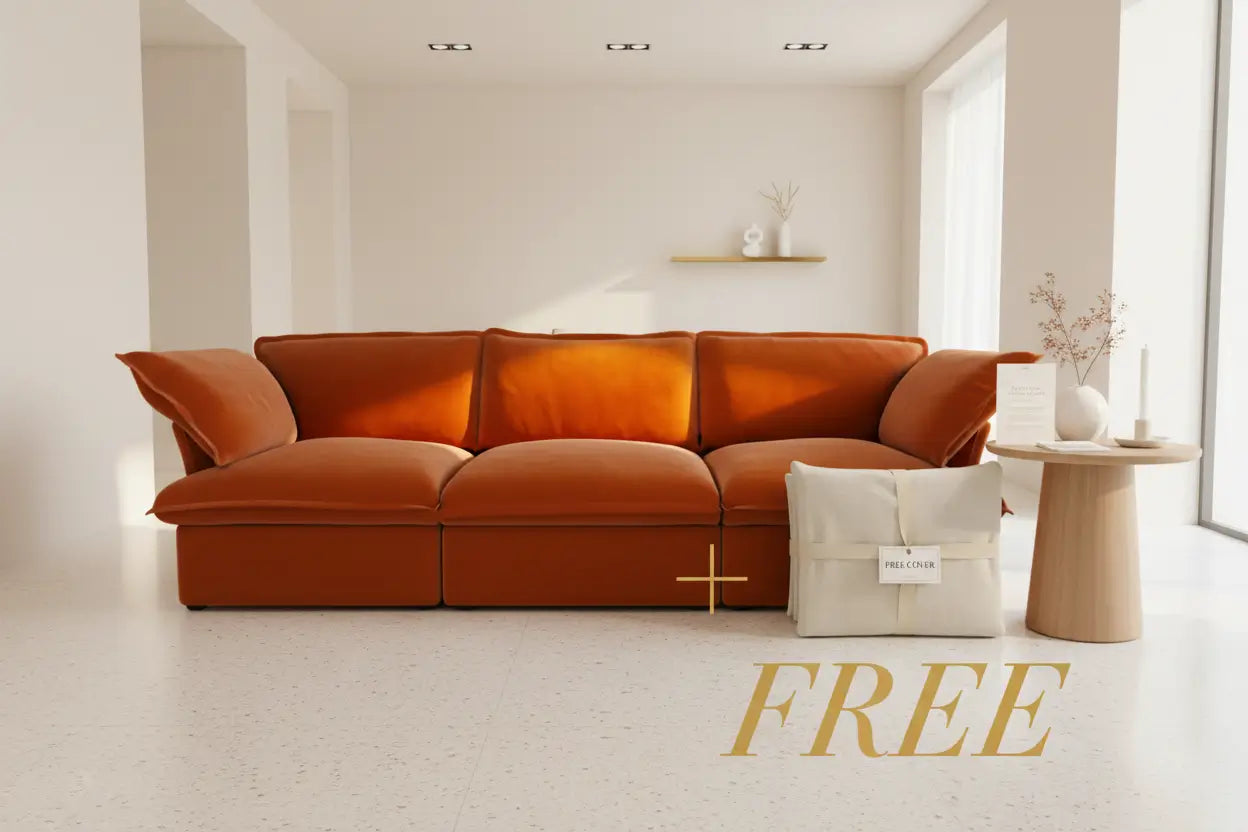
Planning a new sofa?The WJS Home 120V/121V Modern Velvet Sofa includes a complimentary fabric cover with your purchase — choose your preferred color and style at no extra cost.
Sofa Cover Selection Checklist: Final Summary
Use this as a final review before purchasing. Every item should be confirmed before completing the order.
- ▢ Step 1 - Sofa Type:Cover construction matched to sofa type and arm style
- ▢ Step 2 - Measurements:Seat width, depth, and back height confirmed (each section if modular/sectional)
- ▢ Step 3 - Material:Material and GSM matched to household needs; care method confirmed
- ▢ Step 4 - Maintenance:Washing frequency and storage plan confirmed
- ▢ Step 5 - Color & Style:Cover undertone verified against room in natural daylight
- ▢ Step 6 - Price & Purchase:Hidden costs and return policy reviewed
- ▢ Step 7 - Rotation:Second cover decision made; swap trigger and storage method confirmed
A cover chosen correctly should last 3-5 years and cost significantly less per year than replacing cheaper covers that don't perform.
Conclusion
Choosing the right sofa cover is about four steps: identifying your sofa type, taking accurate measurements, selecting the right material for your household, and considering long-term value. Following these steps ensures a perfect fit, durability, and style that complements your home. At WJS Home, every sofa comes with a free fabric cover, making it easier to start a seasonal rotation system and protect your investment. By knowing how to choose a sofa cover and planning for care and style, you extend its lifespan while keeping your living space fresh and functional.
FAQ of Choosing Sofa Covers
The complimentary cover is part of a buy-with-sofa promotion available on selected models only — not all products qualify. For modular or sectional configurations, confirm the cover dimensions against your individual section measurements before purchasing. Check which models are currently included in the promotion atBuy One, Get One Free.
For qualifying sofa purchases, the complimentary cover options are:
Modern Series — Linen & cotton blend: Beige, Black, WhiteColor selection is made at checkout. Only sofa models included in the promotion qualify for the complimentary cover — check product pages for eligibility before ordering.