


Is a Velvet Sofa Pet Friendly? What Pet Owners Must Know

Introduction
Velvet sofas look luxurious, but for pet owners, choosing one can quickly turn into an expensive mistake. If you've ever replaced a sofa due to scratches, stains, or constant cleaning, you already know how costly the wrong fabric can be. So, is a velvet sofa pet friendly? The answer depends on the type of velvet and your pet's behavior. In this guide, we'll break down real-life performance, compare velvet with other pet-friendly sofa materials, and help you decide based on durability, maintenance, and long-term value - not just looks.
Is a Velvet Sofa Pet Friendly?
Yes - but with important caveats. Velvet sofas can work for some pets, especially calm dogs, but traditional velvet is generally not pet friendly, particularly for cats or heavy-shedding dogs. Performance velvet offers a compromise between luxury and durability, but expectations must be realistic.
Below, we'll break down how velvet performs in real-life pet scenarios, including cleaning, durability, and scratch resistance.
Is Velvet Sofa Good for Pets? 5 Real-Life Tests
Now that you know which velvet type applies to you and whether your pet is a cat or a dog, let's look at five real-life scenarios pet owners care about. Each factor includes practical tips, quick takeaways, and side-by-side comparisons.
Test 1: Pet Hair on Velvet Sofas
You've just had guests over, and your golden retriever has left a "blanket" of fur on the sofa. Pets shedding is one of the most common challenges for velvet owners, so it's important to see how different fabrics handle it.
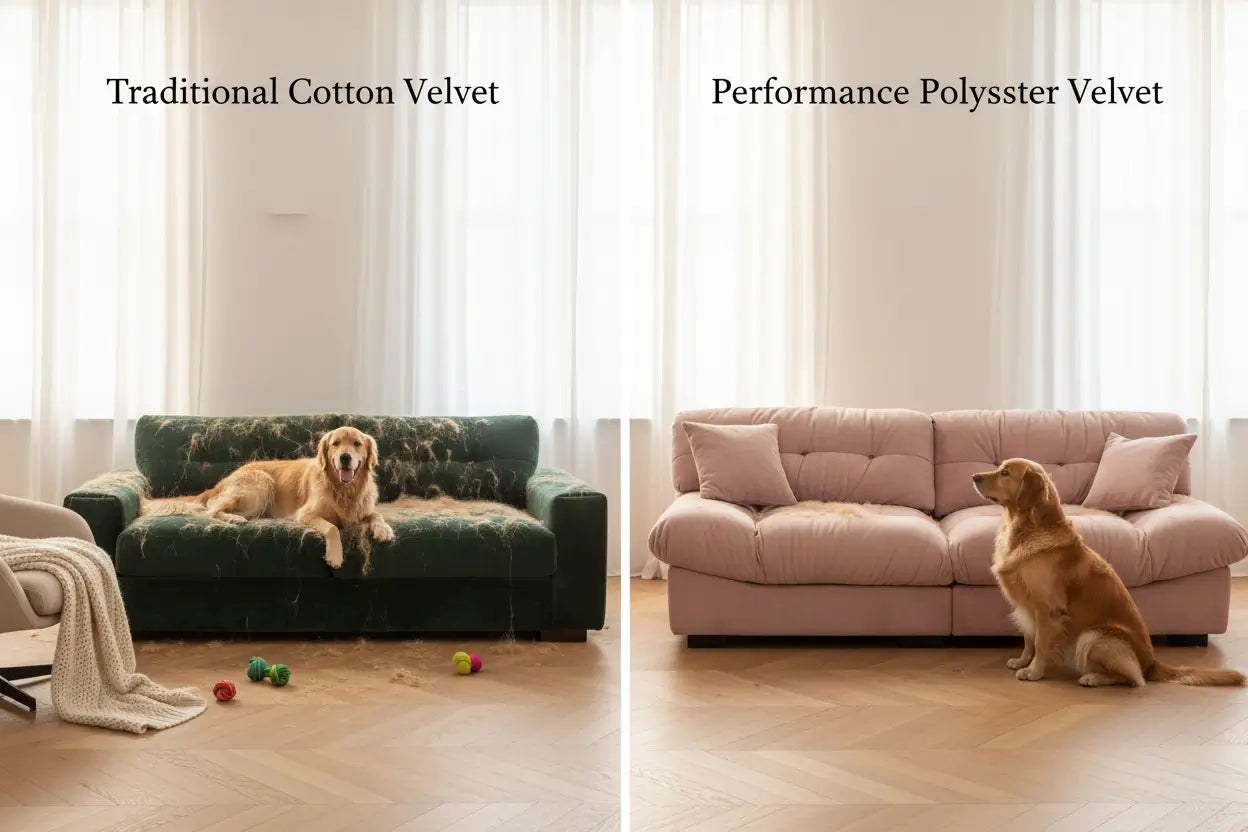
- Sofa Type: Traditional cotton velvet vs. performance polyester velvet
- Method: Dog allowed on sofa for 15 minutes daily for 3 days; hair removed with vacuum and rubber brush every 2 days
- Results:
- Traditional velvet: Hair embedded deeply; cleaning took 15–20 minutes each session, fur stuck, tedious to remove
- Performance velvet: Hair mostly on surface; brushing took only 2–3 minutes, much quicker cleanup
- Microfiber / Leather: Near-zero effort, easiest to maintain
Overall, performance velvet significantly reduces the time and effort needed to manage pet hair compared with traditional velvet. For pet owners, keeping a rubber-bristle brush behind the cushions makes a big difference - a quick 60-second swipe before guests arrive keeps the sofa looking clean and presentable.
Managing pet hair highlights how different velvet types affect daily maintenance, but pets don't just shed - scratching is another major challenge to consider.
Source: Crypton Fabric. "Crypton Fabric Care Guide."
Test 2: Do Cats Scratch Velvet Sofas?
Cats love to leave their mark, and velvet's looped pile can catch claws easily. Over two weeks, two indoor cats had free access to a performance velvet sofa.
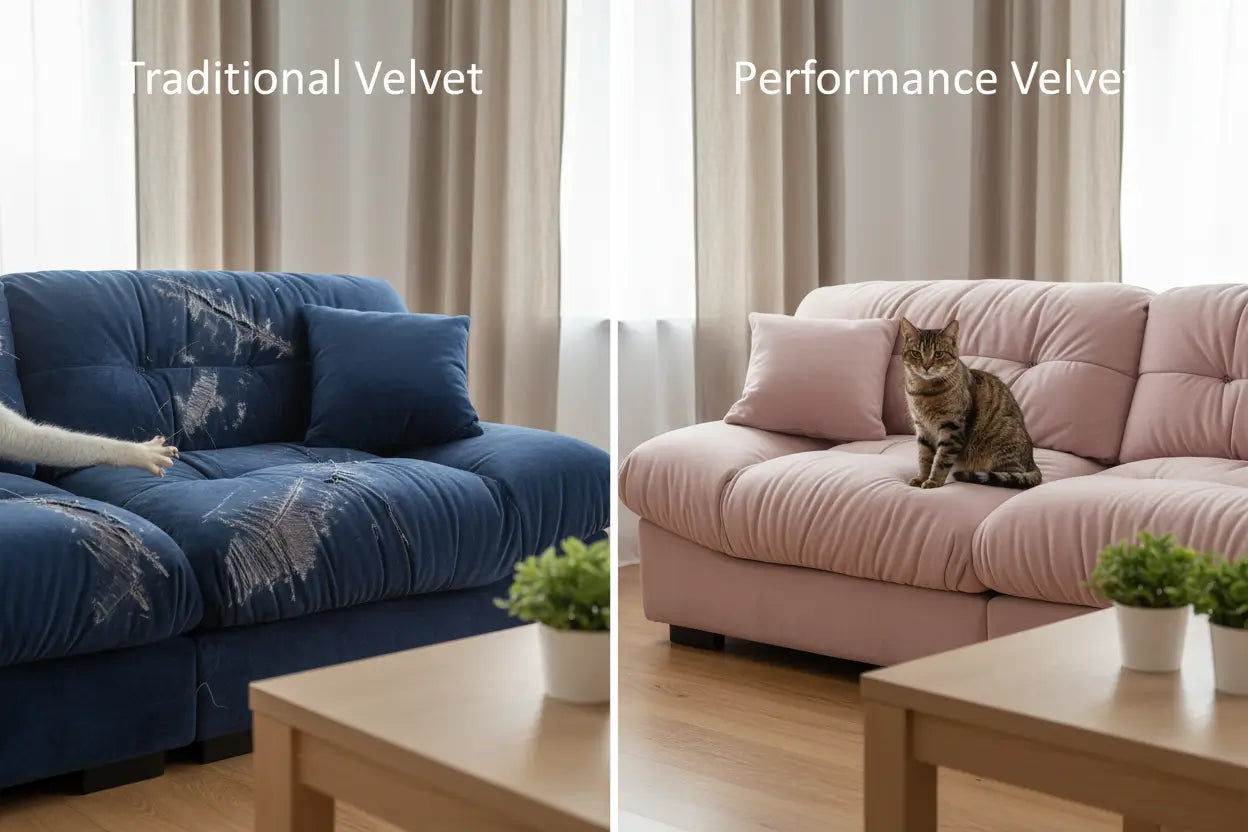
- Sofa Type: Traditional velvet vs. performance velvet
- Method: Two cats allowed free access for 2 weeks, normal play and jumping
- Results:
- Traditional velvet: High risk, threads pulled and pile flattened
- Performance velvet: Moderate risk, minor pulls and flattening
- Woven performance / Microfiber: Best resistance to claws
Velvet cannot fully resist cat claws, so providing scratching posts or limiting unsupervised access is essential. Light steaming and a soft velvet brush can help restore minor flattening, but pulled threads may require professional repair.
Repair Tips for Minor Damage:
- Pulled thread/snag: Push loops back through with a blunt needle or toothpick - never cut.
- Flattened pile: Lightly steam from 5–8cm above and brush with a soft velvet brush.
- Small bald spots: Velvet repair sprays can mask minor areas; test first.
- Widespread damage: Professional reupholstering may be required.
Scratching can damage velvet over time, and spills or accidents from playful pets add another layer of concern for pet owners.
Test 3: How to Clean Velvet Sofa with Pets
Accidents happen, especially with puppies. We tested minor spills over five days to see how velvet holds up.
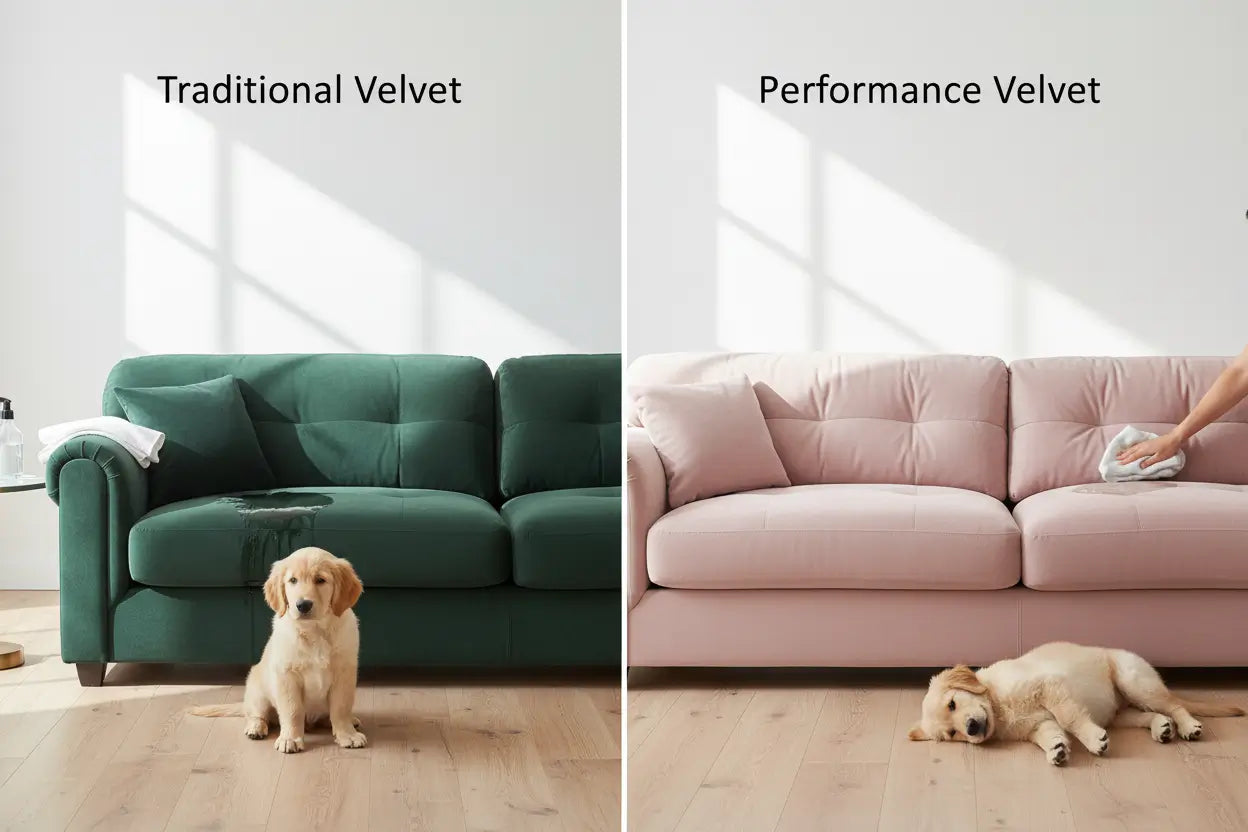
- Sofa Type: Traditional velvet vs. performance velvet
- Method: Puppy allowed on sofa; minor liquid spills blotted immediately
- Results:
- Traditional velvet: Liquids absorbed quickly, leaving stains and odors
- Performance velvet: Liquids beaded for 30–60 seconds, blotting removed most stains
- Microfiber / Leather: Most forgiving, quick cleanup
Prompt blotting is key. Pre-treating velvet with a fabric protector extends your window for cleaning, and enzymatic cleaners are effective for urine or other organic stains.
Odor & Stain Solutions:
- White vinegar mist (1:2 with water): Lightly spray, air dry. Neutralizes odors.
- Baking soda: Sprinkle, leave 4–6 hours, vacuum. Good for surface odors.
- Enzymatic cleaner: Best for urine; breaks down uric acid crystals. Test hidden area first.
Spills and accidents show how velvet reacts to moisture and stains, but even durable fabrics face wear and tear from active dogs over time.
Test 4: How Durable Is Velvet for Dogs?
Active dogs jumping, spinning, and plopping can wear out sofas quickly. A medium-sized dog was tested over three weeks to see durability differences.
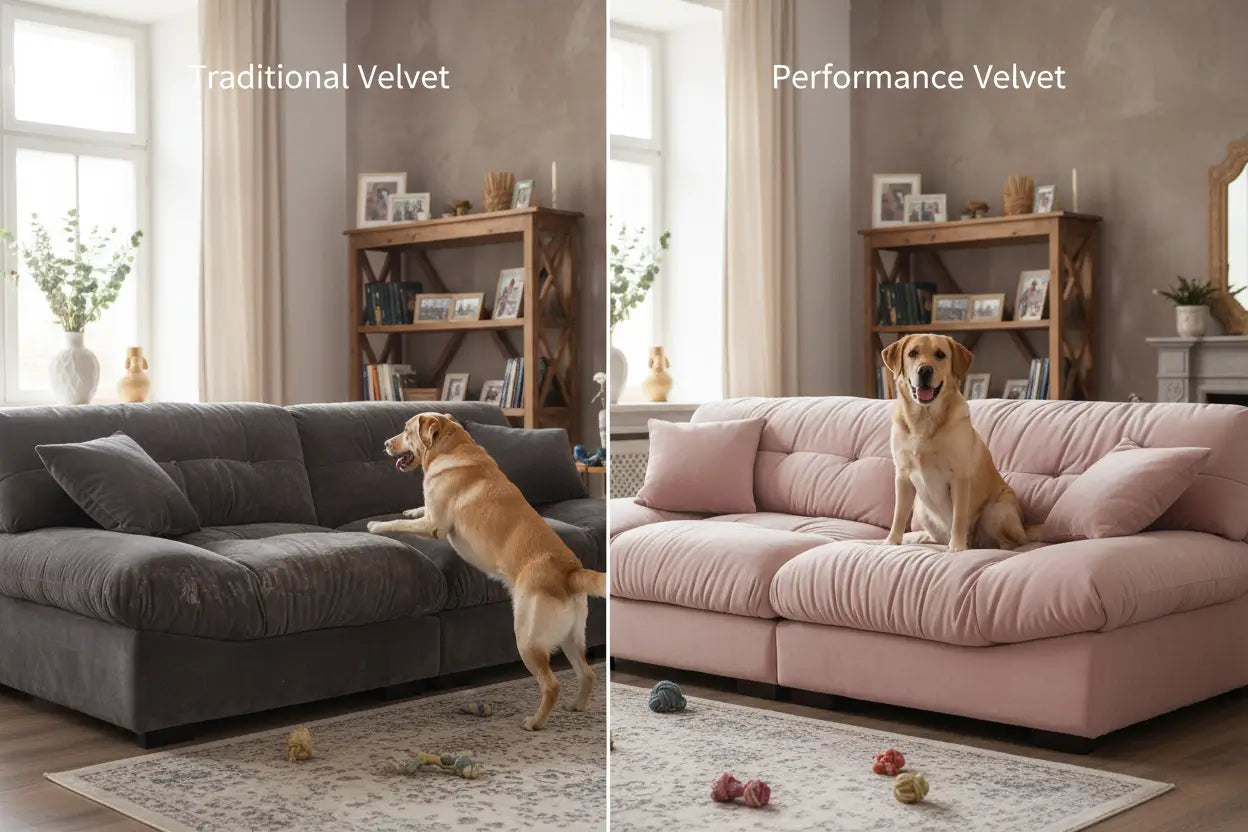
- Sofa Type: Traditional velvet vs. performance velvet
- Method: Daily jumping and sitting repeated for 3 weeks
- Results:
- Traditional velvet: Flattened pile, minor pilling
- Performance velvet: Slight flattening, pile mostly intact
- Microfiber / Woven performance: Best durability under heavy use
Performance velvet handles moderate pet activity, but heavy-use households may benefit more from microfiber or woven performance fabrics.
Daily pet activity can slowly flatten and stress velvet, and while durability matters, everyday messes like mud and drool remain a key concern.
Test 5: Is Velvet Stain Resistant for Pets?
Pets create a variety of messes - muddy paws, drool, spilled food, and more. We observed daily exposure for two weeks on performance velvet.
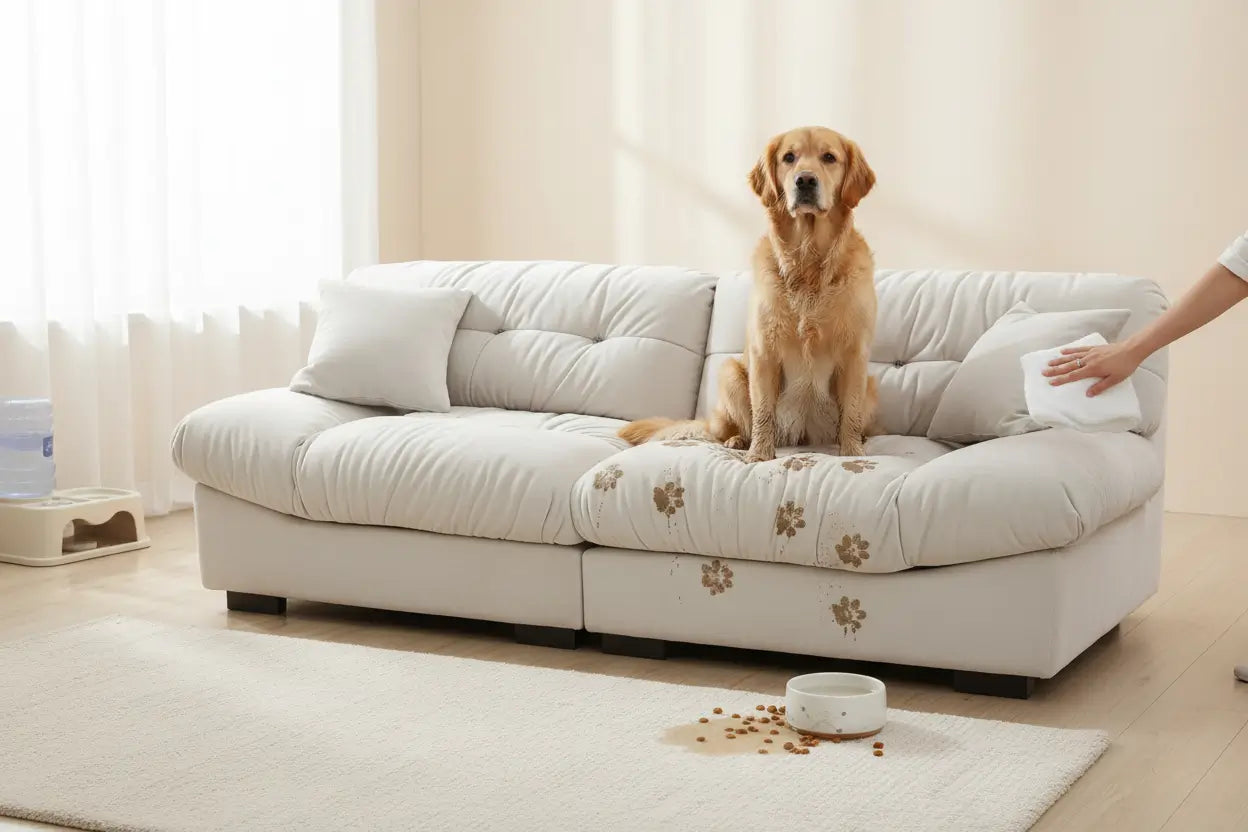
- Sofa Type: Performance velvet
- Method: Daily pet activity; mud, water, and food cleaned as needed
- Results:
- Light stains wiped off easily
- Dried mud required gentle brushing
- Drool, food, and minor spills manageable with prompt care
Acting quickly makes a big difference. Baking soda, diluted soap, or enzyme cleaners work well for most pet messes, and keeping a routine cleaning approach ensures the sofa stays presentable.
Practical Guide for Common Pet Stains:
- Muddy paws: Let mud dry, brush off, lightly dab with diluted soap.
- Drool/Saliva: Blot while wet; low risk on performance velvet.
- Food/Grease: Sprinkle baking soda first, brush, then clean gently.
- Vomit: Scoop solids, blot liquids, enzyme cleaner for residue.
- Urine (fresh): Blot firmly, enzyme cleaner.
- Urine (dried): Rehydrate, apply enzyme cleaner, repeat if needed.
Prompt care can keep velvet looking presentable despite messes, completing the real-life look at how different velvet types perform with pets.
When Velvet Isn't Ideal: Better Alternatives for Pet Owners
Velvet can work for some pets, but there are clear situations where it's not the best choice. Understanding these limitations helps you decide whether to stick with velvet or switch to a more durable option.
1. Cats and Scratching Behavior
Cats' claws can easily snag velvet's pile, especially traditional or crushed velvet. Even performance velvet is not completely scratch-proof, as we saw in Test 2. If your cat has free access to the sofa, velvet is high risk - pulled threads and flattened pile are almost inevitable.
Alternative: Woven performance fabrics or microfiber are more resistant to claws, while still maintaining a soft, stylish feel. Using throws or furniture covers can also protect velvet surfaces in cat households.
2. High-Shedding or Large Dogs
Active or heavy-shedding dogs can embed hair in traditional velvet and accelerate wear, as shown in Tests 1 and 4. Frequent jumping may flatten the pile, create pilling, or leave permanent wear marks.
Alternative: Leather or faux leather sofas are easier to wipe clean and resist hair buildup, while microfiber or performance fabrics provide extra durability under daily dog traffic.
3. Accidents and Stains
Traditional velvet absorbs liquids quickly, leaving stains and odors that are difficult to remove, even with fast action (Test 3 & 5). While performance velvet is slightly better, it still requires careful maintenance.
Alternative: Microfiber and woven performance fabrics handle spills more effectively, while leather offers near-immediate cleanup for liquids. These options reduce stress for owners of puppies or messy pets.
4. Households Seeking Low-Maintenance Furniture
If your goal is minimal cleaning and low upkeep, velvet is generally high-maintenance. Even performance velvet requires brushing, blotting, and sometimes steam treatment to keep it looking plush.
Alternative: Microfiber or leather/faux leather provides long-term ease, making them ideal for busy households. Performance fabric can offer a middle ground if you still want a soft, upscale look without constant care.
Velvet's luxurious feel and appearance are appealing, but for most pet households, its vulnerabilities - scratching, hair embedding, stains, and maintenance - limit its practicality. Only choose velvet if:
- Pets are calm or restricted
- Performance velvet is used
- You accept the extra care involved
Otherwise, consider microfiber, leather, or woven performance fabrics to protect your investment and maintain a pet-friendly home.
If you're still comparing materials, explore our full guide to the best pet-friendly couch materials for a deeper breakdown of durability, maintenance, and real-life performance.
Should You Buy a Velvet Sofa? A Quick Self-Qualification Guide
A velvet sofa can work for pet owners-but only in specific situations and with the right expectations. Use the checklist below to quickly decide if velvet fits your lifestyle or if a more durable pet-friendly sofa is the better choice.
Use this checklist to make your final call:
| ✅ Velvet WORKS for Pets When... | ❌ Velvet DOESN'T Work for Pets When... |
|
✔ You choose performance velvet ✔ You have a low-shedding dog breed ✔ Your pet stays off the furniture ✔ You brush/groom your pet regularly ✔ You use a furniture cover or throw ✔ You want a premium look and feel |
✘ You have a cat with free furniture access ✘ You have a heavy-shedding dog ✘ You want a truly low-maintenance sofa ✘ You have puppies or kittens (accidents likely) ✘ You choose traditional (not performance) velvet ✘ You're replacing furniture frequently |
If you're unsure, the safest default is microfiber or a dedicated performance fabric sofa. If velvet is a must-have aesthetic, go performance velvet - and use slipcovers or throws as an added layer of protection. If you're looking for ready-to-buy options, see our curated list of the best pet-friendly couches.
For more help making the right choice, see our guide on how to choose a sofa if you have pets.
Conclusion
Velvet can work in a pet household - but only if you choose performance velvet and go in with realistic expectations. For most pet owners, especially those with cats or heavy-shedding dogs, microfiber or a dedicated performance fabric remains the safer, lower-maintenance choice.
At WJS Home, we believe your sofa should be beautiful and built for real life - pets included. Explore our curated range of pet-friendly sofas, from performance velvet to stain-resistant fabrics, and find the one that fits your home and your household.