


Chenille vs Linen Sofa: Which Fabric Is Better for Your Living Room?

Chenille vs Linen Sofa: Which Fabric Should You Choose?
Most people pick a sofa fabric based on how it looks in a photo — and regret it within a year. Chenille looks rich and cozy on screen. Linen looks clean and refined. But neither tells you how the fabric actually behaves with your climate, your kids, or your pets.
This guide skips the showroom appeal and compares what each fabric actually does in a real living room, so you can make the right call before you buy.
Pros and Cons of Chenille Sofas
Chenille is a soft, pile-construction fabric made by wrapping short yarn segments around a core thread — the resulting velvety surface feels immediately warm and plush, closer to a soft sweater than a woven cloth. Its dense pile is the source of both its biggest strength (exceptional softness and warmth) and its main trade-offs (heat retention and particle trapping).
If you want to go deeper on chenille's material properties before deciding, our guide on whether chenille is a good fabric for a sofa covers yarn construction, pile density, and long-term performance in more detail.
 Pros:
Pros:
- Pile surface is exceptionally soft against bare skin
- Directional nap creates a light-catching texture with natural visual depth
- Dense pile retains warmth — well suited to cold rooms or cooler climates
- Accepts dye deeply; available in a wide range of saturated, lasting colors
- Synthetic-blend constructions resist pilling and maintain pile density over time
- Fine-yarn, tightly woven chenille has high abrasion resistance at contact points
Cons:
- Pile structure traps particles — dust, crumbs, and loose fibers accumulate between fibers
- Thick-yarn pile is prone to snagging and pulling under friction or sharp contact
- Dense pile restricts airflow — one of the least breathable common sofa fabrics
- Quality varies sharply: thick-yarn, loosely woven chenille flattens visibly within 2-3 years of heavy use
- Natural-fiber chenille (cotton-based) can distort when wet — check care labels before washing
Pros and Cons of Linen Sofas
Linen is a flat-woven natural fabric made from flax fiber — its open weave creates a crisp, breathable surface that stays cool to the touch and softens gradually with use. That same open structure is why linen breathes better than almost any other sofa fabric, and why spills reach the fiber within seconds.
For a broader look at how linen compares to other popular upholstery options including velvet, cotton, and performance fabric, see our complete sofa fabric guide.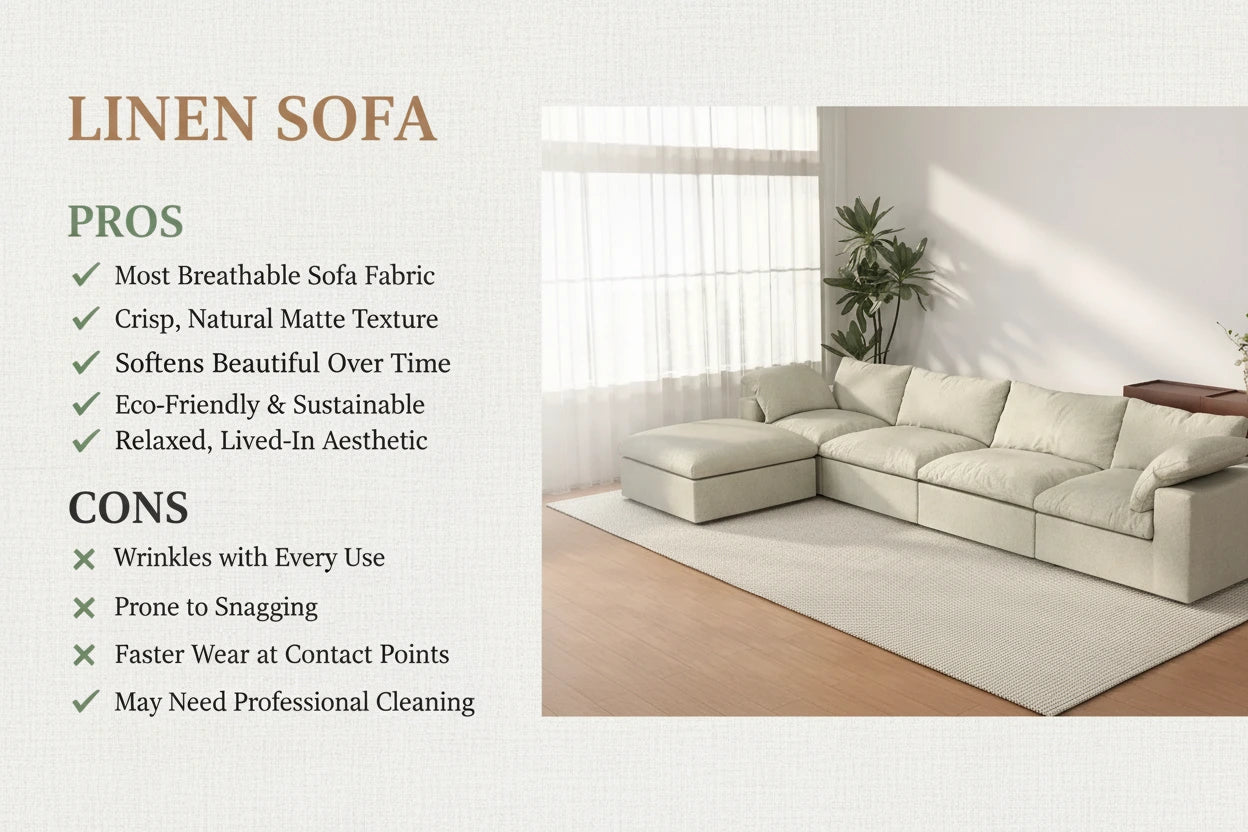
Pros:
- Open flat weave allows active airflow — the most breathable of common sofa upholstery fabrics
- Crisp matte natural finish with a slightly irregular, organic surface texture
- Flax fiber softens naturally over time without losing structural integrity
- Natural wrinkles are part of the fabric's character — they give linen its relaxed, lived-in look
- Sustainably sourced; flax cultivation requires significantly less water and pesticide than cotton
Cons:
- Open weave absorbs moisture within seconds — untreated linen has no inherent stain resistance
- Wrinkles with every use and does not self-smooth like performance fabrics
- Open-loop weave snags under friction or sharp contact and is difficult to repair once pulled
- Pure linen wears faster at high-contact areas (armrests, seat edges) than performance fabrics
- Non-treated linen with non-removable covers may require professional cleaning
Note: Performance fabric is upholstery treated or engineered to resist moisture, stains, and abrasion — both chenille and linen are available in performance versions that hold up significantly better than their untreated counterparts.
Core Differences Between Chenille and Linen Sofas
The real difference between chenille and linen is not softness versus breathability — it is pile construction versus flat weave, and everything else follows from that structural distinction. The comparison below shows how each construction behaves under actual use conditions.
| Dimension | Chenille Sofa | Linen Sofa |
|---|---|---|
| Comfort & Feel | Warm, soft, enveloping | Cool, crisp, breathable |
| Durability | Fine-yarn blends: 7-10+ years; thick-yarn: 2-3 years before flattening | Performance/cotton-linen blend: 5-8 years; pure untreated linen: 3-5 years under heavy use |
| Stain Resistance & Cleaning | Moderate; performance blends easier to maintain | Low without treatment; absorbs spills quickly |
| Pet & Family Friendliness | Better; fine-yarn is more claw-resistant | Less ideal; open weave snags easily |
| Cost | $500-$1,500; synthetic blends offer best long-term value | $800-$2,500; pure linen adds ongoing maintenance costs |
Comfort and Feel — Which Fabric Feels Better to Sit On?
In a climate-controlled room, both are comfortable. In a warm or sun-facing room, linen wins on feel. In a cold or heavily air-conditioned space, chenille's warmth is a genuine asset.
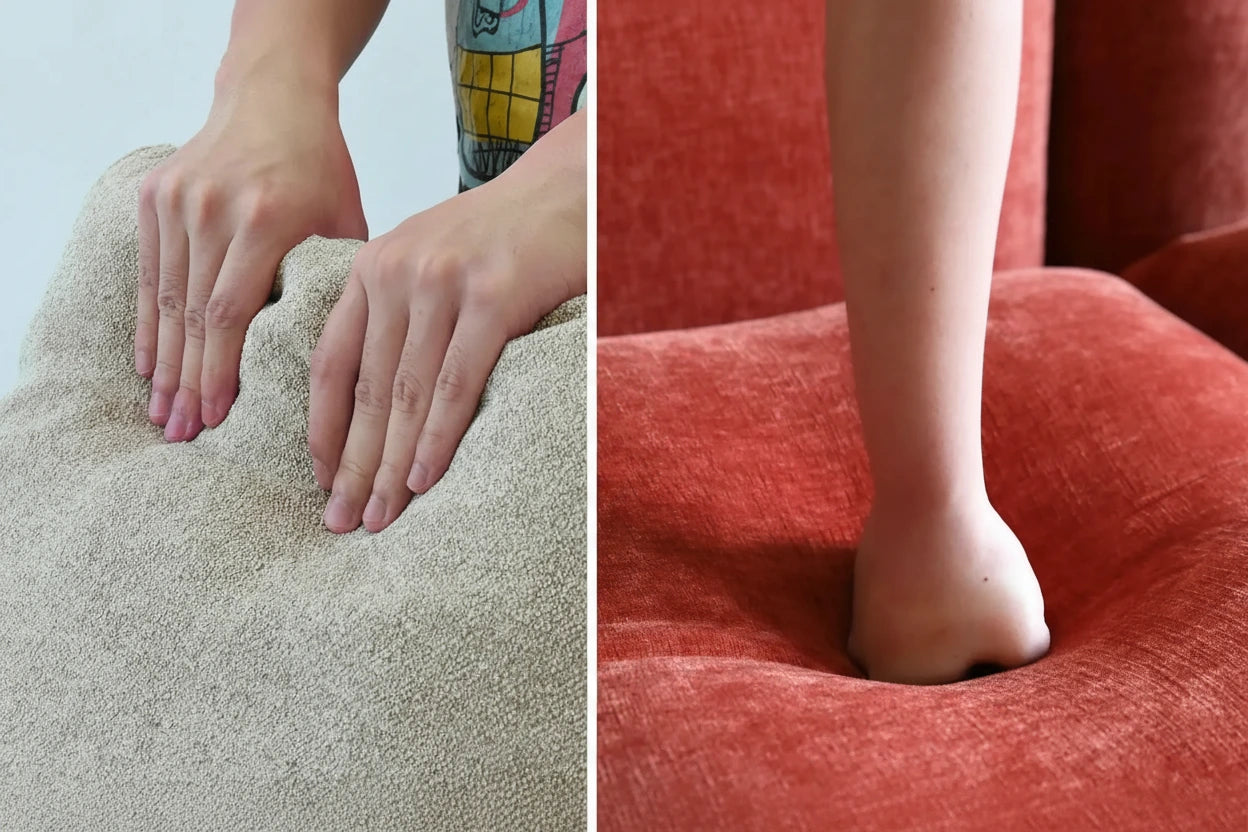
- Chenille: Surface temperature rises with prolonged contact; noticeably warm in rooms above 22°C / 72°F without air conditioning
- Linen: Maintains a neutral surface temperature; does not trap heat between fabric and skin
Durability — Which Sofa Fabric Lasts Longer?
Fine-yarn chenille holds its pile density under friction significantly longer than pure linen, which wears faster at armrests and seat edges. The deciding factor is not which fabric category you choose — it is the specific construction quality within each category.
 Chenille
Durability depends heavily on yarn quality. Tightly woven polyester-blend chenille holds its pile density well under daily friction, typically lasting 7-10+ years with normal care. Lower-quality thick-yarn chenille is a different story — visible flattening and pilling appear at high-use spots within 2-3 years of heavy household use.
Linen
Performance linen and cotton-linen blends are meaningfully more resilient than untreated pure linen, and can approach 5-8 years in light-use settings. Pure untreated linen, however, shows surface abrasion at armrests and seat edges faster than any performance fabric — making construction quality just as critical for linen as it is for chenille.
For the same budget, chenille blends offer more longevity under heavy daily use. Our full breakdown on how long sofas last includes wear benchmarks across fabric types and frame construction.
Stain Resistance and Cleaning — Which Is Easier to Maintain?
Chenille is easier to maintain on a daily basis. Its pile slows liquid absorption on synthetic blends — spills bead on the surface before penetrating the fiber, giving you time to respond. Linen offers no such buffer: its open weave pulls moisture directly into the fiber within seconds, and untreated linen that is not blotted immediately is at high risk of permanent staining.
 Chenille cleaning protocol:
- Vacuum weekly with a soft-brush attachment to clear the pile of trapped dust and particles
- Blot spills immediately, apply a water-based upholstery cleaner, allow to air dry
- Do not saturate — overwetting the pile can cause permanent flattening
Linen cleaning protocol:
- Spills must be blotted within 2-3 minutes — untreated linen sets stains quickly
- Do not rub — rubbing spreads the stain and distorts the weave structure
- Non-removable pure linen covers may require professional cleaning
For step-by-step instructions on cleaning both fabric types at home, see our guide on how to clean a fabric sofa.
Pet and Family Friendliness — Which Fabric Holds Up Better?
Chenille's pile absorbs the friction of pet claws and everyday contact better than linen's open weave, which catches and snags under sharp contact with no easy repair. Fine-yarn chenille outperforms both thick-yarn chenille and untreated linen in homes with pets or young children.
 Pets
Pets
Fine-yarn chenille is the better choice for pet owners. Chenille's pile surface collects pet hair, but it removes easily with a lint roller or a quick vacuum — the maintenance is routine rather than stressful. The main risk is claw snagging, and this is significantly reduced with fine-yarn constructions that offer tighter pile resistance. Linen is harder to protect: its open flat weave catches pet claws directly, and once a thread is pulled, the damage is immediately visible and difficult to reverse.
Kids
Chenille handles toddler and child use more forgivingly than linen. The pile absorbs contact pressure and crumbs without showing immediate wear, and performance chenille blends manage incidental liquid spills better than untreated linen in real daily use. Linen, by contrast, absorbs spills the moment they land, and the visible wrinkling that comes with every sit-and-tumble cycle accumulates quickly in a household with young children.
Adult-only, low-traffic rooms
Linen performs well when the sofa sees occasional, careful use. In a formal living room or reading space used primarily by adults, its maintenance requirements are entirely manageable — and the refined, airy aesthetic it brings to the room is difficult for chenille to match.
If you have cats or dogs and are also considering velvet, our pet-friendly velvet sofa guide covers scratch resistance and hair removal across pile fabrics.
Cost — Which Fabric Gives ou More Value?
Synthetic chenille blends deliver stronger long-term value because both purchase price and ongoing maintenance cost stay low. Pure linen's stain vulnerability means the real lifetime cost includes professional cleaning — not just the sticker price.
| Cost Factor | Chenille | Linen |
| Purchase price | $500-$1,500 | $800-$2,500 |
| Long-term maintenance cost | Low — weekly 5-min vacuum(professional cleaning rarely needed) | Medium-high — immediate spill response required (may need professional) |
| Lifespan (heavy use) | 7-10+ years | 5-8 years |
| Best value option | Polyester/performance blend | Cotton-linen blend |
Performance chenille offers the strongest long-term value for most households. Cotton-linen blend is the smartest linen choice when budget and practicality are both priorities.
Which Fabric Is Best for Your Living Room?
Your living room conditions — not the fabric's reputation — should make the final decision. Match your household profile to the right fabric using this checklist.
Choose chenille if:
- You have toddlers or school-age children who use the sofa every day
- You have pets that sit or sleep on the furniture
- Your primary use is lounging, TV watching, or daily family gathering
- You live in a cooler climate or keep the room air-conditioned year-round
- You want low-maintenance upkeep without professional cleaning services
- You prefer a warm, cozy, textured living room aesthetic
Choose linen if:
- Your living room is an adult-only or genuinely low-traffic space
- You live in a warm or humid climate where breathability matters daily
- Your interior style is coastal, minimalist, Japandi, or Scandinavian
- You can respond to spills immediately and manage wrinkles as part of routine
- Sustainable, natural materials are a purchasing priority for you
Still undecided? A blend fabric solves the tradeoff:
A chenille-linen blend delivers chenille's soft feel with linen's lighter visual weight. A cotton-linen blend gives you linen's natural look with meaningfully better durability and easier care. Browse our full sofa collection to compare blend options side by side.
Chenille and Linen Sofa Recommendations
Not sure which model fits your household? Here are two WJS Home sofas matched to the three most common buyer profiles in this comparison.
WJS Home Cotton and Linen Fabric Sofa | $1,590
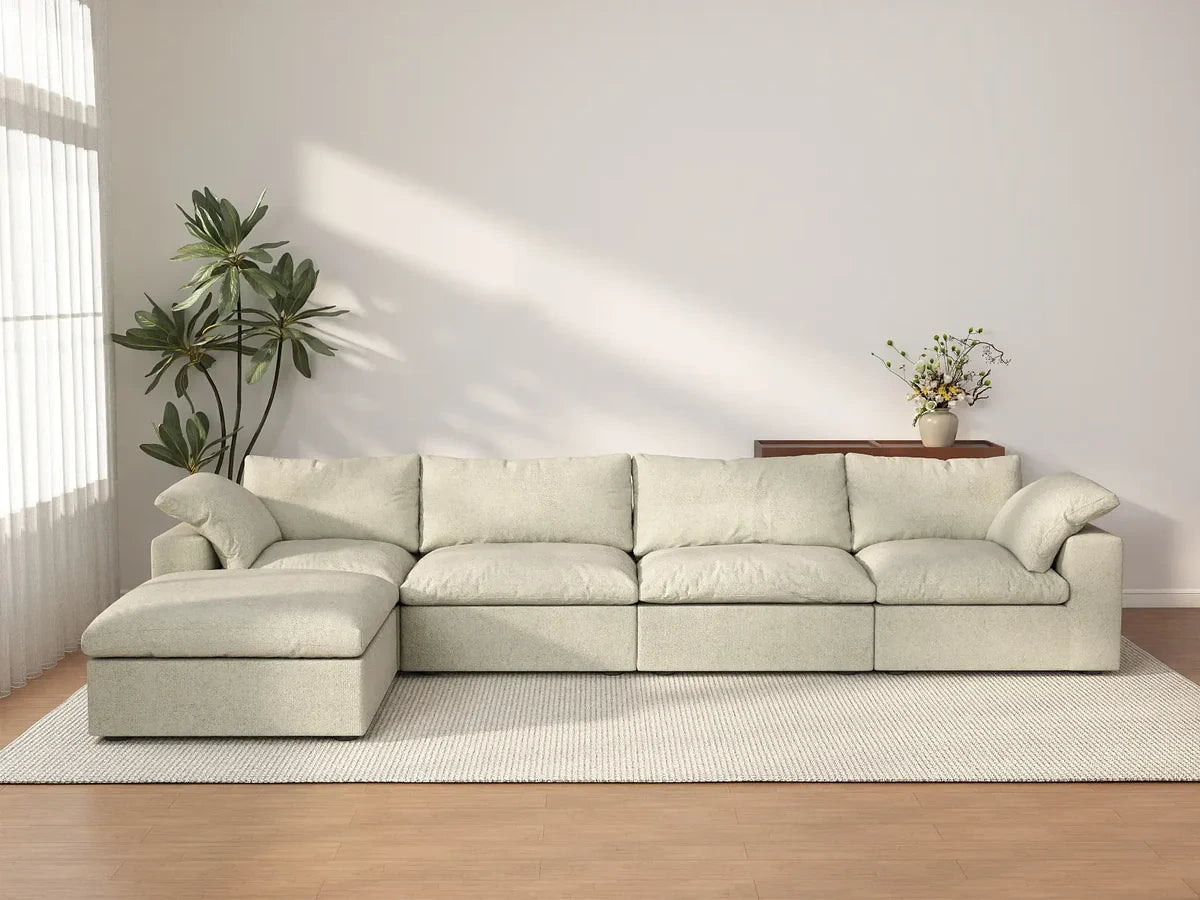
For buyers who want linen's look with built-in everyday functionality. The cotton-linen blend is more durable and easier to care for than pure linen, and the built-in storage keeps the room visually light while solving the living room clutter problem. If you love linen's aesthetic, our linen cloud sectional covers are also available separately for easy replacement and seasonal refresh.
WJS Home Matrix Orange Chenille Couch Sectional | $770

For comfort-first buyers who want maximum softness and a bold design statement. When the sofa needs to be the most comfortable seat in the room, chenille is the clear answer. The rich pile and warm orange color make this sectional the room's comfort anchor — not just a styled furniture piece.
Chenille vs Linen Sofa — Which Should You Buy?
The right sofa fabric is the one that fits how your household actually operates — not how it looks in ideal conditions. Three clear paths:
- Buy chenille if your sofa will be used hard, every day, by a full household
- Buy linen if your living room is calm, adult-focused, and breathability matters more than softness
- Buy a blend if you want the aesthetics of both without choosing one over the other
Both fabrics can look exceptional and last for years. The difference is not quality — it is match. Get that right, and either choice becomes the right one.