


Introducción
Si alguna vez te has hundido en un sofá en una tienda y has pensado "¿por qué el mío no es así?", la profundidad del asiento es casi con toda seguridad la respuesta. La diferencia entre un sofá de asiento profundo y uno normal es una de las distinciones más importantes, pero a la vez menos comprendidas, a la hora de comprar muebles. Si aciertas, tendrás un sofá que se adapta perfectamente a tu estilo de vida. Si te equivocas, tendrás que usar cojines durante años.
Esta guía desglosa todas las diferencias importantes entre los sofás de asiento profundo y los sofás estándar (dimensiones, comodidad, postura, estética, tamaño de la habitación y a quién se adapta realmente cada tipo) para que puedas tomar una decisión informada antes de comprar.
¿Qué es un sofá de asiento profundo?
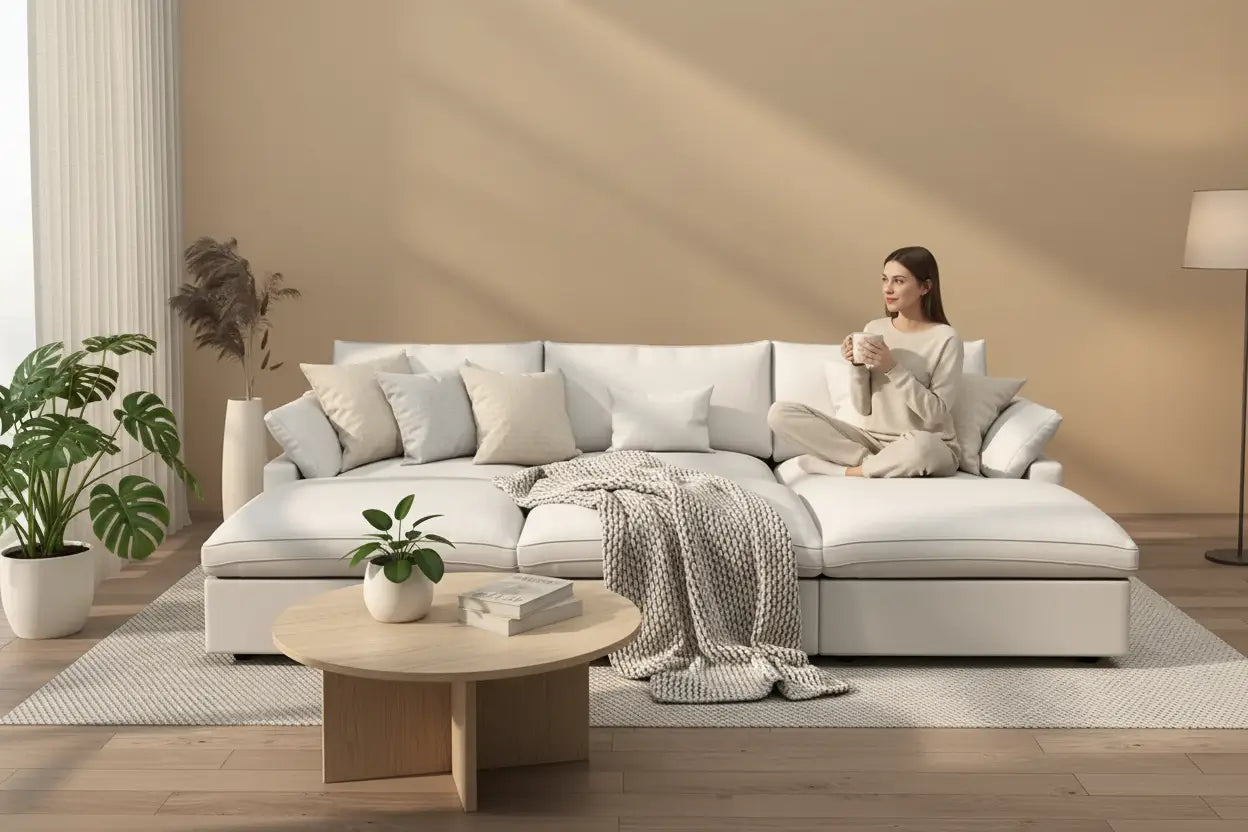
Un sofá de asiento profundo es cualquier sofá con una profundidad de asiento —medida desde el borde delantero del cojín hasta el respaldo— de 24 pulgadas o más. La mayoría de los sofás de asiento profundo tienen una profundidad de entre 24 y 30 pulgadas, aunque algunos modelos extragrandes o seccionales superan esta medida.
Su característica principal es la amplitud horizontal. Al sentarse, puede recostarse completamente contra los cojines y aún así tener espacio para meter las piernas debajo, estirarse hacia los lados o sentarse con las piernas cruzadas sin sentirse apretado. Los sofás de asiento profundo están diseñados para descansar, acurrucarse y relajarse durante largos periodos.
Nombres comunes que verás usados indistintamente:
- Sofá de asiento profundo
- Sofá de asiento profundo
- Sofá de asiento profundo
- Sofá de salón
- Sofá de perfil bajo (cuando se combina con una altura de asiento baja)
¿Qué es un sofá normal (de asiento estándar)?

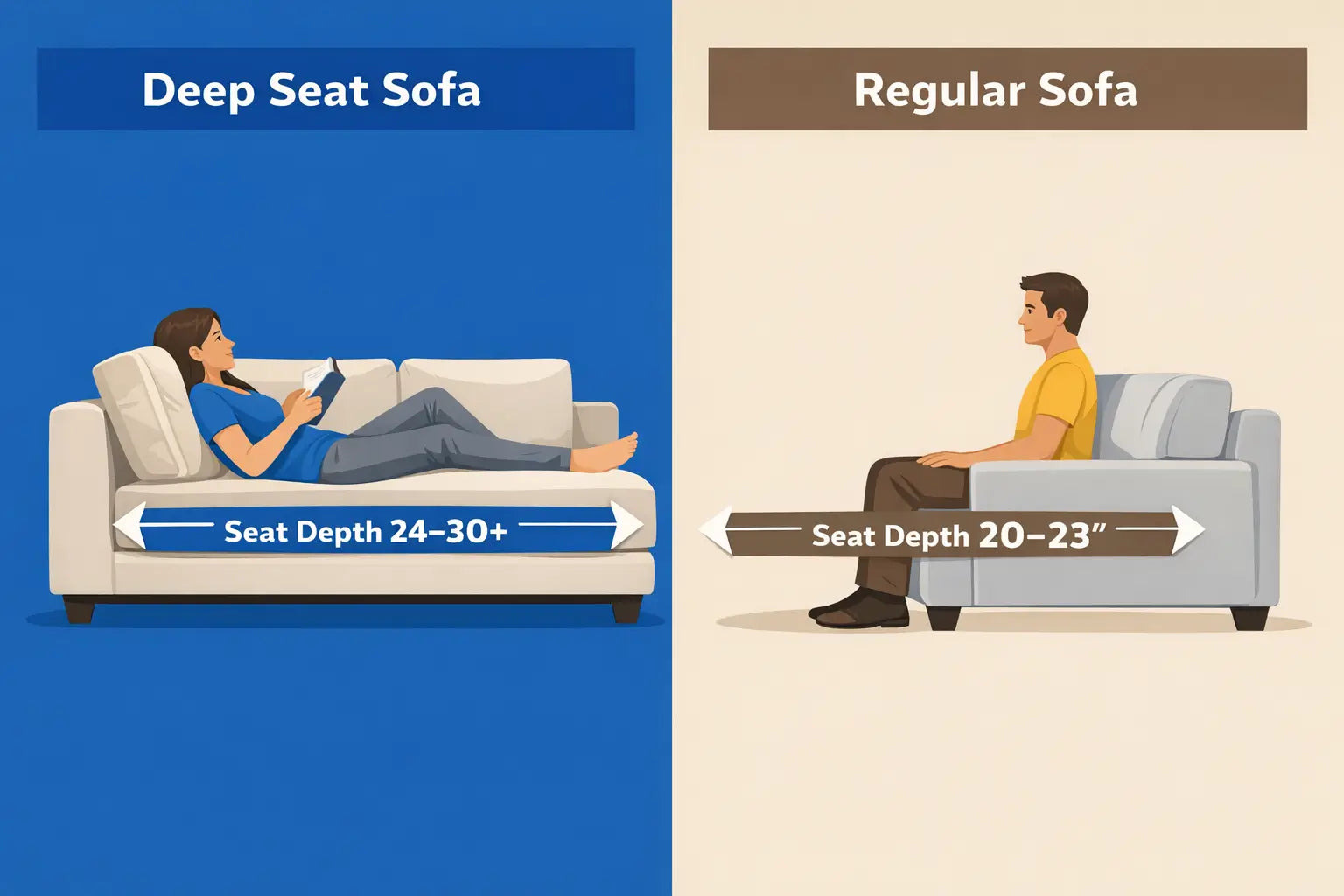
Un sofá de asiento estándar, también llamado sofá común, suele tener una profundidad de asiento de entre 20 y 23 pulgadas. Esta dimensión ha sido la norma en la industria durante décadas y está diseñada para brindar una postura erguida y con buen apoyo: imagínese sentado con ambos pies apoyados en el suelo y la espalda naturalmente contra los cojines.
Los sofás estándar priorizan la postura ergonómica y la versatilidad. Son ideales para salas de estar formales, oficinas en casa, apartamentos pequeños y cualquier espacio donde se realicen actividades habituales como conversar, comer o trabajar desde el sofá.
Sofá de asiento profundo vs. sofá estándar: diferencias clave de un vistazo
La principal diferencia entre un sofá de asiento profundo y un sofá normal radica en la profundidad del asiento, que influye en la comodidad, la postura y la distribución del espacio. Los sofás de asiento profundo priorizan el espacio para relajarse, mientras que los sofás normales priorizan el soporte erguido y la versatilidad.
La tabla comparativa que aparece a continuación destaca las diferencias más importantes de un vistazo.
| Característica | Sofá de asiento profundo | Sofá normal |
|---|---|---|
| Profundidad del asiento | 24-30+ pulgadas | 20-23 pulgadas |
| Uso principal | Descansar, relajarse, anidar | Sentados erguidos, conversando. |
| Tipo de cuerpo ideal | Personas de mayor estatura (1,73 m o más) | Estatura promedio a baja |
| Soporte postural | Requiere esfuerzo o almohadas adicionales. | Soporte lumbar natural |
| Tamaño de habitación necesario | Mayor huella | Más eficiente en cuanto al espacio |
| Se admiten mascotas y niños. | Excelente: habitación extra | Buen espacio, menos extenso |
| Estético | Informal, relajado, moderno | Formal, tradicional, versátil |
| Gama de precios | Generalmente más alto | Amplio rango, generalmente más bajo |
| Facilidad para levantarse | Puede ser más difícil para algunos. | Fácil para la mayoría |
Según las guías de compra de muebles de Wayfair y recursos de diseño de interiores como The Spruce, la profundidad estándar del asiento de un sofá suele oscilar entre 20 y 23 pulgadas, mientras que los sofás de asiento profundo comienzan en 24 pulgadas o más.
Sofá de asiento profundo vs. sofá estándar: diferencias clave
Los sofás de asiento profundo y los sofás convencionales difieren en varios aspectos importantes, como la profundidad del asiento, el estilo de comodidad, el soporte postural y las necesidades de espacio. Comprender estas diferencias ayuda a los compradores a elegir un sofá que se adapte a sus proporciones corporales, estilo de vida y espacio disponible.
Las siguientes secciones desglosan cada diferencia en detalle.
1. Profundidad del asiento: La medida clave
La profundidad del asiento es el dato más importante a la hora de comparar sofás, pero suele pasarse por alto en favor de la longitud o el estilo general del sofá.
Cómo medir la profundidad del asiento: Siéntese en el sofá y mida desde el borde delantero del cojín del asiento hacia atrás hasta donde comienza el respaldo. Esta es la profundidad útil del asiento.
- Profundidad estándar del asiento del sofá: 20-23 pulgadas
- Profundidad del sofá de asiento profundo: 24-30+ pulgadas
- Diferencia: Al menos 4 pulgadas, lo que parece insignificante pero se traduce en una experiencia de asiento radicalmente diferente.
Como referencia, 10 centímetros de profundidad adicional equivalen aproximadamente al largo de la mano de un adulto. Cuando ese espacio existe detrás de las rodillas al sentarse erguido, crea la característica sensación de "flotar" o "hundirse" por la que son conocidos los sofás de asiento profundo.
Consejo rápido para el fragmento destacado: La principal diferencia entre un sofá de asiento profundo y un sofá normal es la profundidad del asiento. Los sofás normales miden entre 50 y 58 cm de profundidad, mientras que los sofás de asiento profundo miden 60 cm o más. Esta diferencia determina si un sofá invita a sentarse erguido o a recostarse de forma más relajada.
Para obtener un desglose completo de los tamaños, anchos, alturas y profundidades de asiento de los sofás, consulte nuestra guía de dimensiones de sofás .
2. Comodidad y experiencia al sentarse
Aquí es donde las opiniones divergen más, y con razón, porque "comodidad" significa cosas diferentes para personas diferentes.
Comodidad de sofá de asiento profundo
Los sofás de asiento profundo son ideales para relajarse. Si su noche perfecta consiste en estirarse con el portátil, leer con las piernas cruzadas o recostarse entre cojines mientras ve la televisión, un sofá de asiento profundo le ofrece una experiencia inigualable por un sofá estándar. Su mayor profundidad le permite cambiar de posición libremente durante toda la noche sin sentirse limitado.
Comodidad estándar de un sofá
Los sofás estándar están diseñados para brindar comodidad postural, es decir, para mantener la columna vertebral correctamente alineada al sentarse erguido. Para quienes usan el sofá para conversar, trabajar, comer o para estar sentados durante periodos relativamente cortos, esta suele ser la opción más cómoda, ya que la postura se adapta de forma natural, sin necesidad de buscar una posición cómoda por cuenta propia.
La verdad honesta
Muchas personas que compran un sofá de asiento profundo lo disfrutan en el 90% de los casos, pero tienen dificultades cuando quieren sentarse erguidos para trabajar. Muchos que compran un sofá estándar desearían tener más espacio para estirarse cómodamente durante las noches de cine. Es fundamental conocer el uso principal que le darás.
Si le gusta la sensación suave y envolvente de los asientos profundos, también puede explorar las diferencias entre un sofá tipo nube y un sofá tradicional para comprender cómo la construcción de los cojines afecta la comodidad.
3. Postura y soporte para la espalda
Una de las diferencias más comúnmente pasadas por alto entre los sofás profundos y los estándar es cómo afecta cada uno a la espalda.
Los sofás estándar están diseñados para que, cuando una persona de estatura media se sienta con normalidad, su espalda alcance de forma natural los cojines del respaldo y reciba apoyo lumbar. La profundidad del asiento se ajusta a la longitud media de la pierna, creando una postura sentada natural y ergonómica.
Los sofás de asiento profundo presentan un desafío postural. Debido a la profundidad del asiento, sentarse erguido con la espalda completamente apoyada en los cojines a menudo significa que las piernas cuelgan o las rodillas no alcanzan el borde del asiento, especialmente para personas de baja estatura (menos de 1,65 m). El resultado es que muchas personas terminan:
- Sentarse en la mitad delantera del asiento (anulando la ventaja de la profundidad)
- Utilizar cojines decorativos detrás de la parte baja de la espalda para cerrar el hueco
- Desplomándose en una posición reclinada.
A quién afecta más: Si mides menos de 1,68 m, un sofá de asiento profundo puede parecer un mueble diseñado para otra persona. Si mides 1,73 m o más, es más probable que la profundidad del asiento se ajuste a tus proporciones de forma natural.
Si te interesa saber cómo el diseño del sofá afecta a la alineación de la columna vertebral y a la comodidad a largo plazo, nuestra guía ergonómica de sofás explica los factores clave que influyen en la correcta sujeción de los asientos.
4. Compatibilidad entre tipo de cuerpo y altura
La altura y la longitud de las piernas son los indicadores más fiables de cómo te resultará la profundidad del asiento de un sofá.
Pautas generales de comodidad:
Estas medidas son pautas generales de comodidad utilizadas por muchos diseñadores de muebles y pueden variar según las preferencias individuales.
| Tu altura | Profundidad de asiento recomendada |
|---|---|
| Menos de 1,63 m | 19-21 pulgadas |
| 5'4" - 5'7" | 21-23 pulgadas |
| 5'8" - 6'0" | 23-26 pulgadas |
| Más de 1,83 m | 26-30 pulgadas |
Estos son puntos de partida, no reglas absolutas. Una persona de 1,63 m que principalmente descansa y ve la televisión probablemente prefiera un sofá de asiento profundo. Una persona de 1,88 m que trabaja desde el sofá podría estar mejor con un sofá estándar. Utilice estas medidas para tomar una decisión informada, no para tomarla en cuenta.
Si eres alto y buscas mayor comodidad al sentarte, nuestra guía sobre los mejores sofás seccionales para personas altas explora diseños de sofás que ofrecen espacio adicional para las piernas y cojines más profundos.
5. Tamaño de la habitación y requisitos de espacio
Los sofás de asiento profundo ocupan más espacio, lo que tiene implicaciones reales para la distribución de la habitación y el flujo de circulación.
La profundidad total del sofá (de adelante hacia atrás, incluyendo la estructura completa y los cojines) suele ser:
- Sofá estándar: profundidad total de 32 a 36 pulgadas.
- Sofá de asiento profundo: profundidad total de 38 a 44 pulgadas.
Esa profundidad adicional de 15 a 25 centímetros puede ser significativa en salas de estar pequeñas. En una habitación de 3,6 x 4,5 metros, por ejemplo, un sofá seccional con asientos profundos podría dejar apenas espacio entre el sofá y una mesa de centro (el espacio recomendado es de 35 a 45 centímetros), o forzarte a arrinconar el sofá contra la pared, lo que a menudo anula el propósito de un sofá profundo y mullido.
Regla general: si su sala de estar mide menos de 250 pies cuadrados, mida con cuidado antes de decidirse por un sofá de asiento profundo, especialmente si se trata de un sofá modular o en forma de L.
6. Estilo estético y de diseño de interiores
El perfil visual de un sofá viene determinado en gran medida por la profundidad de su asiento, y cada tipo se presta a diferentes estéticas de diseño.
Los sofás de asiento profundo suelen presentar las siguientes características:
- Asientos más bajos (de 40 a 45 cm) combinados con cojines profundos para un aspecto moderno y que deja el cuerpo al descubierto.
- Proporciones robustas y de gran tamaño que dan cohesión a una habitación.
- Líneas limpias y detalles minimalistas: la silueta en sí misma habla por sí sola.
- Una estética informal, de la costa oeste o con influencias escandinavas.
Funcionan especialmente bien en:
- Espacios de estar de planta abierta
- Habitaciones con techos altos
- Interiores contemporáneos o de transición
- Viviendas con una filosofía de diseño relajada y centrada en la familia.
Los sofás estándar son más versátiles estéticamente:
- Disponibles en todos los estilos, desde los tradicionales Chesterfields de brazos redondeados hasta los elegantes diseños de mediados de siglo.
- Proporcionalmente equilibrado para la mayoría de los tamaños de habitación.
- Más fácil de combinar para ocasiones formales o informales, dependiendo de la tela y los accesorios elegidos.
Si buscas un estilo de diseño de interiores específico y cuidadosamente seleccionado, como por ejemplo un salón victoriano formal o un apartamento Japandi compacto, un sofá estándar casi siempre será la opción más sencilla.
7. Practicidad para diferentes estilos de vida
Los hábitos de vida determinan qué tipo de sofá es el más adecuado, ya que descansar, recibir visitas y trabajar requieren diferentes tipos de soporte para sentarse.
Los sofás de asiento profundo son una excelente opción si:
- Veo la televisión regularmente durante más de dos horas seguidas.
- Les gusta acurrucarse, estirarse o sentarse con las piernas cruzadas.
- Tener una familia con personas altas (estatura promedio de 1,73 m o más).
- Tener mascotas que compartan el sofá
- Tengo niños pequeños que juegan en el sofá.
- Prioriza el descanso sobre la conversación o la cena.
Los sofás estándar son una mejor opción si:
- Reciba con frecuencia a sus invitados en un entorno más formal.
- Utiliza tu sofá para trabajar, leer sentado o comer.
- Tener miembros de la familia de baja estatura
- Vivir en un apartamento o una casa más pequeña.
- Prefiero sentarme con los pies planos sobre el suelo.
- Buscamos la máxima versatilidad en todos los casos de uso.
Si también estás decidiendo entre sofás seccionales y sofás estándar, nuestra guía sobre sofás seccionales frente a sofás convencionales explica cómo la configuración de los asientos puede afectar la comodidad, la distribución de la habitación y la usabilidad diaria.
8. Levantarse: una consideración subestimada
Este punto rara vez se menciona en los artículos comparativos de sofás, pero es de suma importancia para los adultos mayores, las personas con dolor en las articulaciones o cualquier persona con problemas de movilidad.
Los sofás de asiento profundo, sobre todo si tienen una altura baja, pueden dificultar considerablemente el levantarse. La combinación de un asiento profundo y una altura de 40 cm (16 pulgadas) implica que las caderas queden muy por debajo de las rodillas, lo que requiere mayor fuerza en el tronco y las piernas para ponerse de pie. Los sofás estándar, con asientos más altos (normalmente de 45 a 50 cm) y menos profundos, son mucho más fáciles de usar.
Si va a comprar un sofá para un familiar mayor, alguien que se está recuperando de una operación o cualquier persona con problemas de cadera o rodilla, un sofá estándar —o al menos un sofá de asiento profundo con una altura de asiento mayor— es la opción más práctica.
9. Diferencias de precio entre sofás de asiento profundo y sofás estándar
Los sofás de asiento profundo suelen ser más caros que los sofás estándar similares por varias razones: mayor cantidad de material (tela, relleno y estructura), una construcción más robusta para soportar mayor anchura y el hecho de que a menudo se posicionan como productos de alta gama o de lujo. Dicho esto, los precios varían enormemente según la marca y el nivel de calidad.
Rangos de precios generales (USD):
- Sofá estándar económico: $400-$900
- Sofá estándar de gama media: entre 900 y 2500 dólares.
- Sofá estándar de alta gama: $2,500-$6,000+
- Sofá de asiento profundo económico: entre 800 y 1500 dólares.
- Sofá de gama media con asiento profundo: entre 1.500 y 4.000 dólares.
- Sofá premium de asiento profundo: $4,000-$10,000+
Los precios varían mucho según la marca, los materiales y la calidad de fabricación. Los sofás de asiento profundo suelen ser entre un 20 % y un 40 % más caros que los sofás estándar similares, ya que requieren más materiales y estructuras más grandes. Si merece la pena o no depende totalmente de la importancia que tenga el sofá en la decoración de tu hogar.
Cómo elegir la profundidad adecuada del asiento del sofá para su hogar.
Elegir la profundidad adecuada para el asiento del sofá depende del tamaño de la habitación, las proporciones corporales y el uso habitual del sofá. Una evaluación cuidadosa de estos factores puede evitar la compra de un sofá que luzca bien pero resulte incómodo para el uso diario.
Los siguientes pasos proporcionan un marco sencillo para tomar la decisión correcta.
Paso 1: Mide tu habitación.
Calcula el espacio disponible en tu piso y determina la profundidad máxima del sofá que permite:
- Al menos 14-18 pulgadas entre el sofá y la mesa de centro.
- Senderos peatonales despejados de al menos 30-36 pulgadas.
- Espacio para otros muebles que planeas conservar o añadir
Si no está seguro de cómo medir puertas, pasillos o la distribución de las habitaciones antes de la entrega, siga nuestra guía de medición de sofás para comprobar el espacio disponible.
Paso 2: Conozca su estatura
Mide la altura de los usuarios principales del sofá desde la parte posterior de la rodilla hasta el suelo mientras están sentados. Esta es la altura ideal del asiento. Luego, ten en cuenta la longitud de las piernas al sentarte: las personas más altas con piernas más largas se benefician más de asientos más profundos.
Paso 3: Defina su uso principal
Sé totalmente sincero sobre cómo usas tu sofá. Piensa en las últimas 10 veces que te sentaste en él: ¿estuviste mayormente erguido o te recostaste? Deja que tus hábitos, no tus aspiraciones, te guíen.
Paso 4: Siéntese siempre antes de comprar (o consulte las políticas de devolución).
Si compras en tienda física, siéntate en el sofá durante al menos 10-15 minutos en diferentes posiciones. Si compras online, elige tiendas con políticas de devolución flexibles (60-365 días) y lee las opiniones de clientes con estaturas similares.
Paso 5: Considere a todo el hogar.
Lo que para una persona es la profundidad de asiento perfecta, para otra puede resultar incómodo. Si en tu hogar hay una gran diferencia de estatura, una profundidad de asiento de entre 56 y 61 centímetros (el punto medio) suele ofrecer la mejor experiencia para todos.
El punto medio: sofás semiprofundos y de estilo transicional
Los sofás semiprofundos ofrecen una profundidad de asiento equilibrada que permite tanto relajarse como sentarse erguido. Están diseñados para cubrir el hueco entre los sofás de asiento profundo y los sofás estándar.
Esta opción intermedia puede funcionar especialmente bien para hogares con diferentes preferencias de altura.
Los sofás semiprofundos con una profundidad de asiento de 22 a 24 pulgadas ofrecen:
- Profundidad suficiente para recostarse cómodamente con un cojín detrás.
- Estructura suficiente para sentarse erguido sin encorvarse.
- Mayor compatibilidad de altura en una amplia gama de tipos de cuerpo.
- Ocupan menos espacio que los modelos con asientos profundos completos.
Muchas marcas de muebles ofrecen ahora la misma estructura de sofá en varias configuraciones de profundidad, a veces denominadas versiones "estándar" y "profunda". Si existe esta opción para el sofá que te gusta, prueba ambas o usa la guía de alturas que aparece arriba para elegir.
Sofá de asiento profundo vs. sofá normal: ¿Cuál es mejor para ti?
La mejor opción entre un sofá de asiento profundo y un sofá convencional depende de cómo te sientes, tu estatura y el tamaño de tu sala de estar. Cada estilo se adapta a diferentes necesidades de comodidad y diseños de interiores.
El resumen que aparece a continuación ayuda a simplificar la decisión.
- Si eres alto, priorizas relajarte por encima de cualquier otro uso, tienes una sala de estar espaciosa y estás dispuesto a usar cojines para personalizar tu comodidad al sentarte, elige un sofá de asiento profundo.
- Elige un sofá estándar si buscas versatilidad, si tú o los miembros de tu familia sois de baja estatura, si utilizas el sofá para varias actividades además de ver la televisión y relajarte, o si tienes un espacio reducido.
- Si buscas lo mejor de ambos mundos, si en tu hogar hay personas de diferentes estaturas o si simplemente no puedes decidirte, elige un sofá semiprofundo (de 56 a 61 cm): es la opción más versátil para una mayor variedad de personas y usos.
Sea cual sea tu elección, la profundidad del asiento es la medida clave. Influye en tu comodidad, tu postura, la distribución de tu habitación y tu relación diaria con el que probablemente sea el mueble que más uses en casa. Ahora que sabes qué buscar, estás preparado para elegir con criterio.
Conclusión
La elección entre un sofá de asiento profundo y uno estándar depende, en última instancia, de cómo te sientas, tu estatura y el espacio disponible en tu sala de estar. Los sofás de asiento profundo priorizan la relajación y la comodidad, mientras que los sofás estándar ofrecen mejor soporte para la postura y optimizan el espacio. Comprender la profundidad del asiento, el soporte postural y la distribución de la habitación te ayudará a seleccionar el sofá que mejor se adapte a tu estilo de vida. En WJS Home , diseñamos sofás que combinan comodidad, durabilidad y estilo moderno, ayudándote a encontrar la solución de asientos perfecta para el día a día.


